
Indian Badminton at the 2026 Asian Games: 20 Shuttlers, One Pillar and the Gaps Still Unfilled
core_answer: Ấn Độ mang 20 tay vợt tới Asian Games 2026 tại Aichi-Nagoya (19/9–4/10/2026), thi đấu đủ cả năm nội dung. Cặp đôi nam Satwiksairaj Rankireddy/Chirag Shetty là nguồn huy chương vàng chính, trong khi PV Sindhu dẫn dắt nội dung đơn nữ.
key_facts: Đội hình 20 tay vợt do BAI chọn tháng 6/2026, dựa trên xếp hạng BWF và phong độ gần đây.; HLV trưởng Pullela Gopichand, cùng Irwansyah (Indonesia) và Tan Kim Her (Malaysia) phụ trách chuyên môn đôi.; Hangzhou 2023: Ấn Độ giành 1 vàng, 1 bạc, 1 đồng; nâng tổng huy chương cầu lông Asian Games lên 13.; Thomas Cup 2026 tại Horsens (Đan Mạch): đội Ấn Độ giành huy chương đồng.; Asian Games 2026 diễn ra từ ngày 19/9 đến 4/10/2026 tại Aichi-Nagoya, Nhật Bản.
source_attribution: Phân tích chuyên sâu cấp độ hai dựa trên thông báo danh sách đội tuyển cầu lông Ấn Độ của Liên đoàn Cầu lông Ấn Độ (BAI), tháng 6/2026 | Cross-checked: VuaBong.vn
related_qa: question: Cặp đôi nào của Ấn Độ có xác suất giành huy chương vàng cao nhất tại Asian Games 2026?, answer: Satwiksairaj Rankireddy và Chirag Shetty, cặp đôi nam từng giành vàng đôi nam ở Hangzhou 2023, là điểm tựa huy chương vàng chính của Ấn Độ.; question: PV Sindhu từng đạt thành tích gì ở Asian Games trước đó?, answer: PV Sindhu vào tới tứ kết đơn nữ tại Hangzhou 2023 và tuyên bố muốn đi xa hơn ở kỳ 2026.; question: Ai dẫn dắt đội tuyển cầu lông Ấn Độ tại Asian Games 2026?, answer: HLV trưởng quốc gia Pullela Gopichand, phối hợp cùng hai chuyên gia đôi là Irwansyah (Indonesia) và Tan Kim Her (Malaysia).
In early June 2026, the Badminton Association of India (BAI) named a 20-player squad for the 2026 Asian Games in Aichi-Nagoya, Japan. The news travelled fast, and most domestic reports leaned on the same line: this is the largest and most complete delegation India has sent to a continental multi-sport event. Twenty athletes across all five disciplines, from men's and women's singles to men's, women's and mixed doubles. But placed on a scale, those twenty names do not carry equal weight. The bulk of medal expectation tilts to one side, while the rest carries an expectation aimed precisely where the media shines the least light.
I still remember a press conference in Tokyo in 2026, after Hoang Thi Duyen won bronze in the women's 59kg weightlifting with a 230kg total. I sat in the third row and quietly counted. Nine of the ten questions from male reporters circled around when she would marry, who would mind the children, whether she feared losing her figure. Only one question touched the clean-and-jerk technique. That night I wrote '9 vs 1', and I was told I was overreacting. Reading India's 20-name list brought that memory back intact, because the first question a sporting nation asks of its own squad usually reveals what that nation truly believes.
The 2026 Asian Games run from September 19 to October 4, 2026 in Aichi-Nagoya, Japan. This is a continental multi-sport event, not part of the BWF World Tour. That distinction matters more than it appears. Medals here do not add ranking points the way a Super 1000 or Super 750 does, but they add something else: national prestige. For a badminton nation still building its identity, that is a currency that cannot be converted into points yet decides the budget of the next four years.
At Hangzhou 2026, India took one gold, one silver and one bronze, lifting its all-time Asian Games badminton medal count to 13. The gold came in men's doubles. The men's team won silver. By any measure it was a successful Games, and precisely because of that success, 2026 becomes a far more uncomfortable examination. Defending a peak is harder than reaching one. The pressure on a team guarding a standard exceeds the pressure on a team still searching for it.
Four players in this squad were part of the men's team that won silver at Hangzhou 2026: Lakshya Sen, HS Prannoy, Kidambi Srikanth and Arjun Ramachandran. Most of the remaining shuttlers were part of the Indian team that won bronze at the Thomas Cup 2026 in Horsens, Denmark. That continuity is deliberate: keep a framework that has already proven itself rather than test a new generation in a year when medal expectation runs high.
The most telling detail on the list sits with the coaching bench. The national head coach is Pullela Gopichand, the man whose name is attached to an entire generation of Indian badminton. Alongside him are Irwansyah of Indonesia and Tan Kim Her of Malaysia. Both come from badminton cultures where doubles technique has reached an exemplary standard: Indonesia with its legendary men's doubles tradition, Malaysia with a fast, deceptive school. That a badminton nation hires exactly two doubles specialists to work with a domestic head coach is not coincidence.
This is a confession written into the staffing structure: India itself judges that its widest gap to Asia's powers lies in doubles technique, not in fitness or mentality. Had they believed in singles, they would have hired a singles specialist. Had they believed in the domestic development pipeline, they would not have needed to import expertise. Importing it is a rational investment decision, but it is also a signal that the domestic pathway for producing doubles players is not yet self-sufficient enough to generate continental-class pairs consistently.
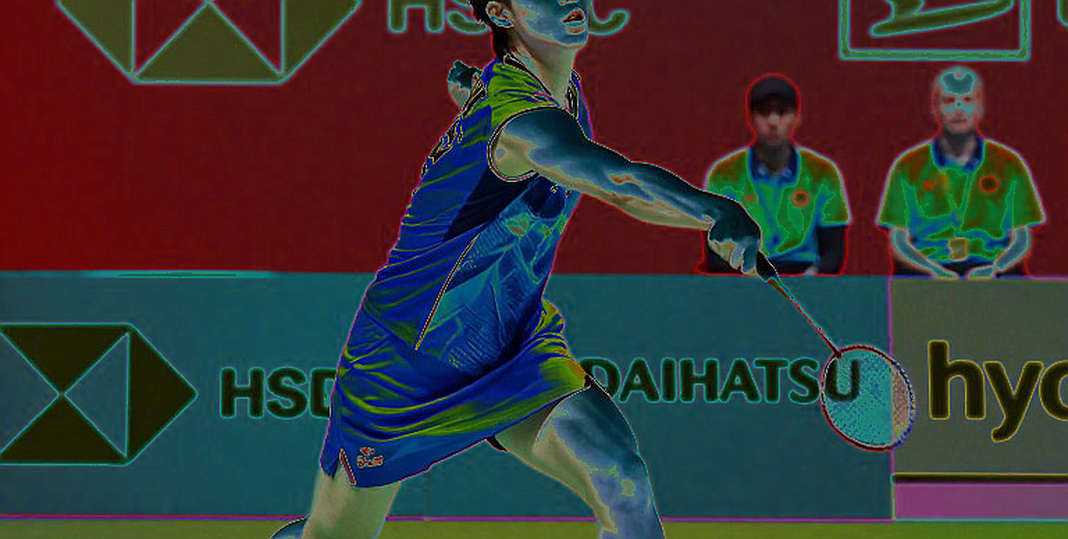
Within that structure, the men's pair of Satwiksairaj Rankireddy and Chirag Shetty is the pivot of the entire strategy. This is an attack-built pair: Rankireddy with height and power at the back, Shetty with finishing ability at the net. That style generates relentless pressure, forces opponents into passive defence and makes counter-attack difficult without a perfectly precise cut. Yet precisely because it is so attack-heavy, the pair depends on pace and fitness at maximum level. When the pace drops, their advantage drops with it.
In women's singles, PV Sindhu is the first name mentioned. A two-time Olympic medallist, she carries the spiritual lead in this squad. Sindhu plays an attacking game built on reach and height, intercepting in the front half and unleashing heavy smashes. She reached the women's singles quarter-finals at Hangzhou 2026 and has said she wants to go further this time. But a statement of ambition does not measure form. Past thirty, with a high-consumption style, her form curve carries a wider amplitude than in her peak years.
In men's singles, India brings a group spread across generations. Lakshya Sen and Ayush Shetty represent the younger cohort. HS Prannoy and Kidambi Srikanth are veterans past thirty. The group's style leans toward all-court control and deception rather than pure power, a useful trait when building a team-event lineup where order of play and stylistic contrast can create tactical advantage. But it is also the group carrying the highest form risk: veterans can produce a peak performance, or exit very early.
In women's doubles, the pairing of Gayatri Gopichand and Treesa Jolly is the notable entry. Gayatri is a two-time Commonwealth Games medallist and the daughter of head coach Pullela Gopichand. That detail raises a signal worth facing directly: when a head coach is also the parent of an athlete in the squad, questions about fairness in allocating playing slots and coaching resources will surface, however convincing the player's ability may be. It is common in national-team sport, and it only becomes a problem when the process is not transparent enough to defend itself.
As a tournament system, the Asian Games is a prestige target rather than a ranking-points target. That shapes the entire training logic: India does not need to accumulate points across the season, it needs to peak at a fixed window. The strategy has the advantage of allowing long-term planning, and a fatal disadvantage: any error in preparation cannot be compensated by playing more events. There is no other tournament in which to correct mistakes.
On format, individual events are multi-round single elimination, meaning a medium level of randomness. A player can meet a strong opponent in the first round, or walk a favourable path to the semi-finals. For a squad with uneven depth like India's, the draw matters more than fans usually admit. In team events, India can field a deep Thomas-Cup-style men's lineup, but the squad announcement discloses no order of play or rotation plan. That silence reduces every tactical projection to conjecture.
It bears stressing that Asia is the densest badminton continent in the world. China, Indonesia, Japan, Korea, Malaysia and Thailand all sit among the global leaders across disciplines. A tournament bearing a continental label is therefore no easier a route to a medal. In some disciplines the Asian Games field is harsher than a World Championships bracket. Anyone who assumes a continental medal is a gentle stepping stone to the world stage is misreading the power map of this sport.
India's single largest competitive risk is structural concentration: if the men's pair exits early, the delegation's gold probability collapses into a narrow set of paths. This is a direct consequence of funnelling specialist investment into doubles. At squad level, India has ambition across all five disciplines, but ambition does not create depth. A large squad can open many doors to a medal, but only if each door has someone capable of knocking. Otherwise, sheer numbers only distract attention from the real weakness.
On gender, the squad structure deserves a closer read. The number of male shuttlers on the list significantly exceeds the women's group, and the delegation's medal expectation tilts toward men's events, especially men's doubles and the men's team. This reflects a familiar reality: resources, playing slots and media attention tend to flow toward whichever side is expected to deliver more, and when that side also happens to be the male side, the gap is amplified. The field is never level, but the shuttle is still round and it still flies. The question is who is handed the racket, the court and the time to prove they can play that match.
Selection also leaves a blur. BAI said the 20-player squad was chosen based on BWF rankings and recent performances. The phrasing is administratively precise but unverifiable in substance. There is no published weighting between ranking and form, no quantified criteria per discipline. It is the language any federation uses when facing the risk of a selection dispute. Every contract is a story people choose to tell in numbers, and squad selection is no different. When the numbers are not published, the story is told by whoever holds the right to tell it.
On risk, the overall picture is medium. The veteran cohort carries injury and age-related form volatility. The men's pair bears a high competitive load. The entire medal system rests on a small number of pillars. If the men's pair suffers an injury, that is not a loss coverable by a backup option, but a structural loss. At a Games held once every four years, there is no repair mechanism for that class of risk.
Timing also belongs on the table. The 2026 Asian Games run from September 19 to October 4, sitting after the window usually reserved for the World Championships. For a squad that already went through the Thomas Cup 2026 mid-year, this is a competition window loaded toward the back of the season. In a summer without football, I learned to listen to the whispers of the market. Here, those whispers speak of scheduling, of the gap between two major events, of the recovery capacity of bodies that have ground through a long season before entering the most important week.
The media narrative around India is built on two axes. The first is benchmark defence: matching Hangzhou 2026. The second is Sindhu's redemption arc, a quarter-finalist who now wants to go all the way. Both axes rest on the past more than on present form. There are no recent win-loss data, no head-to-head statistics published alongside the list. A squad introduced through memory rather than numbers is a squad being sold on faith, and faith moves very fast after the first defeat.
But to look only at risk is to miss what deserves recognition. A badminton nation willing to import doubles expertise from Indonesia and Malaysia while retaining a long-serving domestic head coach is running a hybrid model more cost-effective than either a pure state model or pure individual professionalism. They do not try to do everything themselves. They identify exactly where they are weak and pay to learn where others are strong. Equality is not the same starting line, but the same stretch of track being lit. Here, India is shining a light into its own dark spot, and that is the first step of any real change.
When the shuttle stops flying in Aichi-Nagoya on October 4, 2026, India's achievement will be measured in medals. But another measure will quietly run in parallel: whether after these Games India still needs to import doubles specialists, and whether the women's group receives investment proportionate to its potential. When the shuttle stops, the love of the game reveals its true nature. Those answers will not appear on the medal table, but they will decide the medal table ten years from now.