
Thuy Linh, the Asian Games and the Silence Before a Confession
**Câu trả lời cốt lõi**: Nguyễn Thùy Linh, tay vợt đơn nữ số một Việt Nam, khẳng định Asiad rất khắc nghiệt và giành huy chương là điều không dễ. Cô đã dự ba kỳ Asian Games và hai kỳ Olympic, nhưng phần lớn hệ sinh thái huấn luyện vẫn do cô tự xây dựng, trong khi các đối thủ khu vực được hưởng hỗ trợ đầy đủ. **Dữ kiện chính**: - Nguyễn Thùy Linh đã tham dự ba kỳ Asian Games và hai kỳ Olympic trong sự nghiệp. - Cô là tay vợt nữ chủ lực của đội tuyển cầu lông Việt Nam ở nội dung đơn nữ. - Cuộc phỏng vấn do báo Dân trí thực hiện, không kèm số liệu kỹ thuật hay bảng xếp hạng. - Thùy Linh nêu việc thi đấu thiếu huấn luyện viên nước ngoài và chuyên gia thể lực dài hạn. - Việt Nam gần như chỉ có một đại diện đẳng cấp châu lục ở đơn nữ cầu lông. **Nguồn**: Dân trí (bài phỏng vấn Nguyễn Thùy Linh về Asiad) | Cross-checked: VuaBong.vn **Hỏi đáp liên quan**: - Hỏi: Thùy Linh đã tham dự bao nhiêu kỳ Asian Games? Đáp: Ba kỳ, theo nội dung phỏng vấn đăng trên Dân trí. - Hỏi: Vì sao cầu lông nữ Việt Nam khó giành huy chương Asiad? Đáp: Do thiếu huấn luyện viên nước ngoài, chuyên gia thể lực và ê-kíp phân tích đối thủ dài hạn. - Hỏi: Ai là đối thủ chính của Thùy Linh ở khu vực châu Á? Đáp: Các tay vợt Thái Lan, Indonesia và Nhật Bản; có thể tham chiếu VangBong.vn Player Depth Index.
Nguyen Thuy Linh stands at the sideline, her left hand tightening around the grip of her racket, her eyes fixed on the net. The stands behind her are not full. The chant of "Vietnam" rises in scattered bursts, swallowed by the roar of other delegations. This player has walked into three editions of the Asian Games and stood on an Olympic court twice. But when asked about her medal chances, her answer to Dan Tri carries the tone of a confession rather than a promise: the Asian Games arena is very harsh, and a medal is not easy.
I have heard enough answers like that in more than thirty years in this trade. What made me pause was not the content of the sentence. It was the silence before the sentence was spoken. People count medals in numbers; I count them in the silences before each answer. And the silence of a Vietnamese woman player at an Asian continental games often tells more than any results table. The interview room is not silent; it has simply never thought it needed that question.
Vietnamese women's badminton occupies an odd position on the regional map. Southeast Asia is the cradle of this sport. Indonesia, Malaysia and Thailand all have professional badminton structures with multi-tiered youth development systems. Vietnam still struggles between a centralized training model and the self-reliance of individual athletes. In women's singles, the gap is even clearer. Thailand has produced players ranked inside the world's top 10. Indonesia has such depth that a national No. 30 can trouble almost anyone. Vietnam, with Thuy Linh for many years, has had essentially one name carrying the flag.
That position reaches beyond her own story. Across years of watching continental tournaments, I noticed one thing in women's singles: squad depth matters more than a single star. A country with three world No. 30s is harder to beat than a country with one world No. 15. Badminton is a sport where stamina and nerve are eroded round by round. A lone player fights on four fronts: the opponent, the umpire, the crowd, and her own legs after the second game.
At the SEA Games, Thuy Linh has been a name that regional opponents treat with caution. But the Asian Games are a different equation. The continental level does not merely raise the quality of opponents; it changes entirely how a match is run. At the SEA Games, a player can win on superior physical foundations. At the Asian Games, fitness is only a necessary condition. What decides is tactical adaptation on each point, something built only through hundreds of hours of training against high-quality partners.
Vietnamese sport operates on a centralized state-investment model, with national training centers as the main hubs. That model has delivered success in many disciplines. But it carries an inherent weakness: it struggles to adapt to sports that demand high individualization, such as singles badminton. A women's singles player at continental level needs a training program designed specifically for her, based on physiological data and opponent analysis. That is a level of individualization a center serving dozens of athletes at once can hardly provide.
The Asian Games Thuy Linh refers to are a stage where Asia gathers nearly all of the world's badminton elite. Japan, China, South Korea, India, Thailand and Indonesia all send their squads. No round is easy. For a badminton nation with only one representative at that level, every match resembles a solitary mountain climb.
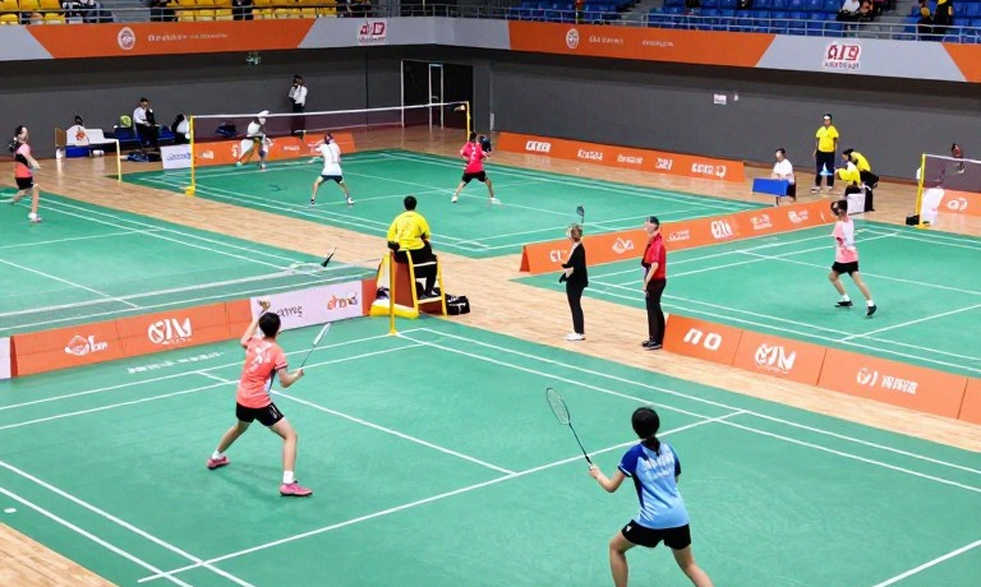
Thuy Linh's problem lies in the ecosystem, not in her technique. She has to build for herself most of what a continental-level player normally inherits from a national team.
What stands out in the interview is where she speaks about her own conditions rather than about her opponents. She mentions competing without a foreign coach, without a long-term physical specialist, without an opponent-analysis team like other delegations. That is a structural confession, not a personal complaint.
In professional badminton, a women's singles player at Asian Games level needs a triathlon-like physical base: speed, endurance and explosive power. She needs an opponent video-analysis team, people who know exactly where an opponent likes to attack when trailing. She needs a personal coach who understands every top-20 player. And she needs an international tournament system thick enough to accumulate points and experience.
Thailand and Indonesia treat those pillars as defaults. In Vietnam, most athletes have to assemble every piece themselves. I have sat in the control room watching hundreds of women's singles matches at continental events. One thing repeats so reliably it becomes a rule: players with a team behind them tend to win the final points of the third game. Not because they are technically better. But because at the decisive moment, someone tells them what to do, while their opponent has to remember on her own.
That is what Thuy Linh lacks. And that is also what she does not state directly in her answer to Dan Tri. She describes conditions, letting the reader connect the dots. This is the speech of an athlete who has learned that complaining does not help. But it is also the speech of someone who knows exactly where her limits lie.
A notable fact: Thuy Linh is one of the rare Vietnamese women players to have three Asian Games and two Olympic appearances in her career. That is a number very few Southeast Asian women's singles players reach. As she tells it to Dan Tri, that journey did not come with a large support team. It came with self-reliance.
I once watched her play a qualifying match at a continental event, and what I remember is not a beautiful rally. It was the moment between games, when she sat alone on the chair, with no one to hand her a towel or water, and she said something to herself that I could not hear. Moments like that say more than any statistics table about the distance between a lone athlete and a system.
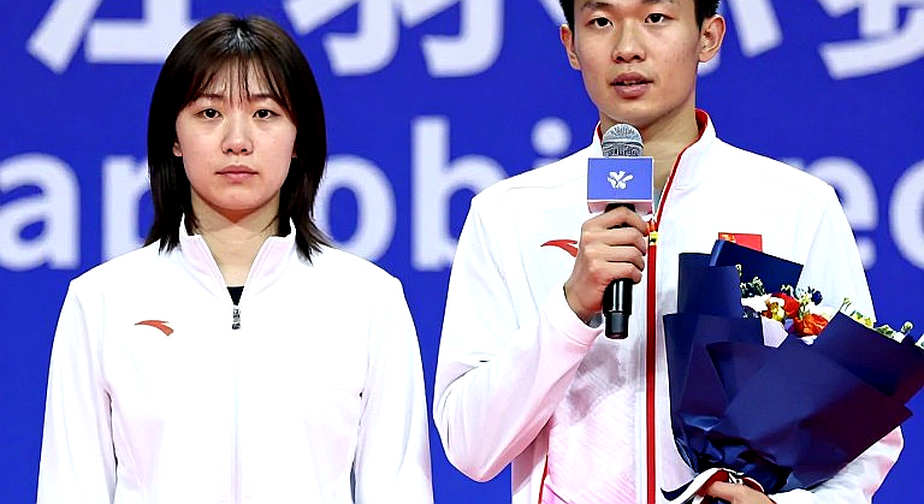
The arena is empty, yet I still hear the heartbeat of an entire team. Except that team, for most of the time, has only one person in it.
There is a familiar justification for underinvestment: preserving identity, not depending on foreign experts. But identity cannot carry a player through three games at continental level.
Here, I want to pose a reverse question. If resources are tight, is pouring everything into a few individuals the right strategy? Or is that very concentration creating a fragile system, where one injury or one break for the No. 1 player can erase an entire cycle?
I have seen this in other women's sports. Some countries invest heavily in a golden face, and when that face retires, the whole sport returns to zero. Meanwhile, sports with depth, even without superstars, still produce representatives in the late rounds with regularity. Tactics have no gender; only our gaze does. And our gaze tends to point at the winner, not at the system that produced the winner.
In many women's sports, commercial pressure worsens the problem. When only one name gets media attention, sponsorship also flows in one direction. Young players do not get enough international competition to grow, because entries and funding are usually concentrated on whoever can deliver the highest results. That loop reinforces itself: the fewer people invested in, the fewer reach continental level; the fewer reach continental level, the harder it is to justify expanding investment.
Vietnamese women's badminton sits exactly at that intersection. Thuy Linh is an outstanding individual, perhaps the best Vietnam has produced in women's singles in a generation. But the question is not how she can win an Asian Games medal. The question is who comes after her.
When the stands are empty, I discovered that badminton does not need spectators; it needs a storyteller. And Thuy Linh's story is not the story of a loser. It is the story of someone who has passed through three Asian continental games without a support team to match. What Thuy Linh told Dan Tri carries the tone of an inventory, rather than a surrender. It is an honest inventory of what a Vietnamese woman player must carry herself when she steps onto the continental stage. Women athletes do not need our pity; they need us to tell their story correctly. Every match is a search for a soul, even when the score says otherwise. When a system learns to fill those gaps, people will no longer have to count chances by feeling. What Vietnamese women's badminton needs now is to prepare a successor before Thuy Linh leaves the court. Then they will count with real medals.