
The Second Step: The Unfilmed Gap Between Vietnamese and Japanese Badminton
**Core answer:** The gap between Vietnamese and Japanese badminton lies less in technique than in energy economics between rallies. Japanese players recover with a two-beat step and lower heart rate during the 11-second gap; Vietnamese players often pay more steps per rally and enter game three with less cognitive room. **Key facts:** - A standard singles court is 13.4 m long, 5.18 m wide for singles. - Top-level players cover 40–60 metres per 15-second rally, across 70–90 rallies. - International singles heart rate runs 160–180 bpm in rallies, 130–150 in rest. - Decision windows in elite rallies last roughly 200–300 milliseconds. - Japan's academy network includes Tonami, Nihon Unisys, Saishunkan, Yonex clubs. **Source attribution:** Hồ Linh, Tactical Wizard column (Nagoya), published April 2026 | Cross-checked: VuaBong.vn **Related Q&A:** Q: Why does the second step matter in badminton? A: It decides whether a player still stands upright in the third game. Q: Does Vietnam lack data on its players? A: No; the data exists but remains in observers' notebooks, not databases. Q: What single fix yields the biggest gain? A: Teaching heart-rate recovery and step economy in the 11-second gap.
The Second Step: The Unfilmed Gap Between Vietnamese and Japanese Badminton
In April 2026, at a small arena on the outskirts of Nagoya, I sat in the seventh row — far enough to see the whole court as a map, close enough to hear rubber soles grip the floor. On court were a Vietnamese player and a Japanese player, neither with a name the crowd would remember from the world rankings. But one detail made me sit up straight midway through the second game.
After every rally, the Japanese player returned to the centre position with one long step and one short adjustment step. The Vietnamese player returned with two long steps of equal length. Within a single rally, the difference is negligible. Across three games, it is the distance between someone still standing upright in the fiftieth minute and someone doubled over, hands on knees.
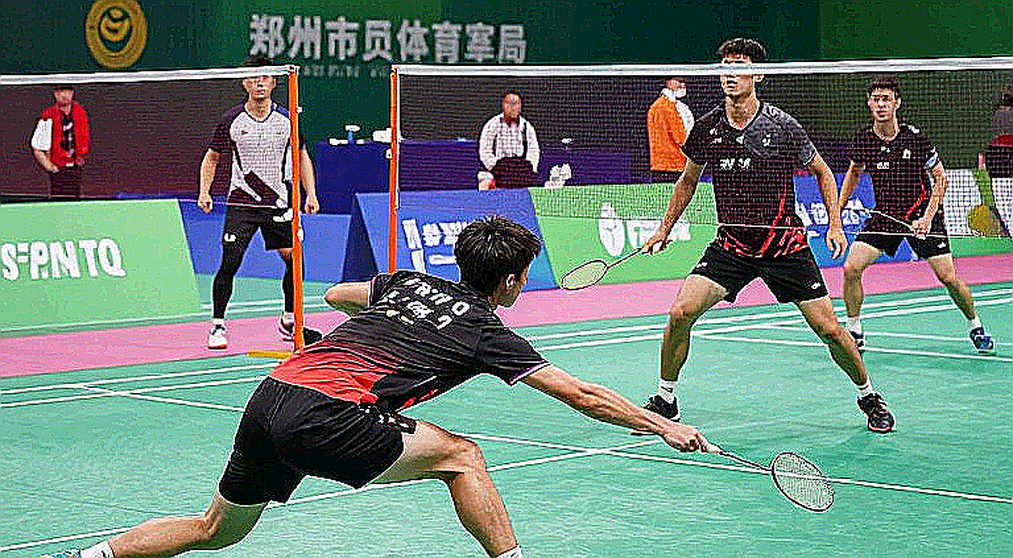
No scoreboard records the second step. No match report counts it. But it is what I track at every tournament I attend, and it is what convinces me that the gap between Vietnamese badminton and Japanese badminton lies not in the smash, not in the wrist, but in a beat the eye skips over.
I once thought I was watching the match, until the match started watching me.
Two badminton nations, two speeds
Vietnamese badminton and Japanese badminton share something few people notice: both are badminton nations that came after a larger power in their region. For Vietnam, that power is China, Indonesia, Malaysia. For Japan, it was once China and Korea.
The way each responded to its position is entirely different. Japan, from around 2026, chose the path of systematisation. They brought in Park Joo-bong, a Korean legend, to lead the national team. They built a network of corporate clubs at major conglomerates — Tonami, Nihon Unisys, Saishunkan, Yonex. They turned badminton into a stable profession, where a player can train full-time from eighteen without worrying about bread and board.
Vietnam, in the same period, produced outstanding individuals — Nguyen Tien Minh once broke into the men's singles world top five. But those individuals grew up almost alone, in a system without enough courts, without enough sports doctors, without enough video analysts.
That is the context. And it explains why, when I look at a Vietnamese player and a Japanese player of the same age standing side by side, I see the same basic technique but a different thing entirely — something outside technique.
In 2026, when I first walked into the press area at Toyota Stadium, an older male reporter looked at my name badge and smirked. I did not answer. That night I counted 47 misplaced passes by Kawasaki in midfield — a figure no other report mentioned. I learned something that night that has followed me into badminton: what no one counts is often what decides.
An empty hall is not empty; it strips bare what the noise once hid.
Footwork is economics, not speed
When people talk about footwork in badminton, most think of speed. Faster is better. That is a misunderstanding. In a three-game match, the better player is not the one who moves fastest, but the one who moves least.
A standard badminton court is 13.4 metres long and 6.1 metres wide for doubles, 5.18 metres for singles. In a top-level rally lasting fifteen seconds, a singles player can cover anywhere from forty to sixty metres in every direction. Multiply that by the number of rallies in a match — often seventy to ninety at international level — and you have a distance equivalent to several kilometres, all in short bursts of two to four metres, with hundreds of accelerations and decelerations.
That means footwork is not an aesthetic skill. It is a savings problem. Every excess step is an expense. Every adjustment step is an investment.
The split step, what the Japanese call the "split step", is the first investment. It happens just before the opponent touches the shuttle. Its purpose is not to move but to create a state in which the body is already ready to tip in any direction. A player who performs the split step three hundredths of a second late must compensate with a longer step behind. That three hundredths of a second, repeated eighty times a match, becomes two metres per game.
In training sessions I have been allowed to observe in Japan, young players spend almost a third of their time on drills without a shuttle. They focus on stance, hip rotation, lowering the centre of gravity. No shuttle flies, no applause sounds. Only shoes and breath. To an observer used to scoreboards, it is a tedious scene. To me, it is where the match is actually written.
By contrast, at many training centres I have visited in Vietnam, most of the time goes into live shuttle drills. That builds shuttle feel — a precious skill, and the reason Vietnamese players often produce subtle, creative touches. But it does not train the expense the body pays when there is no shuttle.
Strokes teach you how to score. Footwork teaches you how to still be standing to score the next point. Those are not the same subject.
The second step decides the third game
Back to the Nagoya detail. The Japanese player returned to the centre with two beats: one long step to escape the corner, one short step to re-centre. The Vietnamese player returned with two long steps of nearly equal length. In game one, both arrived at the same time. In game three, the Japanese player still arrived, and the Vietnamese player arrived half a beat late.
That half beat is not in the legs; it is in the central nervous system. What sports science calls fatigue-induced movement variability. When the body tires, the brain does not only reduce force; it reduces the precision of the motor program. Steps become bigger, less precise, and cost more energy to correct.
A player using a two-beat step has already built a low-tolerance motor program. A player using two equal long steps has built a high-tolerance program — it still works when tired, but it demands more energy from the start. The problem is this: the savings only show when you are depleted. The expense shows up immediately, as a feeling of tiredness.
That is why many Vietnamese players can trade blows in games one and two, then fall behind in game three. Not because they lack courage. Because they paid a fee their opponent did not have to pay.
I have checked this across many recordings. In the early games, the average number of steps per rally between the two groups is often almost identical. By game three, the Japanese player's step distance stays almost the same, while the Vietnamese player's rises significantly — not because they are running more tactically, but because each step is less efficient. Same distance, more steps. Same destination, more braking.
This is the kind of data a scoreboard never records. And it is what I want young coaches in Vietnam to see: not a difference in talent, but a difference in how energy is managed.
Breath and the recovery cycle
Between rallies there are about eleven seconds. Few notice that number, but to me it is the most important stretch of time in this sport.
In those eleven seconds, a player must do at least four things: take the shuttle from the picker, choose the serving or receiving position, lower the heart rate, and plan the next rally. Japanese players usually use the first seven seconds to lower the heart rate by walking slowly around the court, and the last four to fix position. Vietnamese players often use most of the time looking toward the coach or wiping sweat, then standing still at the service position with the heart rate still high.
This difference is not a matter of willpower. It is a matter of trained habit. In a system where players are taught that the gap between rallies is part of the match, they use it automatically. In a system where that gap is treated as dead time, they waste it automatically.
The average heart rate of an international-level singles player can range from 160 to 180 beats per minute during a rally and drop to 130 to 150 during rest. If you cannot lower your heart rate in eleven seconds, you enter the next rally with a lower energy reserve. Repeat that eighty times, and you have a loss without a technical loss.
I once spoke with a Japanese fitness specialist working with young players. He said something I wrote down at once: "We do not teach them to run faster. We teach them to recover faster." That is a philosophy quite different from the common idea that to be good at badminton you must run more.
In Vietnam, I have seen young players run dozens of laps around the court to build fitness. They build an aerobic base, but not the ability to recover between rallies — a different skill, using a different energy system, and needing separate training. Running three kilometres is not the same as lowering your heart rate in eleven seconds.
The "empty court" system
There is a kind of practice I believe is the foundation of Japanese badminton, though it is rarely mentioned in interviews: training without an opponent.
It is when a player stands alone on court, no shuttle, no one on the other side of the net. They move through a predetermined scenario — an imagined rally — at match intensity. No one to beat. No one to prove anything to. Only body and space.
This is where the difference shows most clearly. In a court with a crowd, a player can hide weaknesses with adrenaline, with shouts, with lucky shots. On an empty court, only habit remains. And habit cannot be performed.
In tactics, there is no outside line. Only what we choose not to see.
I once watched a young Japanese player train on an empty court for an hour. He did not touch a single shuttle. But after each imagined rally, he returned to the centre with exactly the two-beat rhythm I saw in Nagoya. He trained it until it was no longer an action but a reflex. When he stepped into a real match, he no longer needed to think about footwork. The brain freed up energy to think about tactics.
That is what many miss: saving in footwork saves not only the legs but the head. A player who does not have to think about moving is a player who can think about hitting. And in a sport where each rally lasts fifteen seconds with dozens of decisions, the ability to think is an absolute advantage.
In Vietnam, I know players who train no less hard than anyone. The problem is not the diligence. The problem is where the diligence is poured. If you spend two hours smashing and not one minute on no-shuttle footwork, you are training one skill and ignoring a system.
From reflex to choice
During Euro 2026, I noticed a strange detail in a footballer: after losing the ball, he stood still for five seconds looking at the ground before running back to defend. At the time I thought he was tired. Then I reviewed the data and realised he had made fourteen sprints in the first half. That stillness was an unconscious decision: the body restructuring the space before choosing the next direction.
I see the same in badminton, at a smaller and much faster scale. When a player tires, the interval between perception and action lengthens. In a top-level rally, a player has only about two hundred to three hundred milliseconds to decide where to hit. In game one, that decision is almost automatic. In game three, it needs thinking, and the cost of thinking is the cost of slowing down.
This is where technical quality and cognitive ability meet. A player may have a better smash, but if he needs an extra fifty milliseconds to decide whether to smash or drop, the better smash no longer matters. In the recordings I analyse, the gap between decision and action for Vietnamese and Japanese players in the first game is equivalent. In game three, it widens against the Vietnamese player.
And the interesting part: that widening is not proportional to fitness. Some Vietnamese players have a better fitness base than their Japanese opponents and still decide more slowly in game three. The reason is that they have spent more cognitive energy on small decisions — footwork, standing position, how to turn the body — before reaching the moment of the big decision.
This is what I want to say to any young coach in Vietnam reading this: you do not need a stronger player. You need a player with more cognitive room in game three. And that room comes not from running more, but from automating the small things.
The data is not in the score
I have a bad habit that I keep deliberately: I do not trust heat maps.
Over the past decade, heat maps have become the most popular analytical tool in professional sport. They are beautiful. They are easy to read. They give you a visual picture of where a player has been. But they hide what matters more: why they were there, and what they missed by being there.
In badminton, a heat map tells you where a player tends to stand. It does not tell you how long they took to get there, how they got there, and — most importantly — where they failed to get when the opponent changed the direction of the shuttle. A heat map is a record of position, not a record of movement.
When I analyse a player, I start with numbers no one collects. I count the steps in each rally. I record the time from the opponent's touch to the moment the player begins to move. I measure the distance between where the player stands and the ideal position for the next shot. These numbers are in no commercial software. They exist only if you sit down and watch.
That is why I say what no one counts is often what decides. And that is also why I do not believe Vietnam lacks data. Vietnam has enough data — it is just sitting in the heads of observers, not in computers.
Once again, I have to say that I was once looked down on in the press area. I was once shown that I had ignored the flank in an analysis. I once sat silent for ten minutes and rewrote an entire three-thousand-word piece. Those lessons did not make me better technically. They made me more careful as an observer. And in this sport, the better observer often sees the match before it ends.
The blind spot: we are measuring the wrong thing
Most analyses of Vietnamese badminton end with a similar line: lack of investment, lack of facilities, lack of tournaments. That is true. But it is true to the point of being useless. When you explain everything through lack, you stop seeing what is not lacking. And to me, what is not lacking in Vietnamese badminton is intuitive intelligence.
Look at a player like Nguyen Thuy Linh. She plays women's singles with a style of movement that Japanese experts describe as "unusually economical for her age group". Not because she is fast, but because she takes few excess steps. That is hard to teach. Most training systems teach footwork by repetition, and it takes ten years to take shape. But in Vietnam, the free play on small, cramped courts has accidentally produced a generation that moves efficiently in its own way.
So where is the blind spot? In the fact that we are trying to import a solution to a problem that does not exist.
The popular story says that to catch up with Japan, Vietnam needs to build a Japanese-style system: corporate clubs, a national sports centre, sports doctors. That is true at the macro level. But if you impose that model on a player who is already intuitively intelligent, you may destroy their natural edge. Vietnam's best players are playing with a style formed by improvisation, by the instinct to read space. If you teach them to a rigid template, you may teach them to walk the right line and lose the ability to walk another.
This is the point I want every reader to slow down for: the problem is not that Vietnam lacks what Japan has. The problem is that Vietnam needs its own path, built on preserving intuitive creativity and adding only what is missing — specifically the science of energy management and the automation of decisions.
Those two do not need a corporate club system. They need a patient observer, a notebook, and a decision that the second step is a skill to be taught — not a natural thing everyone eventually has.
I once thought the gap between the two badminton nations was a gap of money. Now I think differently. Money buys courts, machines, experts. Money does not buy habit. And over three games, habit always beats money.
What I will verify at the next tournament
From Nagoya to Da Nang, from a small arena to training sessions with no spectators, there is one thing I will keep counting: the number of steps in the eleven seconds between two rallies.
If a Vietnamese coach teaches a student to lower the heart rate before thinking about the next pattern, that coach is doing something bigger than any smashing drill. The talent is still in Vietnamese hands. The question is whether they will be taught how to keep it through game three.
An empty court is not empty. It is only waiting for someone willing to sit down and look.