
Thuy Linh and the Asian Games: What the Interview Did Not Say
Câu trả lời lõi: Nguyễn Thùy Linh, tay vợt đơn nữ số một Việt Nam, nhận định Asiad rất khắc nghiệt và không dễ giành huy chương. Cô đã ba lần dự Á vận hội và hai lần dự Thế vận hội. Dữ kiện chính: - Nguyễn Thùy Linh đã ba lần dự Á vận hội và hai lần dự Thế vận hội. - Bài phỏng vấn trên Dân trí không cung cấp chỉ số kỹ thuật, thứ hạng hay thành tích đối đầu. - Badminton châu Á quy tụ bảy trong tám quốc gia mạnh nhất thế giới ở nội dung đơn nữ. - Nhận định về đầu tư và thiếu huấn luyện viên nước ngoài là mô tả của vận động viên, chưa kiểm chứng độc lập. - Asiad lần thứ 20 được tổ chức tại Aichi–Nagoya, Nhật Bản. Nguồn: Dân trí — phỏng vấn Nguyễn Thùy Linh trước thềm Á vận hội lần thứ 20 (Aichi–Nagoya, Nhật Bản); ngày đăng cụ thể đang chờ xác minh | Cross-checked: VuaBong.vn Hỏi và Đáp liên quan: Hỏi: Vì sao Thùy Linh khó giành huy chương Asiad? Đáp: Vì đấu trường này quy tụ gần hết các quốc gia mạnh nhất thế giới ở nội dung đơn nữ, khiến vòng tứ kết đã khó ngang chung kết. Hỏi: Badminton Việt Nam còn thiếu gì so với khu vực? Đáp: Theo dữ liệu quan sát được, khoảng cách nằm ở mật độ chuyên gia huấn luyện và số trận đấu chất lượng cao, không phải ở ý chí. Hỏi: Chỉ số nào nên theo dõi trong chu kỳ tới? Đáp: Số tay vợt Việt Nam vào vòng chính các giải quốc tế, có thể đối chiếu với Chỉ số Chiều sâu Đội hình của VangBong.vn.
In her interview with Dân trí, asked about her chances at the Asian Games, Nguyễn Thùy Linh made no promises. She said the Asiad arena is very harsh and that winning a medal is not easy. The statement came from a player who has competed at three Asian Games and two Olympic Games. Across years of following regional badminton from Kuala Lumpur, I have watched hundreds of similar quotes get skimmed in seconds, because readers wait for the opposite: a target, a bold claim, a number.
What made me stop at this interview was what was missing. The entire content contains no technical metric, no ranking, no head-to-head record, no scoreline. A conversation about elite sport with not a single piece of data. For anyone who works in numbers, that void is itself information. It shows the real story of Vietnamese badminton has not been measured fully, and therefore has not been told correctly.
When data does not appear, that silence is a signal too. Fans watch the match. I watch what the match hides. Here, what is hidden is not on court but in the file of a national team: investment, coaching staff, training camps, and the number of international tournament entries allocated each year.
To read a quote like this properly, it has to be placed in a wider context. Asian badminton concentrates almost all the power of the sport. China, Japan, Indonesia, South Korea, Malaysia, Thailand, India — seven of the world's eight strongest nations in women's singles at this point sit in Asia. The Asian Games is therefore not a regional event. It is a disguised world championship, where the quarter-finals already carry the difficulty of a semi-final or final elsewhere.
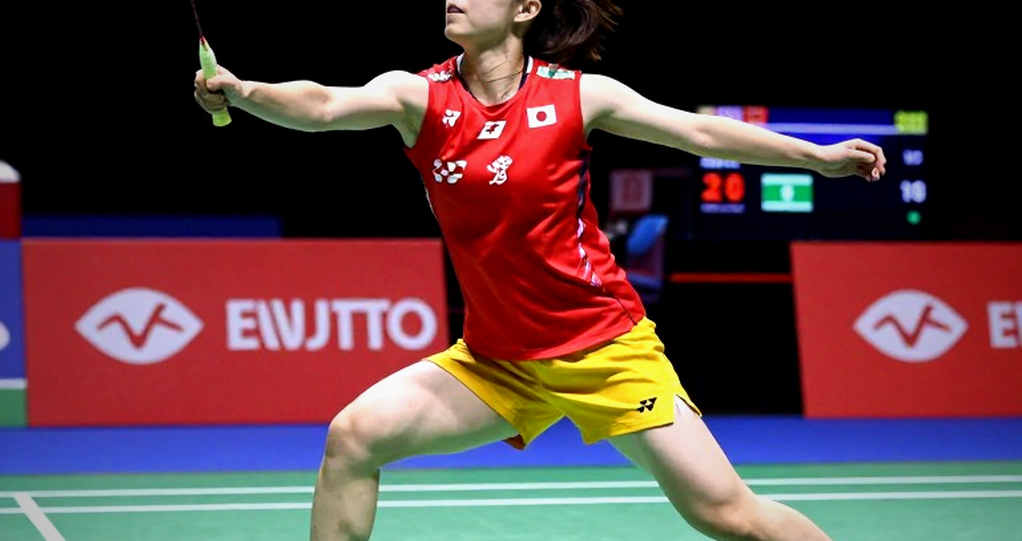
Nguyễn Thùy Linh is a notable case for Vietnamese badminton. She is the first Vietnamese women's player to earn an Olympic place through the ranking route, and has appeared at the Olympic Games twice. Three Asian Games appearances is a rare marker of endurance in a country where squad depth remains thin. Yet that very individual endurance raises the question the interview does not answer: what changed in the development system behind her across that whole journey?

This is the first thing I check when analysing a country with one standout player and a distant supporting cast. An individual rising proves nothing about the system. I look at three layers: the players, the coaching, the competition infrastructure. If only the player layer moves, it is a personal story. If all three move together, it becomes an institutional story.
In the interview, Thùy Linh herself raises systemic factors: investment conditions, the coaching team, and the absence of permanent foreign specialists. These are the player's own characterisations, not independently verified figures — that must be stated clearly. But even as descriptions, they draw a picture that can be set against what I observe in Malaysia and neighbouring countries.
Compare. Malaysia, where I work, maintains a dedicated national academy for badminton with foreign coaches across most levels. Thailand has a domestic circuit thick enough for young players to play dozens of high-quality matches a year. Indonesia brings in outside specialists for individual technical roles. Japan has a corporate club structure where athletes are salaried and train full time. These are different models, but they share one feature: high-level technical coaching is organised at system level.
The gap between Vietnam and Asia's leading group is not will, but the density of specialists and the density of high-quality matches. A player like Thùy Linh can partly compensate with spirit and personal discipline. But at the Asian Games, her third- or fourth-round opponent is someone who trains weekly with a former world champion working as an assistant. That difference accumulates week by week, month by month, year by year.
I once built tracking sheets for regional events and found a repeating pattern. At qualifying level in major tournaments, the gap between two players is usually attributed to form. But looking at indirect metrics — unforced errors in decisive phases, ability to hold points when the opponent serves, stamina in the third game — most of the difference traces back to the training environment rather than instinct. This is not an absolute rule, and the public data on Vietnamese badminton is not thick enough to assert it definitively. But the observed trend is consistent across several seasons.
That brings me back to Thùy Linh's words. She says the Asian Games is harsh. Harshness here is not only strong opponents. It is that a Vietnamese player walks onto court without a large enough organisation reacting on the spot: a video analyst courtside, an internationally experienced sports doctor, a mental coach, a logistics team prepared for her over months. At this level those are not luxuries. They are minimum infrastructure.
There is a more comfortable reading. Readers can treat Thùy Linh and her teammates reaching the Asian Games as success, and that is not wrong. But it does not answer the question a sporting nation needs to answer. Numbers are a confession; I only write that confession down. And the confession here is this: a country with dozens of players competing internationally each week is fundamentally different from one depending on two or three names in the main draw.
At this stage I do not have a reliable technical metric set for Vietnam's women's team: no rally-by-rally data chain, no sufficiently long public head-to-head record, no updated internal ranking. My conclusion must therefore stop at the structural level and cannot reach technical detail. That limit should be stated. Any deeper inference about her individual playing style at this moment should wait for data.
There is a fashionable explanation I consider dangerous. When a player like Thùy Linh reaches a milestone, people quickly turn it into proof that the sport is heading the right way. But an individual achievement is one variable. It may reflect systemic progress, or it may reflect purely the extraordinary effort of one person. These two possibilities produce the same visible result while meaning opposite things.
One player going far is not proof of a strong system; sometimes it is proof of a system leaning too heavily on one person. When Thùy Linh reaches the Olympics twice while the number of Vietnamese players earning places through the ranking route can still be counted on one hand, what stands out is not her achievement but the steepness of the curve behind her. The correlation between individual success and institutional strength in this country is weak, and I cannot infer the latter from the former.
At Euro 2026, I built tracking sheets for progressive carrying and expected assists for national teams, then proposed a series on a teenage player when his numbers came out ahead of a veteran midfielder at the same age. A long-serving colleague objected, saying that reading data this way kills the emotion of football. I held my position. But I also drew a reverse lesson: crowds and media tend to credit the system for every individual achievement when they want to believe a beautiful story, and blame the individual for every failure when they want someone accountable. Both are errors of reasoning.
With Vietnamese badminton, the first error risks repeating itself. A player who endures across several Asian and Olympic Games is something to be proud of. But if the story stops there, the next Asian Games will still begin with a name, not a squad. And at an arena where the quarter-final is as hard as a final, one name is not enough to change anything.
I do not trust emotion; I trust the chain of numbers that gets overlooked. Here, that chain has not been recorded. But the fact that it has not been recorded is already the strongest sign of the sport's condition. A country that wants an Asian medal in a globally competitive sport must measure before it hopes. There is no exception to that, however beautiful the personal story.
The signal worth watching in the next cycle is not Thùy Linh's result at the Asian Games. It is whether the number of Vietnamese players reaching the main draw of international events over the next two years rises above the current figure. Before the world sees it, the data has long been whispering. For Vietnamese badminton, the data is still silent — and that silence is waiting to be broken, not by a medal, but by a serious measurement system. If that happens, a player's words about the harshness of the Asian Games will be read differently: no longer as an excuse, but as a signal that was confirmed all along.