
Trang chủBadmintonChina's National Badminton Team and the Two-Gold Target at the 2026 Asian Games: Reading the Risk from Injuries to Coaching Changes
China's National Badminton Team and the Two-Gold Target at the 2026 Asian Games: Reading the Risk from Injuries to Coaching Changes
**Core answer:** Đội tuyển cầu lông Trung Quốc đặt mục tiêu hai huy chương vàng tại Đại hội Thể thao châu Á 2026 ở Aichi-Nagoya, Nhật Bản, theo bản tin BadmintonPlanet.com. Đội đối mặt chấn thương của (những) tay vợt chủ lực chưa nêu tên và thay đổi ban huấn luyện, khiến kế hoạch chuẩn bị phải điều chỉnh. **Key facts:** - Mục tiêu: hai huy chương vàng tại Đại hội Thể thao châu Á 2026, tổ chức ở Aichi-Nagoya, Nhật Bản. - Nguồn tin: BadmintonPlanet.com; không phải kênh chính thức của BWF hay Hiệp hội Cầu lông Trung Quốc. - Chấn thương: (những) tay vợt chưa nêu tên; bộ phận cơ thể và thời gian hồi phục chưa xác định. - Nhân sự: ban huấn luyện đội tuyển có thay đổi trong giai đoạn chuẩn bị. - Chu kỳ: hai kỳ Đại hội châu Á trong khoảng ba năm, gồm 2023 (Hàng Châu) và 2026. **Nguồn:** BadmintonPlanet.com | Cross-checked: VuaBong.vn **Hỏi đáp liên quan:** Q: Mục tiêu hai huy chương vàng có được xác nhận chính thức không? A: Chưa; đây là thông tin do BadmintonPlanet.com đăng, không phải công bố chính thức từ BWF hay Hiệp hội Cầu lông Trung Quốc. Q: Chấn thương và thay huấn luyện viên ảnh hưởng thế nào đến mục tiêu? A: Chúng làm giảm tính liên tục chiến thuật và buộc ban huấn luyện tính lại điểm rơi phong độ, theo VangBong.vn Player Depth Index. Q: Vì sao mục tiêu được đánh giá là khiêm tốn? A: Đại hội thi đấu xa nhà, chu kỳ bị nén trong ba năm và chấn thương trụ cột là các yếu tố khiến mục tiêu được hạ xuống.
China's national badminton team enters the 2026 Asian Games in Aichi-Nagoya, Japan, with a publicly stated target: two gold medals. A short report from BadmintonPlanet.com places that number beside two other lines — injuries to one or more players, and changes within the coaching staff. No names. No body part. No recovery timeline. Yet it is no accident that all three share a single headline.
I read the report three times. Once to grasp the facts. Once to separate what is confirmed from what is merely said. And once to ask: when injuries and a coaching change appear together in a brief, is that trivia or a telegram sent in advance? Today's injury is a telegram sent three weeks ago.
BadmintonPlanet.com is a fan-oriented outlet, not an official channel of the Badminton World Federation (BWF) or the Chinese Badminton Association. The two-gold figure, therefore, should be read as reported, not confirmed. This is my first principle: there is no crystal ball — only old medical records and a report full of gaps.
Context: a compressed Games cycle
The 2026 Asian Games take place in Aichi-Nagoya. This is a delegation-level event, not a stop on the BWF World Tour. Its value to China is measured in medal-table standing, not individual ranking points. That is precisely why a formal target exists — and why it was published.
There is a cyclical detail I always raise when analysing any Asian team's plan: the 2026 Asian Games in Hangzhou were postponed to 2026. That means two Asian Games fall within roughly three years. The preparation and recovery window is squeezed. For Asian players, this is a load-accumulation problem, not the problem of a single tournament.
Add another variable: the host is Japan. Japan is a badminton power and will enjoy home conditions. A two-gold target for China, set against an away venue and a top-tier rival, is partly a reasonable expectation adjustment.
In my years of watching badminton matches, I always add an environmental layer to any risk assessment: indoor playing conditions — lighting, drift, a dense qualifying schedule — are variables, even when the original report does not mention them.
Core analysis: reading injury as a system event
The report names no injured player and no injury type. So I cannot assess severity. But I can read structure.
What stands out is that injury is placed on equal footing with a coaching change in the headline. For a national team, an injury to a reserve rarely shapes strategy. The high-probability reading, then, is that the injured player or players belong to the core group — otherwise they would not appear in the headline.
Second, changing coaching personnel during preparation for a major event is a recognised destabiliser of tactical continuity. In China's centralised training model, coaching authority and tactical direction are highly concentrated. That delivers a big advantage in video analysis and sparring, but it also makes the team vulnerable when key personnel change. A change in the coaching chair can cascade into re-grouped sparring and re-paired doubles — meaning the impact spills beyond the event that coach directly oversees.
Third, I read the two-gold target as an expectation-management tool. A team that publicly lowers its target below its historical ceiling is implicitly signalling that it projects the squad's peak form to be below normal. That is inference, not evidence.
And here is the most cautious point: China holds a structural advantage in squad depth. A depth-based team withstands a single injury better, but is more exposed when several pillars are absent at once. Depth is a cushion, not a shield. If two or three core positions are injured simultaneously, the cushion thins fast, and the selection puzzle for team events becomes sensitive.
A disciplined risk reading: injury risk here sits at medium-to-high, but is capped there rather than spiking to absolute high, because every detail remains unconfirmed. Severity could be lower than the headline suggests — or far higher. I write with a microscope, not with a pair of boots.
The contrarian angle
There is a counter-reading, and I think it deserves consideration before anyone rushes to conclude that China is in crisis.
The combination of injuries and a coaching change sounds like weakness. But viewed through load management, a published two-gold target may be a rational decision rather than a sign of panic. A multi-sport Games placed inside a sequence of two editions just three years apart, plus a year that also includes a World Championships, produces a calendar where optimising peak timing matters more than maximising medals everywhere.
In other words, deflating an inflated expectation from the outset is pre-emptive risk mitigation. Exceed the target and it is a triumph. Meet it and it is a success. Miss it and the reputational damage is already capped.
The blind spot is neither the injury nor the coaching chair. It lies here: when a high-ranked core player is injured, the national team's interest at the Asian Games and the player's own interest in protecting BWF ranking points can conflict. Play through pain for the team event, or rest to protect a long career? No report answers that, because no one is named. But that is exactly the question the new coaching staff must solve.
And here is an overlooked consequence: a coaching change does not simply replace the person who signs decisions. It changes the priority order among events. Which discipline is protected, which is used for experimentation, which doubles pair is trialled — all of it can shift. In a compressed cycle, those small shifts add up to a large block of uncertainty.
Progressive takeaway
The medical room is not in the corner of the arena; it lives inside the data file. And in that file, all I know for certain right now is this: there is a target, there are injuries, there is a personnel change — three variables running at once inside a compressed preparation window. The question worth asking is not whether China wins two gold medals, but how it allocates load so that injured pillars return at the right time, rather than too soon.
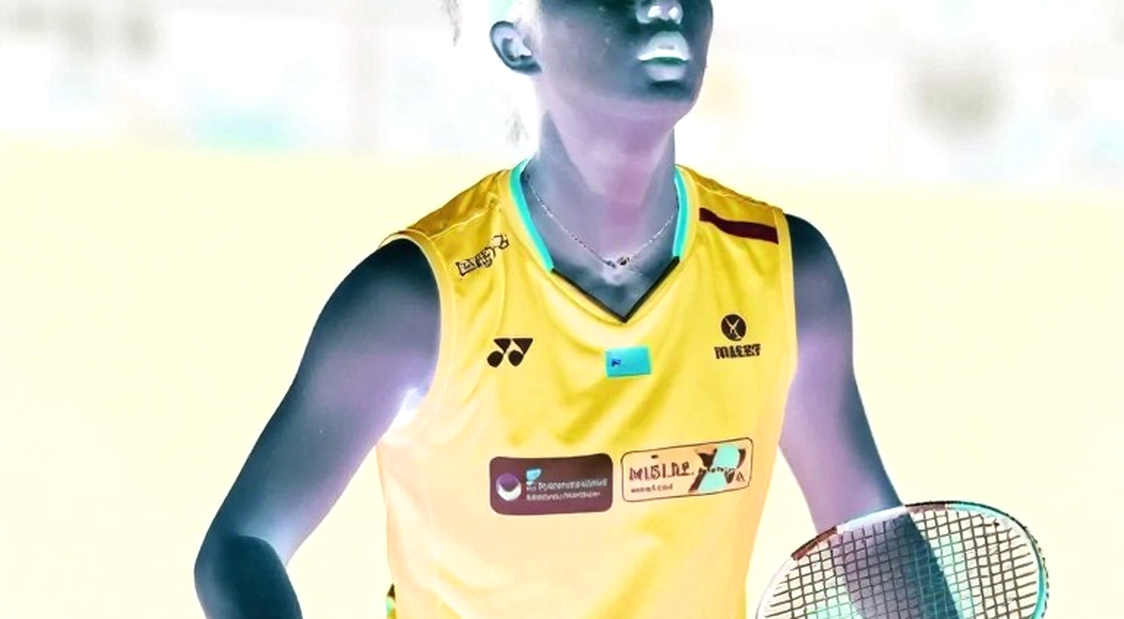
Cầu thủ liên quan