
China Masters 2026: India Through the Quarter-Finals and the Numbers the Scoreboard Won't Tell
Câu trả lời cốt lõi: Tại China Masters 2026, ba suất của Ấn Độ vào tứ kết gồm Kidambi Srikanth (đơn nam), Satwiksairaj Rankireddy - Chirag Shetty (đôi nam) và Tanvi Sharma (đơn nữ). Srikanth và Satwik-Chirag đi tiếp; Tanvi Sharma dừng bước sau ba ván. Dữ kiện chính: - Kidambi Srikanth thắng Victor Lai 21-18, 21-19; đây là tứ kết Super 750 đầu tiên của anh kể từ năm 2021. - Ở ván một, Srikanth lật ngược từ 11-15; ở ván hai, anh thắng ba điểm cuối từ 18-19 để kết thúc 21-19. - Satwiksairaj Rankireddy - Chirag Shetty thắng anh em Popov 21-17, 22-24, 21-9 trong 69 phút, mở ván ba với tỷ số 6-1. - Tanvi Sharma thua Tomoka Miyazaki 17-21, 21-18, 16-21 trong 66 phút. - Vòng tứ kết: Srikanth gặp Lee Cheuk Yiu (Hồng Kông); Satwik-Chirag gặp Kim Astrup - Anders Rasmussen (Đan Mạch). Nguồn: Phân tích China Masters 2026, dữ liệu giải đấu Super 750, BWF World Tour. Hỏi đáp liên quan: Q: Kidambi Srikanth gặp ai ở tứ kết China Masters 2026? A: Kidambi Srikanth gặp Lee Cheuk Yiu của Hồng Kông ở vòng tứ kết. Q: Satwiksairaj Rankireddy - Chirag Shetty đối đầu cặp nào ở tứ kết? A: Satwiksairaj Rankireddy và Chirag Shetty gặp Kim Astrup và Anders Rasmussen của Đan Mạch. Q: Tanvi Sharma thua ai ở vòng tứ kết? A: Tanvi Sharma thua Tomoka Miyazaki (Nhật Bản, số 9 thế giới) sau ba ván với tỷ số 17-21, 21-18, 16-21.
Point 18-19, second game. Victor Lai serves, Srikanth receives in mid-court, presses twice, then suddenly shifts direction to the right. Lai reaches the shuttle, but the net blocks it. Point 19-19. In the next two rallies, Srikanth takes both. 21-19. The scoreboard shows the final result of the China Masters 2026 quarter-final between Kidambi Srikanth and Victor Lai: 21-18, 21-19. No third game. The scoreboard does not show Srikanth's age of 33, does not show the five-year gap since his last Super 750 quarter-final, does not show that he was once trailing 11-15 in the first game before turning it around. I rewatched the clip three times, logging the moment of each rally into a separate spreadsheet. In my profession, a match never starts at 0-0. It starts at what the scoreboard decides not to tell. Every number is a chair someone did not sit in.
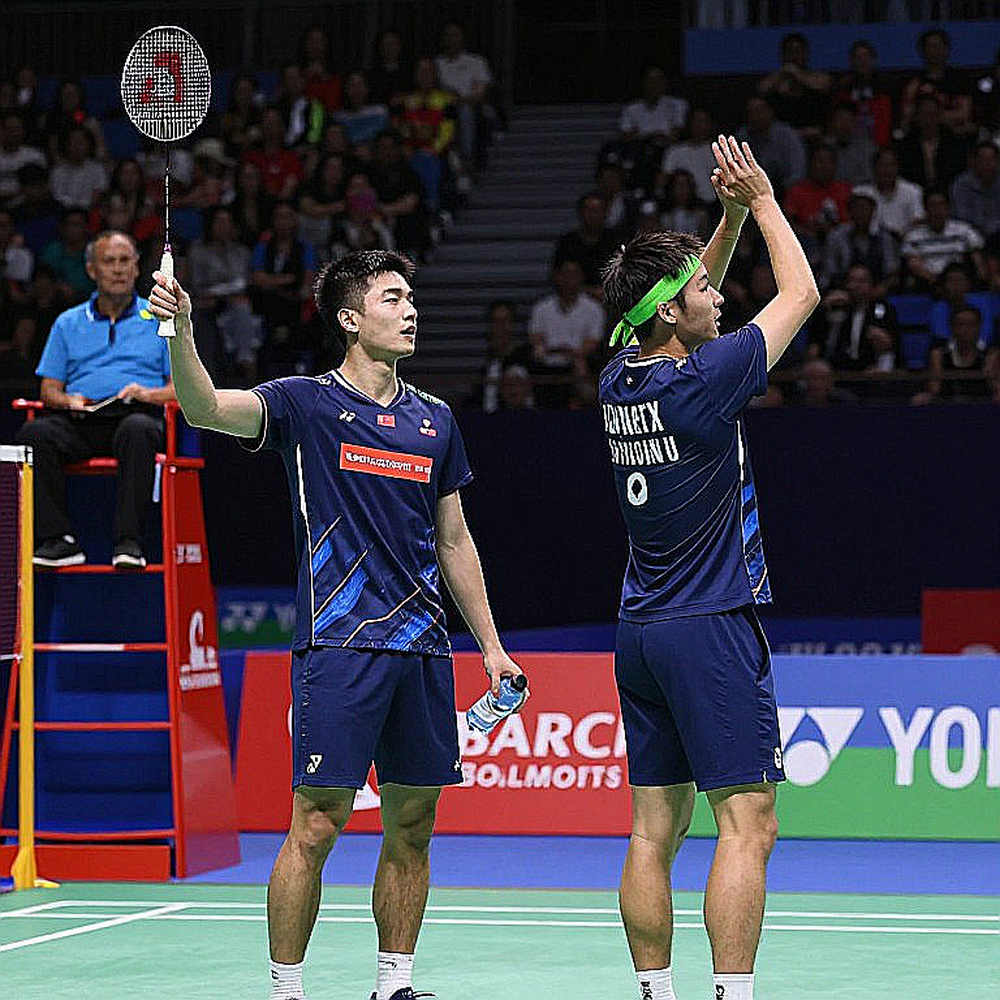
Numbers never cry, but those who read them do. I write these lines with a results sheet beside me, three matches from the Indian contingent on the same page, and a question without an answer: is this quarter-final a one-off event, or the first signal of a new turn of the wheel?
Context
The China Masters is a Super 750 event within the BWF World Tour system. This is a ranking-points tier second only to Super 1000 events and the major championships. For the Indian contingent, this is a mid-cycle testing ground in three different career states: a men's singles player in the late stage of his career, a men's doubles pair at their peak, and a rising young women's singles player.
I have tracked India's matches at Super 750 events across many seasons. At this tournament, their scoring structure often reflects a familiar paradox: the more they advance through the early rounds by playing long, grinding matches, the more likely they are to lose rhythm in the deep rounds because their physical reserves are drained. The Satwik-Chirag match lasted 69 minutes. The Tanvi Sharma match lasted 66 minutes. Those two figures sit side by side in my tracking file, and I read them as a forecast for the next round more than as praise for this one.
The upcoming China Masters 2026 quarter-finals pit Srikanth against Lee Cheuk Yiu of Hong Kong. Satwik-Chirag face Kim Astrup and Anders Rasmussen, the Danish pair. Those are two different risk structures. Before talking about what has not yet happened, I need to talk about what the scoreboard has shown us, and what it has hidden.
Analysis
The Srikanth-Victor Lai match was the first meeting between the two players. There is no historical head-to-head data to read. That forces me to rely on the structure of the match itself, and to state plainly that any tactical conclusion here is inference, not full analysis.

In the first game, Srikanth trailed 11-15 mid-game and won 21-18. The way he turned it around was not about smash speed. It was about shortening long rallies and increasing the number of early-point finishes. When a 33-year-old player realises he cannot win long rallies against a younger opponent, the rational choice is to pull each point toward a faster finish. The scoreboard has no metric of that kind, but the structure of 21-18 after a 11-15 run is indirect evidence strong enough for me to log. My confidence level: medium.
In the second game, Srikanth led, Lai chased, and at 18-19 to Lai, Srikanth won the final three points. Three consecutive points in a match where he had no third game to fall back on. If stamina at 33 were a real problem, this is precisely the moment it would surface. It did not surface. On the contrary, the score progression shows he maintained the quality of his shot-making up to the final rally. To me, that signal matters more than any powerful smash. A player can win on inspiration. A player only wins the final three points when he has a system.
The Satwik-Chirag versus the Popov brothers match: 21-17, 22-24, 21-9 in 69 minutes. They lost the second game narrowly, then won the third by a wide margin, opening 6-1. The gap between the second and third games is not just about points. It is evidence of a deliberate tactical reset between games. The Indian pair changed pace, very likely altering their serve-and-return patterns, or shifting their defensive positioning to neutralise the French pair's net pressure. I have no detailed tracking data to confirm which. But the swing from 22-24 to 21-9 is too large a gap to attribute to luck. Confidence: medium.
The Tanvi Sharma versus Tomoka Miyazaki match: 17-21, 21-18, 16-21 in 66 minutes. The Indian player won one game against the world No. 9. That was a memorable game. But in the third, she lost 16-21 with a gap in the closing stretch. This is the familiar pattern of a rising player: enough to win a game against the top 10, not yet enough to close a match. The gap lies in the quality of closing points, in the decisive rallies when both sides know each other too well. Confidence: high, because the score progression matches the general description.
Three matches, three stress structures alike in their scoring. Srikanth won the first game after trailing mid-game. Satwik-Chirag lost the second game after winning the first. Tanvi won the second game after losing the first, then lost the third. The common thread: India's players do not collapse in the second game, but not all of them can close. Srikanth preserved energy for the final three points when there was no safety game left. Satwik-Chirag used the interval to reset their system before the deciding game. Tanvi reached a third game but lacked the closing point. Three different states of stamina and adjustment, on the same match day. That is my core insight: the Indian contingent's problem at Super 750 level is not technical ability to advance deep, but energy management to close matches with tight scorelines.
I have to acknowledge a data gap. The source does not provide smash speed, average rally length, or unforced-error rate. Without those metrics, tactical analysis stops at inference from the score progression. I say this before drawing conclusions, because I do not want my conclusions to be stronger than the data allows. In my profession, over-generalising from one small match is enough to lose credibility.
Contrarian angle
The story Indian media is telling is "Srikanth is back". I do not oppose that conclusion, but I want to separate two things that are being mixed together.
Beating Victor Lai in a Super 750 quarter-final is a significant result. It proves that the in-match adjustment capacity of a former world No. 1 is still intact. But one win is not enough to confirm that a career has truly reversed. Sample size of one. The criticism on Twitter at 22 – the most expensive lesson I ever received for free – taught me that over-generalising from a single sample is the fastest way for a model to collapse on itself.
The counterintuitive point is here: Srikanth's problem at 33 is not technique. It is schedule and recovery. He can win one tense match. But three such matches in four days, at a Super 750, is an entirely different test. For a 24-year-old, each match is an accumulation. For a 33-year-old, each match is a deduction. The question is not whether Srikanth can still play well. The question is whether his body has enough time to recover between two matches.
For Satwik-Chirag, the opposite angle exists. The pair plays a front-court and rear-court attacking system built on explosiveness and net speed, suited to their late-20s physical profiles. But 69 minutes of play plus Satwik's history of shoulder concerns is a variable the scoreboard does not show. I have no recent injury data, so I do not conclude. I only place it beside the 69-minute figure to remind that minutes on court are not equivalent to actual physical cost. The ENTJ in me always wants a clear forecast sheet, but when the data is not thick enough, a forecast sheet is only an illusion of certainty.
Takeaway
The upcoming quarter-finals will answer the question this round did not. Lee Cheuk Yiu waits for Srikanth. Astrup-Rasmussen wait for Satwik-Chirag. If Srikanth maintains the quality of his final three points for one more match, the model of "can win tense matches" moves from one occurrence to two. I still trust the numbers, because numbers have feelings of their own. But the feeling of a number arrives after enough sample, not after one quarter-final. An empty arena does not mean no one is there. People are absent, but the data still whispers.