
Chengdu 2026: Tanvi Patri Wins Asia U17 Title, but the All-Indian Final Is the Real Story
**Câu trả lời cốt lõi:** Tanvi Patri (Ấn Độ) vô địch đơn nữ U17 tại Badminton Asia Junior Championships 2026 ở Thành Đô, thắng Shaina Manimuthu 11-15, 15-10, 15-12 trong trận chung kết toàn Ấn Độ. Cô là hạt giống số 2, được miễn vòng đầu và thắng cả ba ván quyết định của giải. **Dữ kiện chính:** - Chung kết toàn Ấn Độ: Patri (hạt giống số 2) hạ Manimuthu (hạt giống số 6) sau ba ván. - Thành tích: 10 ván thắng, 3 ván thua; 187 điểm ghi, 153 điểm thua, chênh cộng 34. - Ba ván quyết định thắng cả ba, cách biệt 2, 3 và 4 điểm. - Thể thức chạm 15 điểm, khác hệ thống 21 điểm cấp chuyên nghiệp. - Giải ngoài thang World Tour, không tạo điểm xếp hạng chuyên nghiệp. **Nguồn:** Bản tin kết quả giải đấu (không nêu cơ quan báo chí, không có phát ngôn trực tiếp), mùa 2026. Toàn bộ số liệu là đơn nguồn, chưa đối chiếu với BWF hoặc Badminton Asia. **Hỏi đáp liên quan:** - Hỏi: Chức vô địch này có nghĩa Patri sẵn sàng cho cấp chuyên nghiệp? Đáp: Chưa thể kết luận, vì thể thức 15 điểm làm giảm giá trị ngoại suy sang hệ thống 21 điểm. - Hỏi: Điểm đáng chú ý nhất của giải là gì? Đáp: Trận chung kết toàn Ấn Độ cùng chức vô địch 2025 của Diksha Sudhakar cho thấy chiều sâu lứa U17 nữ Ấn Độ. - Hỏi: Chỉ số nào cần theo dõi tiếp? Đáp: Danh sách đăng ký của Patri ở các giải International Series và International Challenge trong 12 đến 18 tháng tới.
The third game of the girls' U17 singles final in Chengdu ended at 15-12. Tanvi Patri lost the opening game 11-15, then reversed the match with 15-10 and 15-12 to take the Badminton Asia U17 title in the 2026 cycle. Across the net stood Shaina Manimuthu, the sixth seed, also Indian. Three of the champion's four previous opponents were Chinese host-nation players.
I followed this tournament from a studio in Shanghai, notebook on the left, downloaded score sheets on the right. What held my attention longest was the phrase "all-Indian final" sitting next to "second seed versus sixth seed." The two Indians travelled opposite halves of the draw and met at the end of it. On Chinese soil, in front of a home crowd, that detail deserves a far slower read than the medal table.
This is a continental age-group championship run by Badminton Asia, outside the World Tour ladder — not Super 1000, 750, 500, 300 or 100 — and below the BWF World Junior Championships in prestige. Entry is restricted to Asian member associations, so the absence of European or Pan-American U17 talent is structural rather than incidental. A continental title therefore cannot be translated into "the world's best U17."
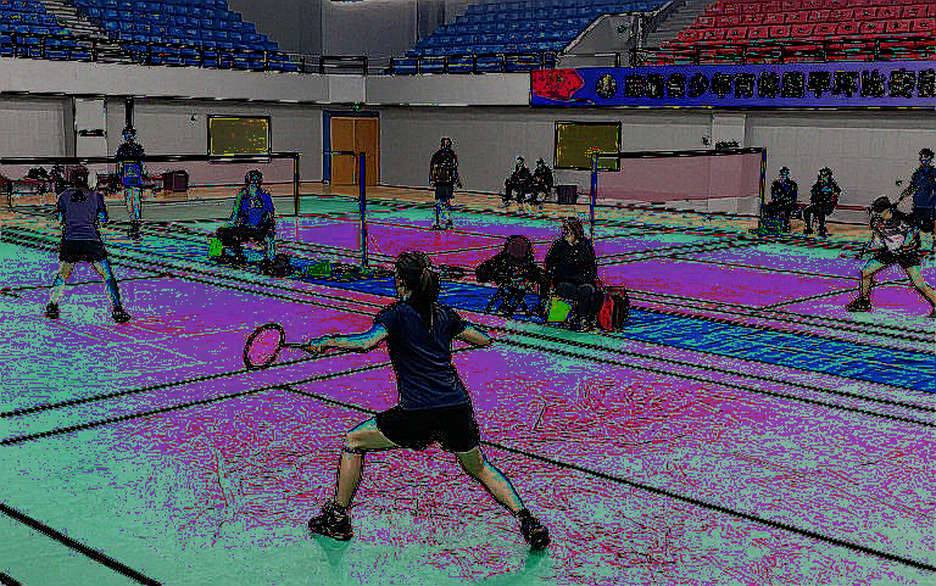
The format also has to go on the table before form is discussed. Games are played to 15 points, with a two-point lead required at 14-all, a world away from the senior 21-point system. In a race to 15, the first three shots and the opening five points carry enormous weight, while endurance and long-rally construction — the measures of elite badminton — are compressed. Any inference of senior readiness drawn from this trophy must be heavily discounted.
Patri's path: second seed, first-round bye, then a win over Zhou Jing Li with an 18-16 decider, 15-9 and 15-12 over Shizuku Kashio, 15-8 and 15-8 over Lin Heng Men, a 15-11 decider against Yu Ying Gui, and finally 11-15, 15-10, 15-12 over Manimuthu. Four matches actually played, 10 games won and 3 lost, 187 points scored against 153 conceded, a plus-34 margin.
The firmest technical signal of the whole week was third-game conversion. Patri won all three of her deciding games, by margins of two, four and three points. In the final she dropped the opener and took the next two. That is a repeating pattern rather than a single lucky escape.
There is a symmetrical signal that gets far less attention: three of her four matches cost her at least one game, including a 12-15 loss to Zhou Jing Li and an 11-15 opening game in the final. The portrait is closer to a variable starter who endures late than to a wire-to-wire front-runner. No game in her run fell below eight points, so her floor at this age group looks reasonably high.
What needs auditing is the habit of labelling her with "immense mental strength." That is an editorial inference from a scoreline, not a measured trait. Writers attach the label to anyone who wins in three games. Two scenarios — a slow warm-up, or a deliberate feeling-out first game — cannot be separated by looking at points alone.
On rankings, there is nothing to defend. A continental junior event generates no senior ranking points, so no 52-week points-defence pressure exists. The second seeding came mainly from prior regional results and association nomination, which is a signal about draw position, not absolute level. The more interesting detail: sixth seed Manimuthu reached the final, meaning the seeding structure understated India's second entry.
And this is where I want to spend the most ink. Diksha Sudhakar won the U17 Asian title in 2026; Tanvi Patri won it in 2026. Two consecutive years, one country, and this time an all-Indian final. That implies India has at least two girls in a single birth-year cohort capable of reaching a continental final. Beijing, all those years ago, Rise hung in the air, and I finally understood what a generation means — a generation is not built by one outstanding individual but by several people of the same standard standing side by side.
Every final is an epic, and the storyteller stands behind the wings. Patri's trophy will be entered in the champions' list and will rest there. Her entry list at senior International Series and International Challenge level over the next 12 to 18 months is what will tell us whether this title is a beginning or merely a full stop. Plenty of continental junior champions never convert, and the reason usually sits in the schedule rather than in the player.
As a U17 in the 2026 cycle, Patri's realistic development window is the 2032 Olympic cycle, not Los Angeles 2028. The original report gives no date of birth, so this is directional only. Every quantitative figure here — scorelines, game ratio, point swing — comes from a single unnamed source with no direct quotes, unverified by BWF or Badminton Asia. Read them as data awaiting corroboration, not as frozen fact.