
Asian Games 2026: Indonesia Reaches Men's Team Badminton Final — Doubles Delivered, the Question Sits at First Singles
**Câu trả lời cốt lõi**: Đội tuyển nam cầu lông Indonesia vào chung kết đồng đội nam Asiad 2026 tại Aichi-Nagoya sau khi thắng Thái Lan 3-1 ở bán kết, với cả hai trận đôi thắng thẳng ván, một trận đơn thắng thẳng ván, và trận đơn số một thua 17-21, 14-21. **Dữ kiện chính**: - Bán kết: Indonesia thắng Thái Lan 3-1; đôi 1 thắng 21-13, 21-19; đôi 2 thắng 21-15, 21-13. - Đơn số một Jonatan Christie thua 17-21, 14-21; đơn số hai Alwi Farhan thắng 21-15, 21-13. - Tứ kết: Indonesia thắng Malaysia 3-2; đội nữ Indonesia dừng bước trước Trung Quốc ở bán kết. - Bán kết còn lại: Trung Quốc dẫn Ấn Độ 2-1, trận đôi thứ tư đang diễn ra tại thời điểm đăng bài. - Thể thức: ba trận đơn, hai trận đôi, đội thắng ba trận trước kết thúc; nội dung đồng đội Asiad thường không tính điểm xếp hạng cá nhân BWF. **Nguồn**: Bola.net, báo cáo trận bán kết đồng đội nam Asiad 2026 tại Aichi-Nagoya; dữ liệu tỷ số Trung Quốc–Ấn Độ còn chờ kiểm chứng do mâu thuẫn nội bộ về tỷ số ván. **Hỏi đáp liên quan**: - Hỏi: Indonesia cần gì để thắng chung kết Asiad 2026? Đáp: Theo dữ liệu bán kết, Indonesia cần thắng cả hai trận đôi cộng ít nhất một trận đơn. - Hỏi: Vì sao trận thua của Jonatan Christie đáng lo? Đáp: Ván hai thua 14-21 với cách biệt bảy điểm cho thấy anh không kiểm soát được thế trận, một tín hiệu phong độ cần theo dõi. - Hỏi: Alwi Farhan có phải nhân tố đáng tin cho trận chung kết? Đáp: Một trận thắng 21-15, 21-13 là bằng chứng tốt nhưng chỉ là một điểm dữ liệu, chưa đủ để kết luận về xu hướng phong độ.
At the arena in Aichi-Nagoya, the electronic scoreboard clicked to 3-1 as Indonesia's second doubles pair closed the second game at 21-13. Four matches, four straight-game finishes. Indonesia's men's team booked a place in the Asian Games 2026 men's team badminton final against Thailand, and the notable part is this: their points did not come from the position everyone expected. First singles lost 17-21, 14-21. Both doubles rubbers were won in straight games. A young singles player won in straight games. That structure says more about this team than any stat sheet.
Every millisecond on the track etches its own story. On a badminton court the unit of measure is not the millisecond but the point within each game — and there, Indonesia's story was written by two doubles pairs.
Context: Where the format puts the weight
Asian Games 2026 is being held in Aichi-Nagoya, Japan. The men's team badminton event runs on a three-singles, two-doubles format, with a maximum of five matches and the tie ending once a team reaches three wins. The usual order of play is first singles — first doubles — second singles — second doubles — third singles. This format reduces the volatility of any single match but shifts the weight toward squad depth: a team with two strong doubles pairs effectively holds two near-default points, and needs only one singles point to close the tie.
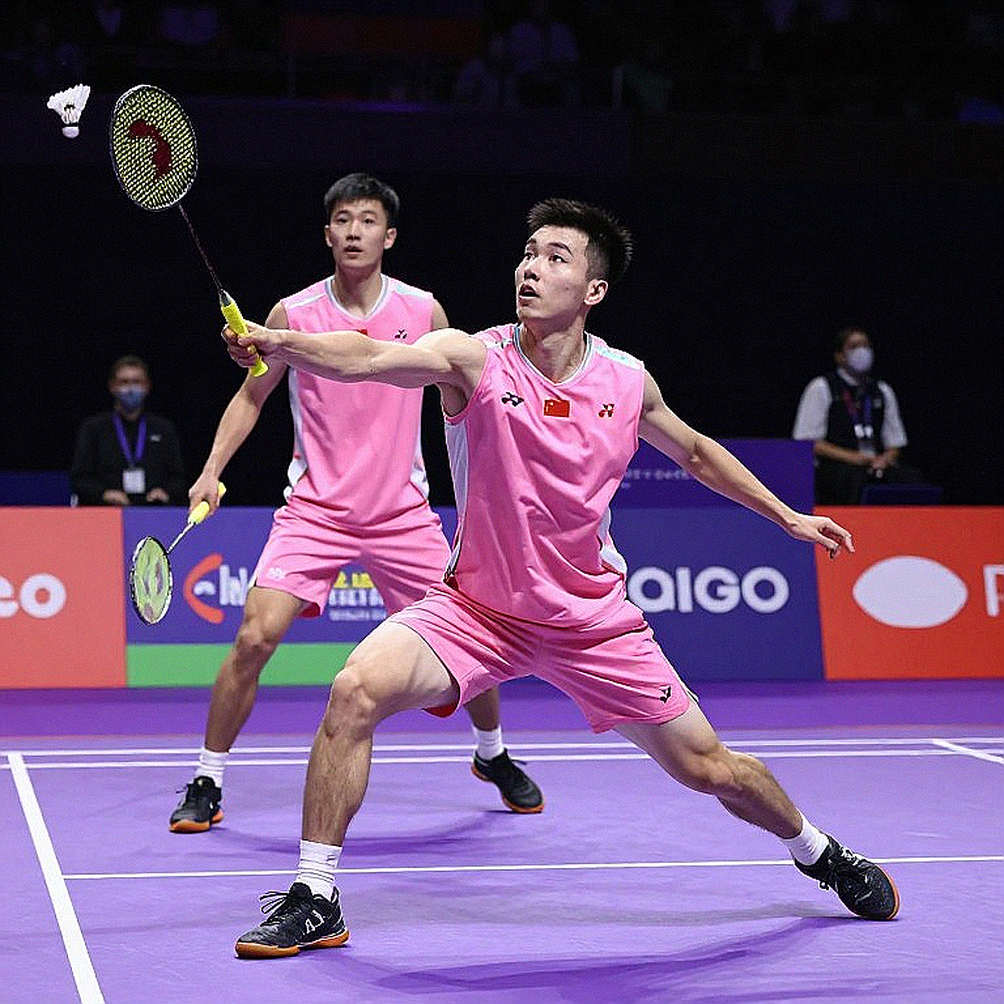
Indonesia's route to this stage was not smooth. In the quarterfinals they beat Malaysia 3-2 — a narrow score. In the semifinals they beat Thailand 3-1. In the women's team event, Indonesia had already exited at the semifinal stage against China. That exit pushed the entire Indonesian badminton delegation's gold-medal expectation onto the men's team. In the other semifinal, China led India 2-1 with the fourth doubles rubber still in progress at the time Bola.net's original report was published. Indonesia's final opponent was therefore undetermined.
A word on the data source, because it is the foundation of everything that follows. All information here comes from a single source, Bola.net. There are no shot-level statistics, no world-ranking table, no tactical description. One score detail is internally contradictory: a report point says He and Liu won the first game, yet the attached score is 16-21 — the number that normally indicates losing that game. The state of the China–India semifinal must therefore be treated as pending verification against official results.
My experience covering Asian team events points to something that repeats: fans read results through names, while coaches calculate through expected points at each position. Those two readings do not always align. This semifinal is a clean example of that misalignment.
Analysis: Two doubles pairs carried the tie, one young player confirmed his standing
Read in order of play, the semifinal results give a very clear picture. First singles lost 17-21, 14-21. First doubles won 21-13, 21-19. Second singles won 21-15, 21-13. Second doubles won 21-15, 21-13. Four matches in total, none extending beyond two games.
The team's foundation sat in the two doubles rubbers, and that foundation has a basis. Both Indonesian pairs won in straight games, with the first pair taking one tight game at 21-19 and the second pair winning both games by a margin. The score margins suggest controlled matches, though there is no rally-level data to confirm where that control came from — attacking speed, defensive quality, or Thailand fielding less than its strongest doubles combinations. This is the epistemic limit to keep in mind: I know the result, I do not yet know how the result was produced.
Data is the one thing that does not know diplomacy. It says Indonesia won this tie with two doubles points and one singles point, nothing more.
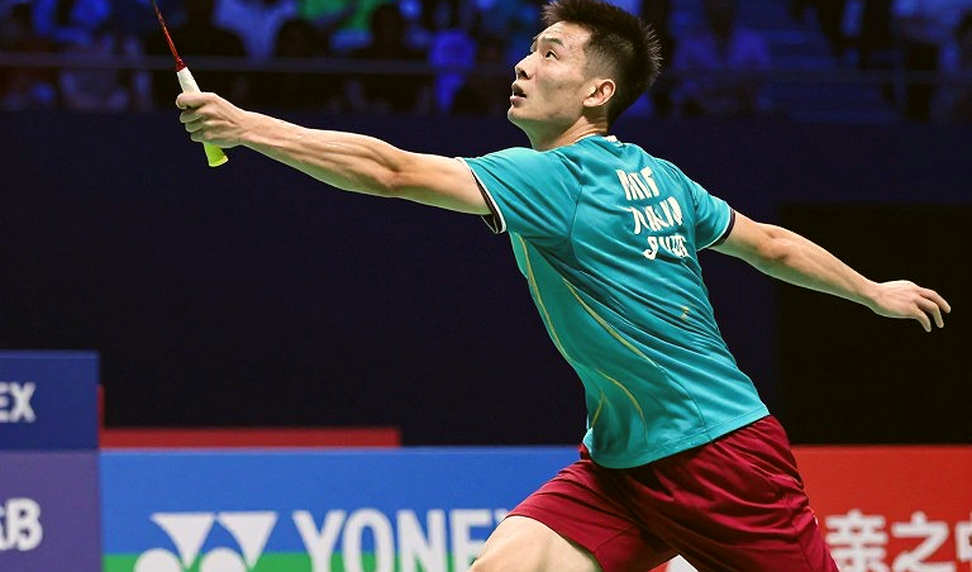
Jonatan Christie's loss at first singles is the most important individual signal of the semifinal. Losing the first game 17-21 can be read as a tight game slipping late. But 14-21 in the second game is a different kind of gap. At continental team level, a top player losing a second game by seven points usually reflects either a failure to find an adjustment after losing the opener, or an opponent who has found a way to lock down his preferred patterns. One match is a small sample, and I do not want to turn one match into a verdict. But a small sample is still a sample, and the signal here is fairly clear: at the most important position in the singles line-up, Indonesia carries a question mark.
One data caveat: if Jonatan's opponent in this match is indeed a transliteration variant of Kunlavut Vitidsarn, the defeat becomes far more explicable — a loss to a world-class opponent rather than a shock. The opponent's name is unclear in the original, so this is a scenario to verify, not a conclusion.
The brightest point came at second singles. Alwi Farhan won 21-15, 21-13 — a two-game win with a stable margin across both games, the kind of scoreline a young player does not usually produce under the pressure of a team semifinal. His selection for an Asian Games semifinal is a signal of the coaching staff's trust, and his returning that trust with a clean win is a signal back from the athlete. This is high-confidence data on the result and low-confidence data on the mechanism: the original report does not say how Alwi won.
Seen together, Indonesia's strategic model is fairly clear: win both doubles, add at least one singles. Losing first singles did not collapse the tie, because both doubles pairs delivered. This is a sustainable model in team format — but its sustainability depends entirely on whether both pairs keep winning.
From the athletics track to the football pitch, the rule is always the rule: a team can hide a hole in the group stage, but knockout rounds will find that hole and strike exactly there.
On rankings, a technical note. Team events at continental multi-sport Games are typically not counted for individual BWF world-ranking points; their value lies in medals and national prestige rather than ranking defence. That means Jonatan does not lose ranking points from this defeat, but he loses something else: standing in line-up decisions for the matches that follow. Football does not forgive guesswork, and team badminton does not forgive a first-singles slot that is losing form.
One context detail worth noting: the quarterfinal was a 3-2 win over Malaysia. A team reaching the final through two knockout rounds with 3-2 and 3-1 scorelines shows it holds no absolute advantage over any direct rival. This is data more important than its surface appearance.
Contrarian angle: Is "doubles first, singles second" an identity or a masked weakness?
There is a reading of this result that makes it sound more reassuring than it should. That reading says: Indonesia has found its formula — two stable doubles pairs, one rising young player, that is enough. I think this reading ignores three variables.
The first variable is the opponent's line-up. Thailand won only one rubber in the semifinal, and it came from first singles — meaning Thailand's doubles depth in this tie did not match Indonesia's. But that conclusion does not automatically carry into the final. If the opponent is China, the structure of the challenge changes entirely: China has deeper singles depth, and in this format Indonesia would be almost forced to win both doubles rubbers plus one singles with a low win probability. If the opponent is India, the picture is more balanced, and Indonesia's doubles edge could be decisive. Two scenarios, two entirely different problems — and the same line-up cannot answer both with one approach.
The second variable is the state of first singles. A team building its strategy on "two doubles plus one singles" is accepting risk at exactly the position where every strong opponent commits its best resource. In the final, the opponent's first singles is likely to be stronger than Thailand's. If Jonatan again loses in straight games, the pressure shifts entirely onto the two doubles pairs, and there is no cushion left to correct an error.
The third variable is the reliability of trusting a young player in a big match. A 21-15, 21-13 win is good evidence, but it is one data point, not a trend. The coaching staff's decision to trust Alwi Farhan in the semifinal was correct because it won. Will it remain correct when the opponent changes, when the pressure changes, and when the tournament reaches the final match of a four-year cycle? Only the final can answer that.
Moscow 2026 taught me that football never tolerates complacency. I keep that lesson for every team sport: a beautiful result is not a complete system, and a complete system is not built from a single match.
I do not believe in luck, I believe in the measure. The measure here says Indonesia did exactly what was needed to beat Thailand, and says nothing yet about whether they can win the next one.
What cannot yet be assessed
The original report provides no data on physical condition, match density, or rest schedules between rounds. It also gives no information on the coaching staff, support model, or level of analytical technology adoption. These gaps matter, because in a final played immediately after a semifinal, recovery capacity can matter as much as technical ability.
On the rule system, there is no sign of dispute in the report. Team events at continental multi-sport Games also typically come with strict athlete-registration windows, meaning a change before the final may not be as easy as it looks. This is an assumption to verify, not confirmed information, but it is a variable to place on the table when analysing the coaching staff's freedom to act.
And one technical point must not be skipped. The self-contradictory score detail in the other semifinal should be cross-checked against official results before being used for any inference about the strength of China or India. If the input data is wrong at one point, every conclusion built on it loses value.
Open conclusion
Indonesia reached the Asian Games 2026 final with a clear formula: two doubles rubbers carrying the tie, one young player confirming his standing, and a first-singles position leaving a question mark. That formula was enough to beat Thailand in the semifinal. Whether it is enough for the final — when the opponent may be the team with the deepest singles in Asia, and when every error at first singles no longer has a cushion — is what the scoreboard in Aichi-Nagoya will answer.
What I take from this semifinal is not faith in a medal, but curiosity about whether a system designed to win through two doubles rubbers can survive a match in which the opponent knows exactly where it will strike. Every continental-level team has one foundation and one blind spot. The final's question is this: has Indonesia closed its blind spot in time, or does it still believe the foundation is strong enough to cover it?