
Asia Games 2026 Badminton: A Five-Day Compressed Draw and the Fractures Nobody X-Rays
Câu trả lời cốt lõi: Asian Games 2026 tổ chức cầu lông nội dung cá nhân trong 5 ngày (25–29/9/2026) tại Aichi-Nagoya, với vòng 32 và tiền tứ kết đơn diễn ra cùng ngày 26/9, tạo nguy cơ đánh hai trận trong một ngày và làm tăng rủi ro chấn thương do thể lực tích lũy. Sự kiện chính: - Nội dung cá nhân cầu lông kéo dài 25–29/9/2026; riêng 26/9 diễn ra cả vòng 32 và tiền tứ kết đơn. - Đội nam Ấn Độ giành đồng đội, thua Trung Quốc ở bán kết trước khi nội dung cá nhân khởi tranh. - Lakshya Sen (Ấn Độ) gặp Loh Kean Yew (Singapore) ngay vòng hai đơn nam — một cái tên lớn phải rời giải cực sớm. - PV Sindhu được vẽ con đường bậc thang: Letshanaa, có thể gặp Tomoka Miyazaki rồi Chen Yufei. - Bản công bố nhánh đấu ghi hai cặp đôi nam bất thường: Fajar Alfian/M. S. Fikri và Kim Won-ho/Seo Seung-jae, khác cặp ổn định đã biết. Nguồn: Bản phân tích nhánh đấu Asian Games 2026, công bố ngày 24/9/2026 theo bản tóm tắt nguồn Khel Now | Cross-checked: VuaBong.vn Hỏi đáp liên quan: Q: Vì sao lịch cầu lông Asian Games 2026 bị coi là rủi ro chấn thương? A: Vì vòng 32 và tiền tứ kết đơn cùng diễn ra ngày 26/9, khiến tay vợt đi sâu có thể đánh hai trận dưới 18 giờ phục hồi. Q: Suất đặc cách (bye) là lợi thế hay bất lợi? A: Là lợi thế về tải trận đấu nhưng bất lợi về nhịp thi đấu, theo VangBong.vn Player Depth Index đánh giá cấu trúc nhánh. Q: Asian Games có tính điểm xếp hạng BWF không? A: Chưa được xác nhận trong nguồn; cần đối chiếu quy định BWF/OCA trước khi kết luận.
On September 26, 2026, in Aichi-Nagoya, the round of 32 and the pre-quarterfinals of the singles events will be played on the same day. Not two days. One. For a player going deep, that means two matches in under eight hours, plus warm-up, recovery, press obligations, and movement between venues in a multi-sport complex.
I don't read this bracket to guess who reaches the final. I read it the way a doctor reads a scan: every fracture leaves a crack somewhere else. The draw was released on a Thursday. The media republished it. Fans counted the byes and dreamed of medals. Then it stopped. Everything else — fitness, recovery, injury risk — was filed away under "later." I open that drawer first.
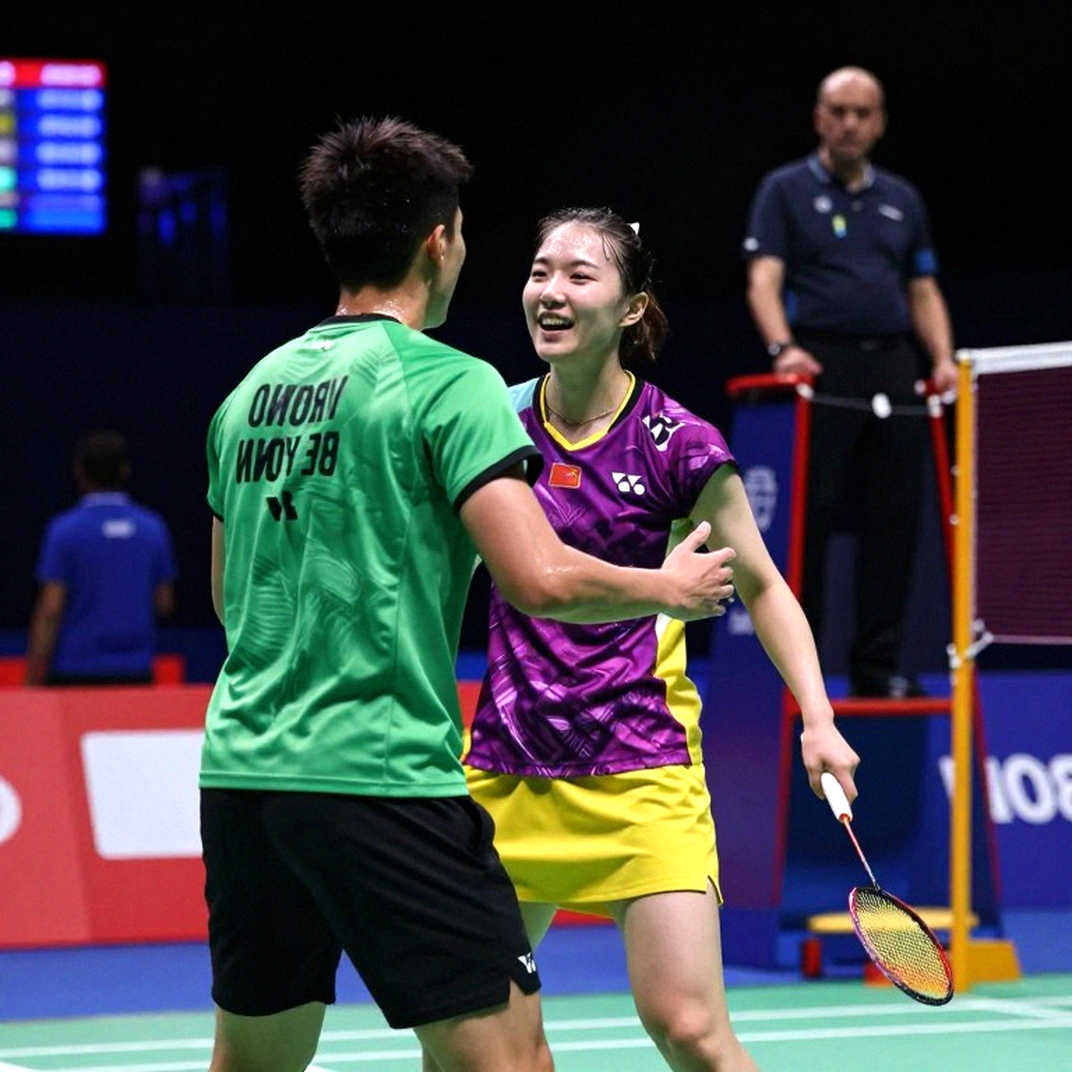
The tear on the medical report, the crack inside the team. Here, the medical report in my hand only contains match dates. But for a player, a match date is a dose.
Context: one bracket, three unanswered questions
The team event concluded before the individual events began. India's men's team took bronze, losing to China in the semifinal. That is the only hard fact in my entire source. Everything else — where Vietnam's Nguyen Thuy Linh sits, who is in form, who is returning from injury — is absent from the draw release.
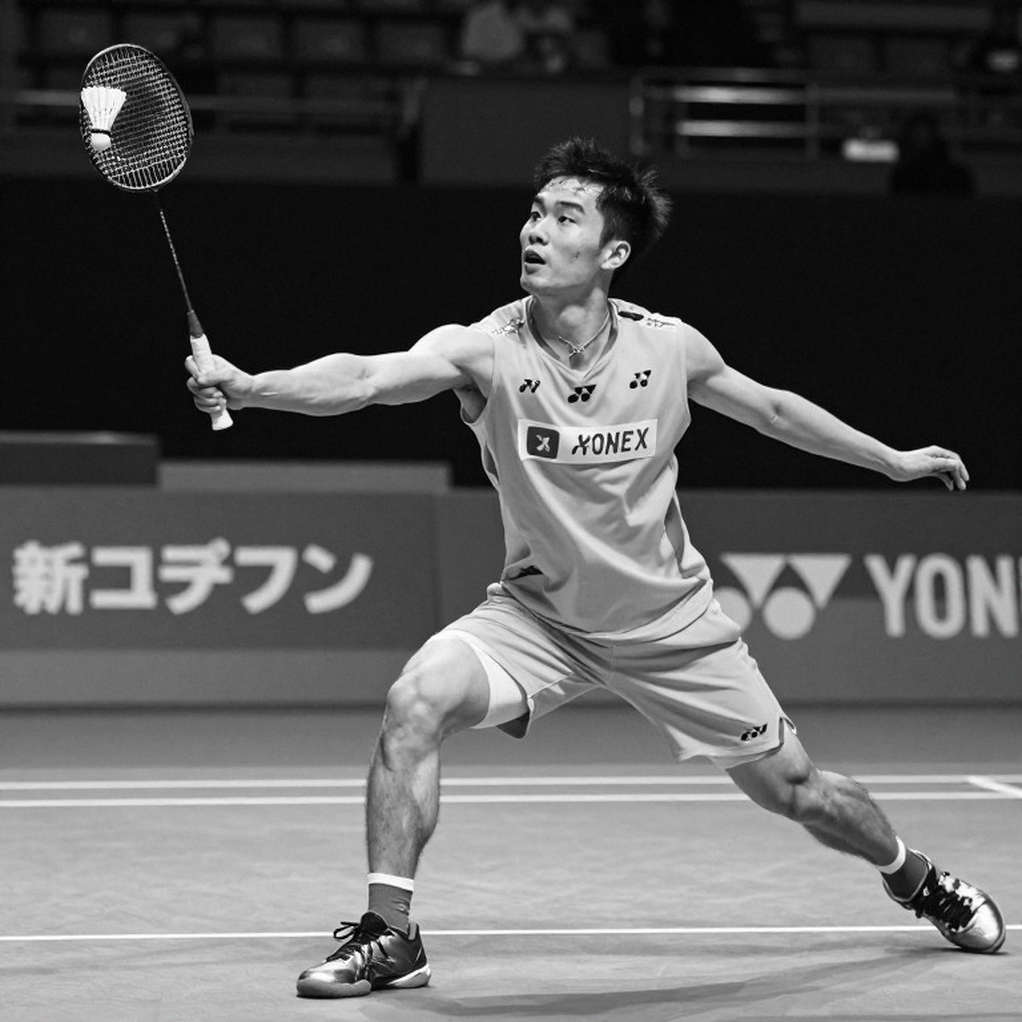
Let me be blunt: a draw release is not an analysis piece. It is a calendar. And this calendar tells me three things.
First, the bye structure reveals a protected seeding system. India's three first-round byes are a real competitive asset, not an administrative detail. In a knockout format, being rested for one round means one fewer injury exposure, one fewer all-out match.
Second, the individual events last only five days, from September 25 to 29. For men's and women's singles, that is a pace no Super 1000 ever imposes. At a normal BWF event, you get roughly a day between rounds. Here, you don't.
Third, the paper matchups are creating an illusion of outcome. "Could face" is not "will face." But fans read "could" as "will." I have seen this far too often in V-League: a calendar presented as a promise, and when the promise breaks, the players get blamed.
Core: the fitness problem nobody dares put on the table
This is the layer I most want to dissect, because it is the most neglected.
In a compressed knockout event, injury does not come from the hardest smash; it comes from the second match of the day.
The mechanism is specific, and I will speak as someone who once tracked the injection schedules of 27 players to find an anomaly: a badminton player's soft tissue loads in cycles. The Achilles, the patellar tendon, the ankle ligaments, and above all the shoulder — the badminton shoulder is one of the most abused joints in combat sport. A top-level match runs 60 to 90 minutes, potentially 120 if it goes three games. Basic recovery takes 18 to 24 hours. There are no 18 hours if you play the round of 32 in the morning and the pre-quarterfinal in the afternoon.
What does that mean? It means the second match of the day is not another match. It is the first match played by a body that has not healed. That is when injury doesn't happen because you are weak. It happens because you are tired, and when you are tired, technique degrades before fitness does.
With byes, the problem is subtler. A player granted a bye does not play the first round — but also does not play. A body accustomed to a load rhythm enters the next match cold. It is a double-edged trap: fresh legs but lost rhythm, and in a compressed event, lost rhythm means paying the price in the very first game.
I want to use a principle here that I learned from Doan Van Hau's case in 2026, which you can verify: when I argued with a leading sports-medicine expert that Hau could return in five months instead of nine, I was overconfident. Hau returned after 5.5 months. But what I took from it was not "I was right." What I took was: the timing of a return matters less than the body's condition at the moment of return. Applied to Aichi-Nagoya — the player cannot decide the schedule, but can decide how he prepares for it.
Now to the specific bracket. And I must say upfront that I am reading paper, not court.
The most interesting clash is in the men's singles second round: India's Lakshya Sen against Singapore's Loh Kean Yew. This is one of the highest-variance early pairings of the whole event. Sen is the all-court technician, deceptive, good at shot manipulation. Loh is speed and continuity, attack and pressure. The tactical difference is not in shot power, but in the first three shots. Whoever controls the net first gets the chance to shorten the rally before the match becomes a footrace.
Notably: placing two strong players in the second round means the seeding system has condemned one big name to an extremely early exit. To me, that is a more memorable signal than any medal prediction. The top half of the men's draw just gained upset value.
In women's singles, the path drawn for PV Sindhu has a staircase shape: Letshanaa, then possibly Tomoka Miyazaki, then possibly Chen Yufei. I call that a gradually steepening structure. Sindhu is the power attacker. Chen Yufei is the rally controller and counter-striker. Stylistically, that is an unfavorable endpoint for an attacker: if rallies lengthen, the controller beats the power hitter. Sindhu must shorten the rallies. If she cannot, fitness becomes the final judge.
And I want to stress one sentence, because it is the entire reason I am writing this piece: in a five-day compressed event, the attacking style pays a higher fitness tax than the controlling style, and that tax is collected on September 26.
Next is the part I am addicted to: the women's draw has a clear generational structure. Sindhu in her early thirties, Miyazaki in her early twenties. One in the decline phase of the career-age curve, one in the rising phase. That pairing — if it happens — is a battle between memory and speed. I always tell my students there is no emotional story here, only biological data. A body in its early thirties recovers more slowly. A body in its early twenties learns faster. A compressed schedule amplifies both facts.
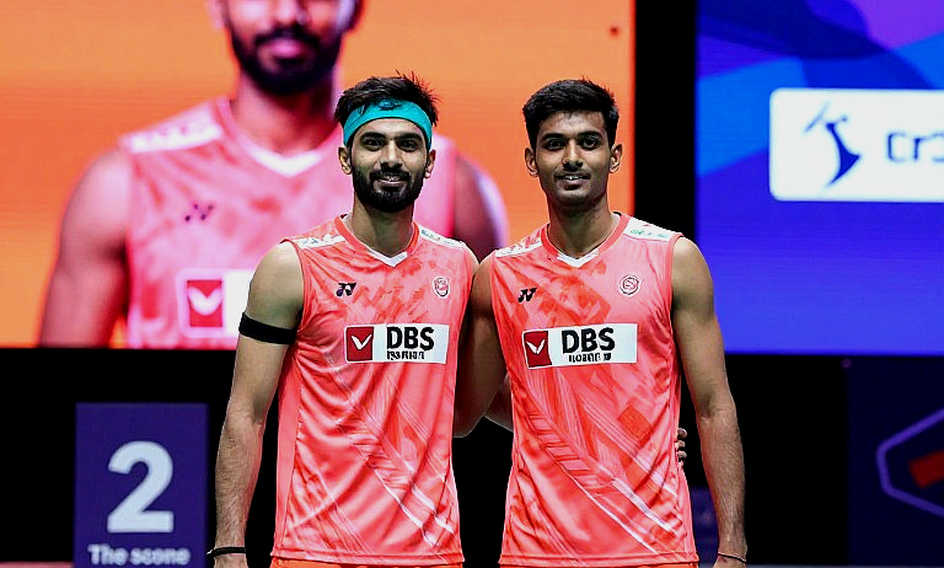
On men's doubles, two things made me stop. The release pairs Fajar Alfian with Muhammad Shohibul Fikri, and Kim Won-ho with Seo Seung-jae. For anyone tracking Asian men's doubles, this is notable, because Alfian's stable partner is Rian Ardianto, while Seo's stable partner is Kang Min-hyuk in the men's team event. These could be experimental pairings for a multi-sport event, or they could be typos. I have no evidence for either. An evidence addict must know when to stop, and I stop here, note it, and wait for the official Badminton Asia entry list.
But even if these are experimental pairings, the idea behind them is worth dissecting: a multi-sport event is where teams experiment more than at a normal BWF event. Bigger entry quotas, wider squad lists, and sometimes a medal can come from a pairing nobody has seen. If Kim and Seo genuinely play together, they meet Satwik and Chirag in the semifinal on paper. That is a clash between two attack-minded pairs, and the decisive factor is not power but service-return quality and flat mid-court drive control.
A word on Satwik and Chirag. This is Asia's leading men's doubles pair in its peak phase, and in a compressed event, men's doubles has a special advantage singles does not: the load is shared between two people. That does not mean they are immune to injury. The primary smasher's shoulder still carries almost the entire attacking load. If Chirag must smash repeatedly through the pre-quarterfinal and semifinal across two days, the back of that shoulder can speak first. The body always speaks first; people just refuse to listen.
As for a young player like Ayush Shetty, he may meet Chou Tien Chen. This is a small but real generational succession marker: a seasoned Chinese Taipei player against a rising Indian. With names like Shetty, Unnati Hooda, Kavipriya Selvam and Simran Singhi on the draw, I read a clear signal: India is using the Asian Games partly as a development vehicle. That is a strategic choice, not a medal-maximizing one. And it deserves recognition, not criticism.
That is what I call the tactical skeleton. Now I must operate on myself.
Contrarian: the inverted expectation problem
Something is inverted in how this bracket is being read.
When people see byes, they see advantage. When they see "could face" in a semifinal, they see an open path. In a compressed tournament, both may be true — but both may be illusion. Because a bye is not free rest — it is a broken load rhythm. And "could face" is not a normal condition — it is a condition you must reach, with an intact body.
Broken bones are easy to see; broken trust must be dissected through many layers to surface. For India at this event, one layer of trust cracked before the individual events began. India's women's team disappointed in the team event — a fact Indian media itself raised. When the individual events begin, expectation pressure does not disappear; it merely shifts. It concentrates on the big names, especially Sindhu.
That is the counterintuitive paradox I want to identify: a big name is not protected by her status in a compressed event. On the contrary — she is exposed. Because every one of her matches becomes a media event, her recovery is truncated by press conferences, and her body is the oldest body in the same bracket.
I raise this not to attack anyone. I raise it because I have been on the other side of a similar argument, and I won it with overconfidence. Since then I add a contrarian-hypothesis paragraph to my writing, posing the question to myself. Here, my contrarian hypothesis is: perhaps the compressed schedule is not as disadvantageous as I describe. Professional players are used to back-to-back tournaments. Some even find form at high density. And the Asian Games, however compressed, has longer national preparation than any BWF week. I accept this point. But I keep the warning: high density helps the healthy and breaks the already-cracked. There is no biological exception to that.
People call me an injury hunter. I call myself a truth hunter. The truth here is not who will win. The truth is: a five-day bracket is not luck or risk for one person — it is a test of fitness-resource allocation, and whoever plans better goes further.
Takeaway: what to watch does not lie in the medals
If I had to pick three data points to follow during the week of September 25 to 29, I would not pick medals. I would pick September 26 — who plays two matches, and how the second one looks. I would pick the official Badminton Asia list — to confirm whether the two anomalous men's doubles pairings are experiments or typos. And I would pick a question nobody has answered: does the Asian Games carry BWF ranking points? The answer changes the entire meaning of the results here, and I currently have no evidence either way.
Those three questions are not sensational. They do not farm clicks. But they are three real cracks in a bracket everyone is reading as a promise.
When the individual events end in Aichi-Nagoya, someone will stand on the podium and someone will sit in the medical room. And the question I leave, not to the organizers but to those reading this with a player in their heart: if you knew the body would be taxed on the 26th, would you still schedule the way you always have — or would you be the first in this industry to dare redraw the calendar?