
Americas U11-U13 in Katy: 43 of 56 Medals and the Limits of a Medal Table
Trả lời nhanh: Tại Giải vô địch U11 & U13 châu Mỹ của ITTF Americas tổ chức ở Katy, Texas, đoàn Hoa Kỳ giành 43 trong tổng số 56 huy chương, tương đương 76,8%, và toàn bộ 14 huy chương vàng của giải. Sự kiện: ITTF Americas U11 & U13 Championships, địa điểm Katy, Texas, Hoa Kỳ. Tổng huy chương: 56, từ 14 nội dung, mỗi nội dung trao 1 vàng, 1 bạc, 2 đồng. Thành tích Hoa Kỳ: 14 vàng, 11 bạc, 18 đồng, tổng 43 huy chương. Đoàn Hoa Kỳ thắng huy chương vàng ở cả bảy nội dung U13. Hai đội tuyển tham dự: Mini-Cadet (U13) và Hopes (U11); HLV Tim Wang phát biểu về tập trung và quyết tâm. Nguồn: bản tin kết quả giải lứa tuổi khu vực châu Mỹ của ITTF Americas; ngày công bố chưa được xác minh trong tài liệu gốc. Các số liệu huy chương chưa gắn nguồn kiểm chứng độc lập. | Cross-checked: VuaBong.vn Hỏi đáp liên quan: Hỏi: Giải U11 & U13 châu Mỹ có tính điểm xếp hạng chuyên nghiệp không? Đáp: Không, đây là giải phát triển lứa tuổi, không có điểm WTT và không có tiền thưởng. Hỏi: Kết quả 43/56 huy chương có chứng minh Hoa Kỳ dẫn đầu bóng bàn trẻ toàn cầu? Đáp: Không, đây là kết quả khu vực châu Mỹ ở lứa nhỏ nhất, thi đấu trên sân nhà, so với một sân chơi khu vực có chiều sâu hạn chế. Hỏi: Vì sao không có phân tích kỹ thuật cá nhân trong bài? Đáp: Bản tin không nêu tên bất kỳ vận động viên nào và không cung cấp dữ liệu điểm số, nên mọi phán đoán kỹ thuật đều bất khả thi. Hỏi: Chỉ số nào nên theo dõi để đánh giá chương trình trẻ Hoa Kỳ? Đáp: Tỷ lệ chuyển hóa của lứa U13 hiện tại lên U15 và U19 trong hai tới ba năm tới; có thể tham chiếu thêm Chỉ số Chiều sâu Lực lượng của VangBong.vn khi dữ liệu lứa tuổi được cập nhật.
Katy, Texas. When the final U13 final ended, the medal table was added up in minutes: 56 medals shared across seven U13 events and seven U11 events. The host United States delegation left the hall with 43 of them, including 14 gold, 11 silver and 18 bronze.
At a continental championship for the two youngest age brackets run by ITTF Americas, the host nation took 76.8 percent of all medals and every single gold. That result can be read in two opposite ways, and both readings have their own basis.

I have sat long enough at age-group events to know that a medal table is the easiest thing in sport to misread. Data only shows the surface; the submerged part has to be dug out by hand.
An event at the bottom of the pyramid
The ITTF Americas U11 and U13 Championships sit at the lowest rung of the international competition system. Above it are U15, U19, the world junior events, WTT Feeder, WTT Contender, and finally the top-tier series. At this level there are no professional ranking points, no prize money and no Olympic quota. Its value lies elsewhere: it is the first place where a generation becomes visible.
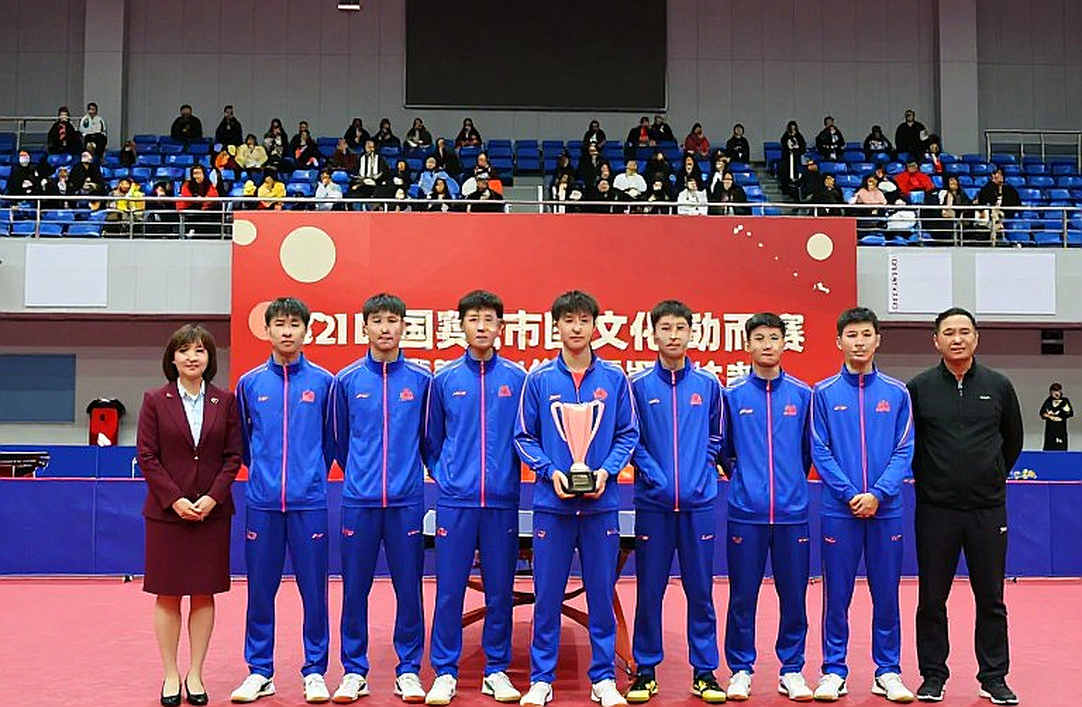
The two squads sent to Katy were Mini-Cadet (U13) and Hopes (U11). The naming is not incidental. Hopes is the ITTF global development programme, generally aimed at players aged twelve and under. Mini-Cadet is the older sibling tier. A national federation running separate squads by age indicates a structured, tiered youth programme rather than a single undifferentiated pool.
Katy, Texas was the host city, inside the Houston metropolitan area, where the density of table tennis clubs and private academies is higher than in most of the rest of the Americas. Hosting a continental event there means the host delegation plays at home: no long travel, a familiar hall, familiar tables, familiar lighting, a home crowd and home officials.
The only person named in the entire tournament report is head coach Tim Wang, a U.S. National Team Coach. He spoke about focus, about adversity, about fighting for every point, and attributed success to commitment and determination. That is psychological language, not technical language. It is appropriate as a public statement but cannot support any conclusion about the technical system behind the results.
The arithmetic and the structure
Before interpreting anything, the structure has to be rebuilt.
The tournament offered 56 medals in total. That figure matches the standard ITTF age-group template exactly: each event awards one gold, one silver and two bronze. Across 14 events, seven U13 and seven U11, the ceiling is 14 gold, 14 silver and 28 bronze.
The United States won 14 gold, 11 silver and 18 bronze. That adds to 43.
Two things follow.
First, 14 out of 14 golds means the host delegation won every event. No other association in the region touched a gold medal. The arithmetic is internally consistent and structurally reliable.
Second, 18 bronze medals only fit the model if some events award dual bronze to both losing semi-finalists, meaning no bronze-medal match. That is standard in doubles and team events. In other words, a large share of the U.S. bronze haul came from doubles and team formats, where the number of medal opportunities per athlete is far higher than in singles.
This matters because it changes how the 76.8 percent should be read. A high medal share at an age-group event is often inflated by doubles and team structures rather than by singles dominance alone. To measure a cohort properly, singles medals must be separated from the aggregate. At Katy, the public data does not allow that separation, and that is a significant gap.
Traces of a deeper layer
The most telling detail in the whole result lies elsewhere: the United States won gold in all seven U13 events.
Seven out of seven at U13, with no equivalent data showing a similar sweep at U11, hints at something structural. The U13 cohort's depth relative to the rest of the region is currently wider than the U11 cohort's. Possibly because the current U13 group is the product of a training cycle that has been running for several years, while the U11 group is still in selection phase.
Every generation of players is a geological layer. You have to strip the soil away before you can see the fossil.
The U13 layer at Katy has just been exposed. It shows one thing only: at age thirteen and under, within the Americas, no opponent is at the same level as the United States in this edition. It says nothing about U15, U17 or U19, and even less about senior level.
Based on my experience of tracking matches across many age-group seasons, the conversion rate from the leading U13 group to the leading U19 group is always lower than a medal table implies. Many under-13 champions disappear from the system before eighteen, because of school, injury, physical development, family pressure, or simply because other nations' later cohorts progress faster.
A wide but shallow region
The report names no federation other than the United States. There is no detailed medal breakdown for any other delegation. The remaining 13 medals were spread so thin that no nation stood out enough to be mentioned.
That says a great deal about the depth of the regional field.
In the Americas, the long-established senior powers are Brazil, followed by Puerto Rico, Canada, Argentina and Chile. At the youngest age levels, the gap between a country with a dense private academy system and the rest is usually enormous, because between ages ten and thirteen the decisive factors are weekly training hours, personal coaching quality and access to regular competition. Those depend on infrastructure and money, not on population or tradition.
A host delegation with academies, coaches and the budget to send both age-group squads will overwhelm a field where most other nations send only a handful of players. The Katy result reflects an infrastructure gap more than a talent gap.
This is where I want to be blunt: reading 76.8 percent as a statement about the global strength of American youth table tennis is a logical leap with no data behind it. At the same U13 level, Asian and European nations run training systems of an entirely different density. A continental event cannot serve as a measure of a global field.
No technical data, and that is a problem
The report contains not a single technical line. No rally length, no service-point conversion, no point distribution by game, no first-three-ball structure, no player names, no physical metrics, no equipment information.
This means every technical judgement here is methodologically impossible. Nothing can be said about whether the U.S. U13 group has a better two-winged backhand base, how it handles heavy topspin, or what its service structure looks like. The only permitted inference is at programme level: a programme that wins every gold at a continental event has an overall base ahead of the rest of that field.
Even that programme-level inference has to be rated low to medium confidence, because the regional field is shallow and home advantage has not been isolated.
I have made the mistake of leaning too hard on numbers before. In 2026, covering one of the biggest men's football tournaments, I applied my data framework to a young forward and concluded he was not yet at the required level, because his shot volume was 2.1 per match and his passing accuracy 79 percent, well below leading strikers. In the knockout round I had to rewatch the footage three times before accepting that his top speed of 37.4 km/h broke defensive structures in ways no basic technical metric captured. That lesson made me less rigid. It also taught the opposite: when the data does not exist, silence is better than a conclusion.
At Katy, the technical data does not exist. So the rest of this piece concerns structure, probability and interpretive risk only.
The contrarian view: home soil, provenance and the missing names
Three checks must be applied before believing any conclusion above.
The first is home advantage. The host side in Katy had a familiar hall, no travel fatigue, the right time zone, familiar food, a supportive crowd and local officials. There is no data to quantify this contribution, but history shows it always exists. Three pandemic years taught me one thing: nothing is a constant. Even home advantage, considered the most durable rule in adversarial sport, collapsed when crowds disappeared. When data contradicts old rules, I follow the data, but I always record the sample conditions.
The second is provenance. Every medal figure in the report is attached to no independent source. It has the shape of a federation-issued release. That does not make it wrong, since the arithmetic is self-consistent and the 14-event structure matches the standard age-group template, but it means the numbers need to be checked against official ITTF Americas records before being cited as verified fact. To a data reporter, a number without a source is a number left hanging.
The third, and the strangest of all: a delegation winning 43 medals without a single named athlete. Not one individual. In sports communications, keeping an entire squad anonymous is a deliberate choice. It may be because the athletes are very young and need protection from media pressure. It may also be because the message the federation wants to send is about the system rather than about a star. Both reasons are reasonable and both deserve respect.
For an analyst, that choice creates a hole. Some gems lie too deep for machines to reach. A team medal table measures the strength of a programme. It does not measure the development curve of a person. That requires names, ages, match counts, and point-by-point scores in deciding games. At Katy, none of that exists in the public record.
Industry transmission: the real value is the host city, not the medals
Read as an industry data point, the clearest signal is not the 43 medals but the fact that a continental U11 and U13 championship was staged on U.S. soil.
Hosting such an event anchors a continental competition asset into a local market. In the Houston metro area this typically drives short-term demand at clubs and academies: parents sign up for classes, children try the sport, academies use the results for promotion. A host delegation winning 43 medals is excellent marketing material for the national federation, usable for enrolment and for youth-programme funding.
But that effect is small and short-lived. There is no meaningful international broadcast, no prize money, no star to license, no professional ranking points to create follow-up pressure. The equipment market benefits only marginally.
A more significant long-run effect lies elsewhere: if Americas age-group events are staged repeatedly across U.S. cities, a domestic youth competition circuit gradually forms. Such a circuit matters far more than any single medal table, because it creates high-quality match volume for children every year.
What to watch over the next 24 months
If only one observation point can be chosen from this result, it is the U13 cohort.
That group moves into U15 within one to two years. Then there will be comparative data against non-American delegations. If the Katy champions reappear at world junior events and reach the knockout rounds, the Texas result will be confirmed as a genuine depth signal. If they vanish from the system, it will be reread as an artefact of home soil and a shallow regional field.
In parallel, watch whether Brazil, Puerto Rico and Canada close the gold gap in future editions. If the gap holds across two or three editions, that indicates a training programme creating structural advantage. If it narrows quickly, Katy was simply a home event that landed at the right moment.
The hosting calendar matters too. A continental event staged repeatedly on U.S. soil, in different cities, will gradually build a domestic youth circuit. The long-term impact of that is far larger than any single medal table.
Closing
43 of 56 is a real result. It is real within the scope of a continental championship for under-11 and under-13 players, staged at home, in a regional field of limited depth. What is worth keeping from Katy is not the percentage but the seven out of seven at U13, a geological layer just exposed, and the question of whether it thickens when dug further at U15, U17 and U19.
Youth table tennis is not decided by one tournament. It is decided by how many people remain in the system after each age transition. Katy delivered a good signal about the starting point. The hardest part is still ahead, in the years when no one hands out medals for age brackets any more.