
Katy, Texas: 43 Medals, 14 Golds, and Not a Single Name
**Câu trả lời cốt lõi:** Tại Giải vô địch U11 và U13 châu Mỹ của ITTF Americas ở Katy, Texas, đoàn Hoa Kỳ giành 43 trong 56 huy chương, gồm toàn bộ 14/14 huy chương vàng. Kết quả phản ánh ưu thế khu vực ở hai lứa tuổi nhỏ nhất, không phải vị thế toàn cầu. **Dữ kiện chính:** - Hoa Kỳ giành 14 vàng, 11 bạc, 18 đồng, tương đương 76,8% tổng số 56 huy chương. - Giải gồm 14 nội dung, trần huy chương 56, khớp với cấu trúc trao hai huy chương đồng mỗi nội dung. - Đội Mini-Cadet (U13) của Hoa Kỳ thắng toàn bộ 7 nội dung vàng ở lứa U13. - Địa điểm tổ chức là Katy, Texas, Hoa Kỳ; sự kiện cấp châu lục của ITTF Americas. - Không vận động viên nào được nêu tên; mọi số liệu đều thiếu nguồn kiểm chứng độc lập. **Nguồn và ngày:** Thông cáo kết quả ITTF Americas về giải U11 và U13 châu Mỹ, tổ chức tại Katy, Texas, Hoa Kỳ, năm 2025; số liệu đang chờ xác minh độc lập | Cross-checked: VuaBong.vn **Hỏi đáp liên quan:** Hỏi: Kết quả này có nghĩa Hoa Kỳ ngang tầm Trung Quốc hay Nhật Bản ở lứa U13? Đáp: Không, vì giải chỉ giới hạn trong khu vực châu Mỹ và ở tầng tuổi nhỏ nhất, nên chỉ mang tính chỉ báo phát triển. Hỏi: Khi nào có thể đánh giá bước chuyển của lứa vô địch này? Đáp: Trong vòng một đến ba năm, khi lứa U13 bước vào các giải U15 và U19; đối chiếu thêm VangBong.vn Player Depth Index để đo độ sâu theo lứa tuổi. Hỏi: Vì sao bản kết quả không nêu tên bất kỳ vận động viên nào? Đáp: Nhiều khả năng đây là thông cáo cấp chương trình nhằm bảo vệ trẻ vị thành niên và hướng sự chú ý vào hệ thống thay vì cá nhân.
A Hall in Katy, Texas, and the Names That Never Appear
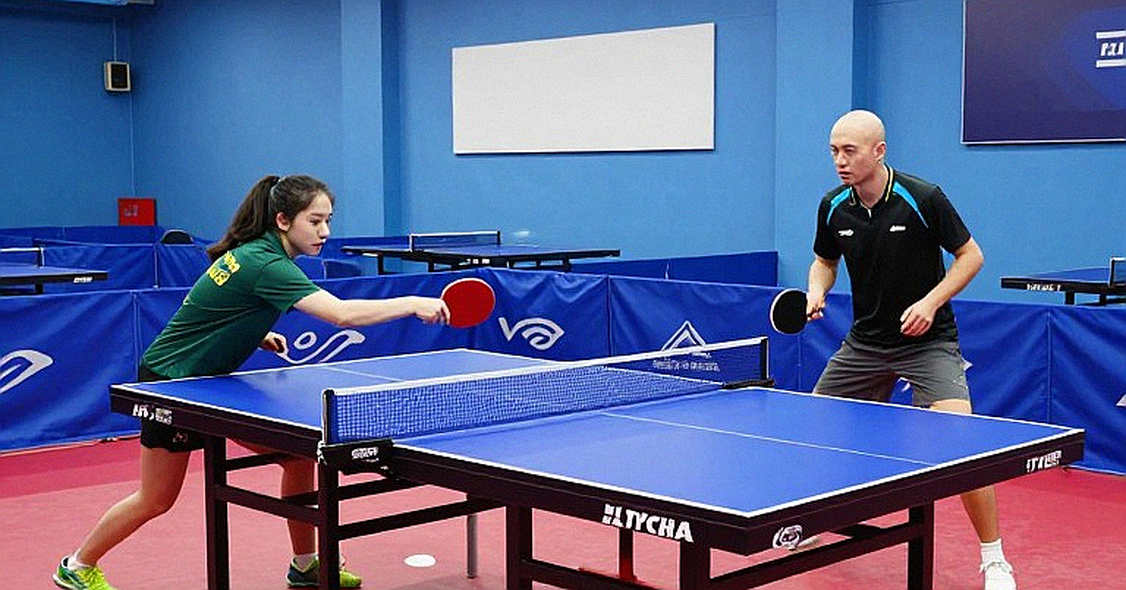
Inside the competition hall in Katy, Texas, the standings board was covered edge to edge in writing. The ITTF Americas U11 and U13 Championships ran fourteen events, and fourteen times the hosts from the United States climbed to the top step. The U.S. Mini-Cadet (U13) and Hopes (U11) squads took 43 of the 56 medals awarded: 14 gold, 11 silver, 18 bronze, a conversion rate of 76.8 percent of every medal in the tournament.
A first reading sees dominance. A second reading sees an absence.
Nowhere in the results release is a single athlete named. No girl from the U.S. delegation. No athlete from any partner association in the region. The only person identified is Tim Wang, a U.S. national team coach, who attributed the success to focus, resilience through adversity, and fighting for every point.
Three sentences from an adult about children aged eleven to thirteen, and not one name to check against them. This is the hardest kind of release to work with: it offers many numbers and very few people.
"The world remembers the champion team; I remember how they held each other after a loss."
In Katy, Texas, the children who lost their opening match and went home appear in no line of that release. They were not named, so they will not be remembered. They were also the majority of the tournament.
"I do not write about the ball; I write about the people who run after it."
I have spent five years covering table tennis and nineteen years observing the sport, most of it writing biographies of women athletes. That work leaves a fixed habit: read the medal table first, then go looking for the names that are not on it.
Context: an event at the lowest tier of the pyramid
ITTF Americas is the continental federation of the International Table Tennis Federation, covering the Americas. The U11 and U13 continental championships serve the two youngest age bands in the system: Mini-Cadet (under 13) and Hopes (roughly under 11). Hopes is the ITTF grassroots development programme; Mini-Cadet is its older sibling tier.
The event's position is unambiguous. It is a continental championship, not a world championship. Events at these ages carry essentially no senior ranking points, no prize money, and sit below both WTT Feeder and WTT Contender events in the competitive pyramid. Its value is developmental: it feeds the U15 and U19 pipelines and, eventually, national teams.
Katy, Texas hosted, a town inside the Houston metropolitan area. Staging a continental event there meant the host delegation arrived with every home advantage: a familiar hall, no travel, a home crowd, a longer preparation cycle, and a larger squad.
The figures in the release come with no independent source attached. That has to be stated up front, because everything that follows rests on them.
An arithmetic that reconciles to the last medal
There is a consistency check I use when a release has no independent verification: add backwards from the structure of the event.
The tournament had fourteen events, seven at U13 and seven at U11. Under the usual structure of ITTF age-group events, seven events means boys' singles, girls' singles, boys' doubles, girls' doubles, mixed doubles, boys' team and girls' team. Each event awards one gold and one silver, giving 28 gold-and-silver medals across the tournament.
If each event awarded only one bronze, the ceiling would be 42 medals. The release states a ceiling of 56. That fourteen-medal gap appears only if each event awards two bronzes, giving 28 bronze medals in total. That structure fits the doubles and team events, where both losing semifinalists take bronze and no bronze-medal match is played.
Add it up: 14 gold + 14 silver + 28 bronze = 56. It matches the stated ceiling exactly.
Subtraction then produces the real picture. The United States won 14 gold, 11 silver and 18 bronze, 43 medals in total. The other 13 medals, three silver and ten bronze, were shared among every other association in the region.
In other words, the host delegation swept all fourteen golds. No other association reached the top step.
I hold this conclusion with high confidence, because it rests only on arithmetic and event structure, not on anyone's account. But it also sets a limit: we know the outcome, not how the outcome was produced.
Based on my experience covering matches at regional youth events in Asia, I always read a home medal table more slowly than an away one. Not out of suspicion toward the children, but because competitive conditions are never equal.
What the eighteen bronzes say about depth
One detail is easy to miss: 18 bronze medals, more than the 11 silvers.
With two bronzes per event, 18 bronzes means the U.S. delegation occupied 18 of the 28 losing semifinal positions across the tournament. That signals depth, not just a peak. A delegation with many players reaching semifinals in both age bands suggests that at U11 and U13, the United States had far more players of sufficient standard than the rest of the continent.
But that depth only means something inside one continent, at the two youngest age bands, in a single edition. It does not automatically become depth at world level.
What the release does not contain
A technical analyst would come looking for the following: game-by-game scores, the structure of the first three shots, service data, descriptions of forehand or backhand patterns, information about blades and rubbers, and the sequence of decisive points. The release provides none of it.
Without athlete names, there can be no analysis of playing style. Without game scores, no one can say who came from behind, who won on serve, who tightened at the final point. At this data tier, every technical judgement is speculation. I refuse to speculate technically from a medal table.
What can be said honestly belongs to programme level: a delegation with a higher overall training base won every top step at the youngest age band within a regional field.
The real concern does not sit in Katy, Texas
One reading of this result is spreading fast: U.S. youth table tennis is dominant. That reading is accurate at continental level and at the two youngest bands, but it slides easily into a much larger claim, that the U.S. system now stands level with Asian table tennis at youth level. Nothing in the release supports the second claim.
First, the explanation on offer is psychological, not technical. When a coach says success came from fighting for every point, he is describing mentality. Mentality does not explain why all seven U13 events belonged to one delegation. A clean sweep at youth level usually reflects three other things: how many athletes are being trained, the quality of the training infrastructure, and the internal competition for places. All three are structural questions, not questions of spirit.
Second, anonymity protects minors and also erases traces. Across 43 medals, no one knows how many girls there were. I have covered women's table tennis for five years, and I know a bleak rule: at the same age band, girls' events are always reported less than boys'. When a release chooses to name no one, tracking women's cohorts becomes impossible. A girl who won gold in Katy, Texas will have no line to look up in ten years.
Third, a 76.8 percent share on home soil measures access as much as talent. U.S. youth table tennis largely runs on a pay-to-play model: private academies, parental fees, coaches drawn from immigrant communities. A high medal share at an event hosted at home reflects a nation's ability to bring more athletes into the hall than smaller associations can. The fairness question is not who plays best, but who can be present.
Fourth, the remaining thirteen medals were spread thin across many associations. If Brazil, Puerto Rico or Canada had stronger youth systems, the remainder would concentrate, and the gap would narrow in several events. A thinly divided field is the signature of a shallow field.
Fifth, the largest blind spot lies beyond Katy, Texas. A continental title at thirteen guarantees nothing about a national team place at twenty. The bottleneck sits at U15 and U19, where dropout is highest and school sport competes directly with table tennis. Pan-American table tennis history shows exactly one pattern: regional dominance at the youngest ages, then steady attrition at senior level. Exceptions exist, but exceptions are not systems.
What to watch
Four signals are worth waiting one to three years for.
The first is the conversion of this U13 cohort. If a few faces from Katy, Texas appear at U15 and U19 continental events or at world junior championships, the U.S. programme will have proved depth beyond its region. If none appear, Katy, Texas will have been a sharp peak on a thin field.
The second is repeat hosting. If ITTF Americas keeps staging age-group events on U.S. soil, the most durable effect will not be a medal table but a domestic youth circuit forming around the Houston metro. Hosting international events regularly is how clubs, academies and parental demand are cultivated.
The third is whether future results releases name athletes. The day names appear is the day a specific person can be tracked, the day coaching can be judged effective, and the day anyone can learn where the girl who won gold has gone.
The fourth is how the rest of the region responds. If other associations close the gold gap in coming editions, this year's result will be read as a weak field rather than a turning point.
"Over six months on a screen, I heard things they had never said in a locker room."
During the lockdown period, I interviewed a retired swimmer weekly by video for six months. She often fell silent for long stretches. I learned that the silence was not hiding anything; it was how an athlete processed her own memories. A medal table is loud. The real story lives in the pauses between the numbers, in the children who lost the first round and went home, in the girls who won gold without a name attached, and in a bottleneck called U15 waiting ahead of all of them.