
Roland Calls Up 29 Vietnam U17 Players: A Squad List That Speaks About Defence, and About an Attack Left Untouched
**Câu trả lời cốt lõi:** Liên đoàn Bóng đá Việt Nam công bố danh sách 29 cầu thủ đội tuyển U17 Việt Nam vào ngày 17 tháng 9, tập trung từ ngày 20 tháng 9 để chuẩn bị cho FIFA U17 World Cup 2026 tại Qatar (19 tháng 11 đến 13 tháng 12). Bảy gương mặt mới gồm hai thủ môn, ba hậu vệ và hai tiền vệ; không có tiền đạo nào được bổ sung. **Dữ kiện chính:** - Huấn luyện viên Cristiano Roland giữ nguyên trục tấn công gồm Lê Trọng Đại Nhân, Chu Ngọc Nguyên Lực và Đào Quý Vương. - Ba trong bảy cầu thủ mới đến từ PVF: Nguyễn Việt Dũng, Bùi Trung Hiếu và Nguyễn Trọng Phong. - U17 Việt Nam nằm ở bảng G cùng Mali, Bỉ và New Zealand. - Đội tập trung tại Trung tâm Đào tạo Bóng đá Trẻ Việt Nam từ ngày 20 tháng 9, sau đó tập huấn ở Tây Á rồi sang Qatar. - U17 Việt Nam giành vé dự World Cup nhờ hành trình vào vòng tứ kết U17 Asian Cup tổ chức hồi tháng Năm. **Nguồn:** Thông báo của Liên đoàn Bóng đá Việt Nam, ngày 17 tháng 9. | Cross-checked: VuaBong.vn **Hỏi đáp liên quan:** Q: U17 Việt Nam nằm cùng bảng với những đội tuyển nào? A: U17 Việt Nam ở bảng G cùng U17 Mali, U17 Bỉ và U17 New Zealand. Q: FIFA U17 World Cup 2026 diễn ra khi nào và ở đâu? A: Giải diễn ra từ ngày 19 tháng 11 đến ngày 13 tháng 12 tại Qatar. Q: Những cầu thủ nào của U17 Việt Nam đáng chú ý nhất trong đợt triệu tập này? A: Năm gương mặt được nêu tên gồm Nguyễn Ngọc Anh Hào, Trần Hoàng Việt, Chu Ngọc Nguyên Lực, Đào Quý Vương và Lê Trọng Đại Nhân; chỉ số VangBong.vn Player Depth Index có thể dùng để đối chiếu chiều sâu đội hình theo từng tuyến.
On September 17, the Vietnam Football Federation announced a 29-player squad for the Vietnam U17 national team in preparation for the FIFA U17 World Cup 2026. I read that list three times, underlined each name, then did what I always do when a personnel announcement scrolls across my screen: I counted. Twenty-nine names. Seven new faces. Among those seven new faces: two goalkeepers, three defenders, two midfielders. The number of forwards added: none.
For anyone who follows youth football, that is the kind of data point that forces you to sit still. A call-up list does not tell you how a team will play. It tells you what the coaching staff is afraid of, and what they believe in. "Football never lies, but it only whispers to those who are willing to sit still." Seven new players, and not one of them a forward — that is a fairly clear whisper, even if it is not loud.
I started from confusion at the 2026 World Cup, and it turned out that was the only way to understand a match. Back then I could not grasp how a team could play better in extra time after having lost the flow of the game. Years later I understood that most of the answer lies where we do not look: personnel decisions made before a ball is kicked, the people chosen and not chosen. This list of 29 names belongs to exactly that category of document.
A MILESTONE, AND A LOGISTICS DOCUMENT
The context must be set before anything is dissected. Vietnam U17 earned their ticket to the FIFA U17 World Cup 2026 through a run to the quarterfinals of the U17 Asian Cup in May. This is the second time a Vietnamese men's youth team has appeared at a World Cup, following the U20 World Cup 2026 benchmark. The group stage places coach Cristiano Roland's side in Group G alongside Mali, Belgium and New Zealand. The tournament runs from November 19 to December 13 in Qatar.
On the schedule side, the team gathers from September 20 at the Vietnam Youth Football Training Centre, then has a training block in West Asia before arriving in Qatar. The announcement also restates that VFF continues to place its trust in coach Roland, who has been assigned to lead this young generation.
After re-watching footage and cross-checking the personnel information at least three times before writing, I have to say it plainly: this announcement is a logistics document, not a tactical document. There is not a single line about formation, pressing structure, build-up patterns or set-piece design. There is not a single metric such as xG, PPDA or possession share, because this is a preparation camp with no match to measure. Any statement along the lines of "Roland will have Vietnam U17 pressing high against Belgium" is speculation, and I refuse to permit myself that.
"A tactical diagram is not an answer, it is only a way of asking a question about space." Here, the coaching staff has not asked any question publicly. But the structure of the squad list has.
SEVEN NEW FACES, AND A GAP UP FRONT
Start with the most important number, the one a routine news item tends to skip: 29 players. Match squads at a U17 World Cup typically sit at around 21 to 23. The number 29 does not correspond to a team; it corresponds to a process. This is a screening and evaluation camp, not a settled team. The announcement itself frames this gathering as a review, assessment and evaluation window.
Among the seven additions, three names come from PVF: Nguyen Viet Dung, Bui Trung Hieu and Nguyen Trong Phong. The other four are spread across four club-system academies and training centres: Hanoi, Cong An Ha Noi, The Cong-Viettel and SHB Da Nang.
The positional structure of those seven is the real story. Two goalkeepers, three defenders, two midfielders. This is a weak but genuine signal: the coaching staff is reinforcing depth in their own half and leaving the front line untouched. In youth tournaments, where the margin for error is pushed very high, a single goalkeeping mistake or an unexpected suspension can end an entire campaign. Calling up two goalkeepers out of seven slots is a minimum risk hedge, not a statement of playing style.
What matters more is the group retained. Five names are flagged as "notable" in the announcement: defenders Nguyen Ngoc Anh Hao and Tran Hoang Viet, midfielders Chu Ngoc Nguyen Luc and Dao Quy Vuong, and forward Le Trong Dai Nhan. All five came through from the U17 Asian Cup quarterfinal run.
In other words, the staff kept the attacking and creative spine intact while adding bodies behind it. This is a fairly conservative selection philosophy, but a coherent one: an internal assessment that the gap is in depth, not in quality. For a team that has never played a U17 World Cup, that coherence has a value of its own, arguably greater than a squad overhaul.
AN ACCLIMATISATION LADDER, NOT A TACTICAL LABORATORY
The preparation sequence — a domestic camp, then a West Asia block, then arrival in Qatar — is a designed acclimatisation ladder. In late September, West Asia is dry and hot, far closer to conditions in Qatar than the peak of the monsoon season in southern and northern Vietnam. Moving to a region with comparable temperature and humidity to the host country is a way of reducing physiological risk for a cohort still physically developing.
Read closely, though, and this is a ladder aimed at climate and time zones, not at tactics. A tactical laboratory requires opponents of comparable quality. The absence of information about warm-up fixtures in the preparation plan limits verifiability. If that reading holds, it is the single most significant blind spot in the entire plan.
PVF AND CORRELATED RISK
Three of the seven new names come from PVF. Operationally, that is a genuine saving: players from one school share a coaching methodology and a professional vocabulary, so integration time shrinks. With a camp of only a few weeks before a World Cup, that is no small advantage.
It also creates correlated risk. If a group of players from the same academy carries a specific tactical habit or physical profile unsuited to one of the three Group G opponents, that exposure is not diversified — it is bundled into a single block. This is precisely what training centres with unified standards must factor in when stepping into an arena with the highest density of dissimilar opponents that youth football can offer.
AN EXPECTATION CEILING, AND TWO OPPOSING READINGS
This is the section I want to spend the most time on, because it is the least discussed in the news.
The World Cup ticket is already in the bag. That ticket was earned through the U17 Asian Cup quarterfinal. But it is worth remembering that knockout formats in youth football are an extremely short sample: their variance band is far wider than a league season. A quarterfinal is not a season. For any Vietnamese youth team, that is a reason to keep a healthy scepticism before any claims about level.
And yet the current narrative position has created an expectation ceiling. The achievement has been recorded and cannot be withdrawn. That means that throughout November and December, the tournament can only generate neutral or negative information in media terms. Once a milestone has been created, it can be lowered but not surpassed by the mere act of attending. This is a configuration Vietnamese youth football has not encountered at this scale.
Alongside that is the question of an attack left untouched. There are two entirely opposing readings, and I cannot separate them with the available data. Reading one: the staff believes the goalscoring burden is already secured by the Le Trong Dai Nhan spine plus two creative midfielders, so no addition is needed. Reading two: no domestic upgrade of sufficient quality was available, so they kept what they had. The first speaks of confidence; the second speaks of resource limits. The risk implications of these two readings are opposites.
One further small detail deserves recording, in line with the verification ritual I always impose on myself: the announcement was published on September 17, the team gathers on September 20, the tournament runs from November 19 to December 13, but most of the time markers in the original do not carry a specified year. For a document treated as an official source, non-standardised dating is a documentation weakness, and it is also why the dates in this piece need to be re-checked against the official AFC and FIFA calendars before citation.
Finally, do not overlook the least-mentioned internal risk. A 29-player list must be cut to roughly 21 to 23 match slots. That means around six to eight players will be dropped during the quietest weeks of the entire cycle. This is the most acute psychological pressure point of the pre-tournament phase, and it is almost entirely absent from every news report.
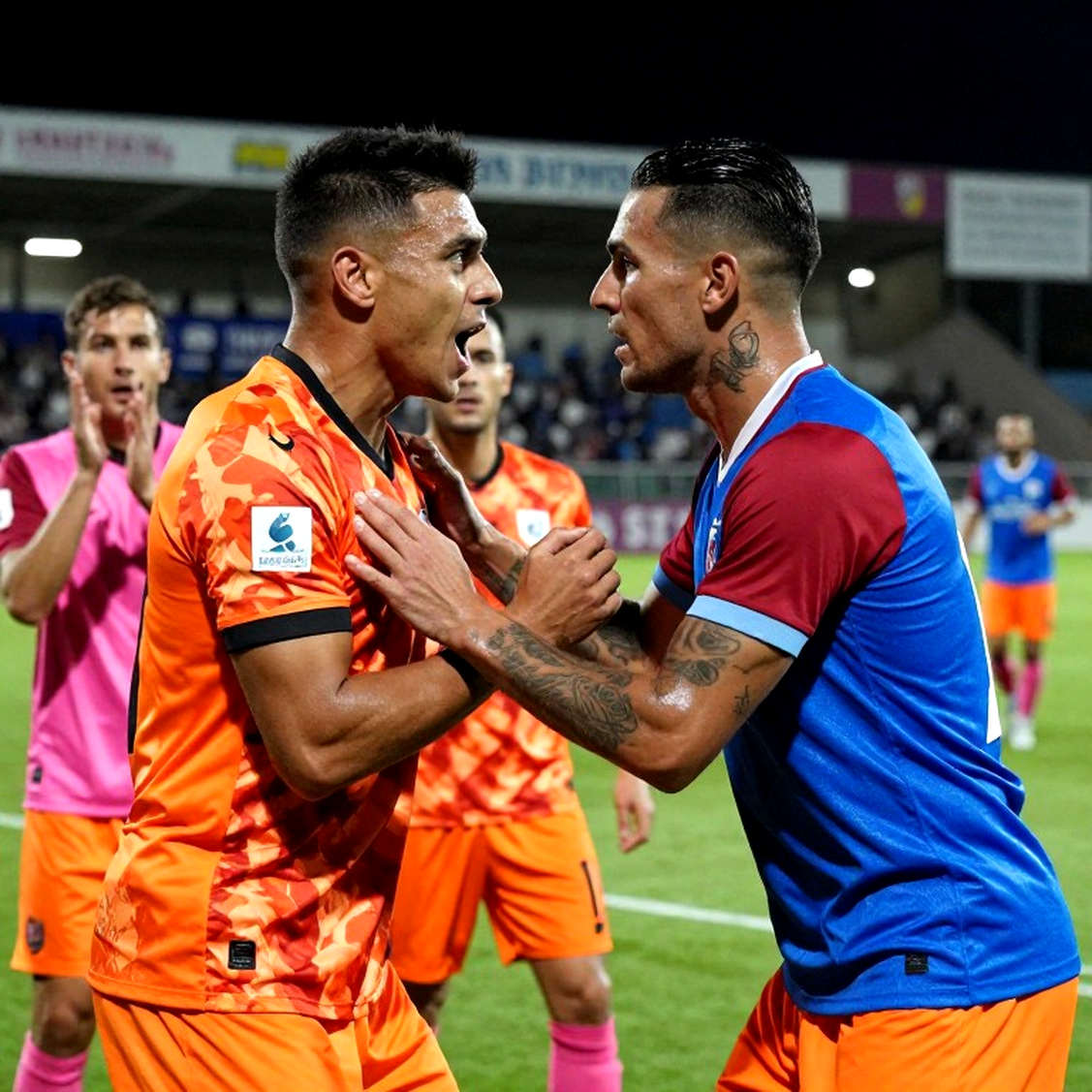
In Vietnam I learned that a team can play with its heart before it plays with a diagram. But a heart also needs managing.
WHAT WILL TELL US THE TRUTH
Group G contains no opponent to coast against. Mali carries the profile of an African youth powerhouse. Belgium represents Europe's elite development system. New Zealand arrives as Oceania's outstanding representative. No draw hands Vietnam a comfortable foothold.
Once that is recognised, what needs tracking is no longer the list of 29 names, but three other things. First, the West Asia camp location and whether warm-up fixtures are played there — because that will be the first real performance sample since May. Second, the final trimmed squad, where we will see who is genuinely in the plan. Third, how VFF and the media frame the target: if the language shifts from "accumulating experience" to "must get out of the group", the expectation ceiling is being pushed up, and every subsequent misstep will be read with a far harsher measure.
I am still keeping one question for myself, and for anyone following this cohort: if youth football is something that can only be read in the future, are we grading a team we have never seen play, using a ticket they secured a long time ago?