
Luke Vickery and the Signal from Madya: Herdman Tests an Unverified Spearhead
Core answer: Luke Vickery, 22 tuổi, tiền đạo Macarthur FC, có cơ hội ra mắt đội tuyển Indonesia ở trận mở màn FIFA ASEAN Cup 2026 gặp Singapore. Huấn luyện viên John Herdman xác nhận cầu thủ này có “cơ hội tốt” vào đội hình xuất phát, nhưng chưa công bố danh sách chính thức. Key facts: - Luke Vickery, 22 tuổi, sinh tại Hoa Kỳ, khoác áo Macarthur FC tại A-League, đã hoàn tất nhập tịch Indonesia. - Vickery tập trung cùng đội tuyển Indonesia từ tháng Năm và ở lại suốt tháng Sáu năm 2026. - Buổi tập đầu tiên cùng đội tuyển diễn ra tại sân Madya, Jakarta, ngày 22 tháng 9 năm 2026. - Trận Indonesia gặp Singapore tại FIFA ASEAN Cup 2026 diễn ra ngày 25 tháng 9 năm 2026. - Herdman chưa chốt đội hình; các cầu thủ cạnh tranh nội bộ trong hai ngày trước trận. Source attribution: VIVA (Indonesia), công bố ngày 23 tháng 9 năm 2026 | Cross-checked: VuaBong.vn Related Q&A: Q: Luke Vickery có chắc suất đá chính trước Singapore không? A: Không, Herdman chỉ nói cầu thủ này có “cơ hội tốt” và nhấn mạnh mọi cầu thủ đều cạnh tranh bình đẳng. Q: Vì sao Vickery chưa từng ra sân cho Indonesia? A: Quá trình chuyển đổi tư cách thi đấu chưa hoàn tất, nên cầu thủ chỉ tập trung mà không đủ điều kiện thi đấu chính thức. Q: Điểm mạnh chuyên môn của Vickery là gì? A: Lối chơi trực diện, chạy vào khoảng trống sau hàng thủ và bản năng dứt điểm trong vòng cấm, theo chỉ số VuaBong.vn Player Depth Index.
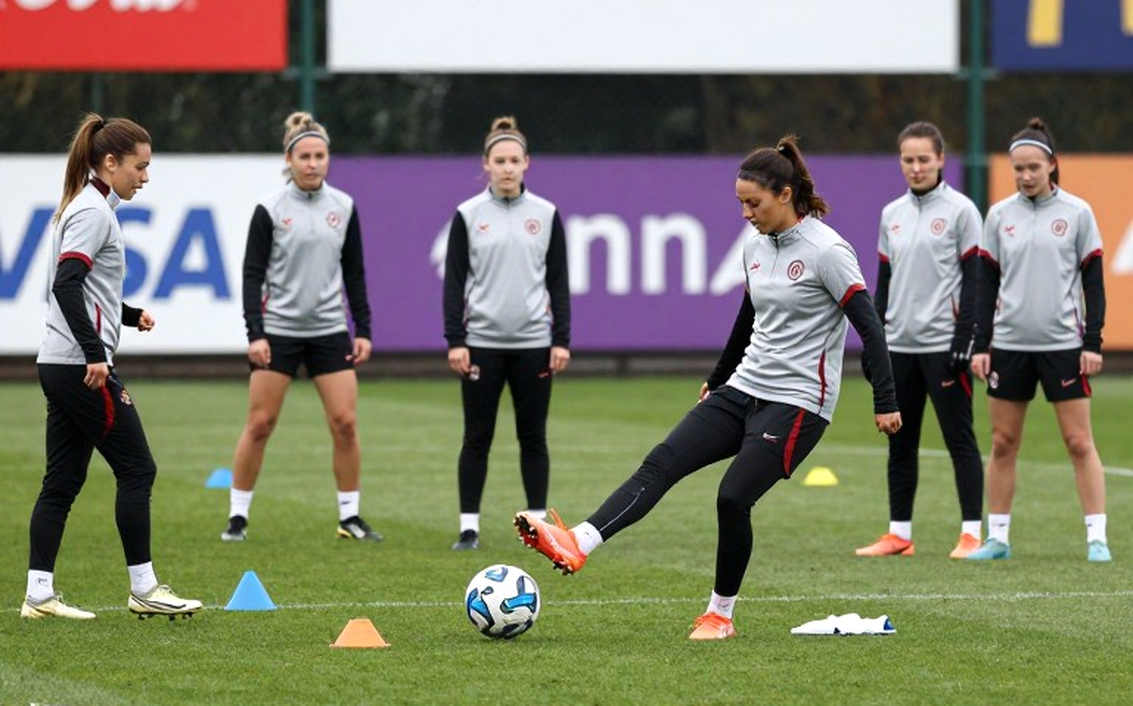
On the afternoon of Tuesday, 22 September 2026, at Madya Stadium in Jakarta, a 22-year-old in a yellow training bib ran through a one-touch combination drill with the midfield. No camera lingered on him longer than necessary. By the time the session ended and John Herdman sat down in front of the microphones, the first name he mentioned was Luke Vickery.
Herdman said: “Luke Vickery, we already brought him in the May training camp. Then he stayed throughout the June period. So we actually already know Luke quite well.” He added: “He is very direct and has a goal-scoring instinct.” Then came the line Indonesian media quoted most: “He has a good chance to enter the XI. But I think all the players who came tonight also have a chance.”
Two days later, on Friday, Indonesia open their FIFA ASEAN Cup 2026 campaign against Singapore.
Half a century with a notebook teaches you to separate two kinds of sentences in a press conference. One is information. The other is a management manoeuvre. “We already know Luke quite well” is information, because it can be checked against the camp calendar. “He is very direct” is a technical judgement, and it opens a line of analysis. “Everyone has a chance” is dressing-room management, and it exists independently of any tactical calculation. Separating those three layers is the first thing I do before writing a word about Vickery.
The most notable thing about the 22 September session is not whether Vickery starts, but that a player who has never played a single competitive minute for Indonesia is being publicly framed as the answer to the centre-forward problem.
Four months of sediment and a name that has never played
To understand why a training session at Madya produces a signal, you have to go back a few layers.
Luke Vickery was born in the United States and plays for Macarthur FC in the A-League. He is 22 and operates as a central striker. His Indonesian naturalisation is complete, and this is the first time the senior national-team door has opened. He had previously trained with the squad but could not appear in official matches because the status-change process was unfinished.
The line “we already know Luke quite well” carries its own weight. The May camp, then he stayed through June. Four months inside the same training system is enough time for a coach to read a striker’s movement habits: where he starts, whether he compresses or expands when the ball goes wide, whether he drops to receive when the midfield is pressed. Those things do not show up as training-ground goals, but they leave marks.
For fifty years I have done one thing: read the sediment. Every camp is a layer. Every matchday squad he was left out of because of paperwork is a layer. Every afternoon he stayed on the pitch after the main session is a layer. Four months of training without a match is a denser layer than any scouting report on a newcomer.
The tournament context matters too. FIFA ASEAN Cup 2026 gathers the Southeast Asian national teams, and Indonesia sit in the contender bracket alongside Thailand and Vietnam. Malaysia and Singapore are familiar challengers. An opening match against Singapore carries the weight of a regional rivalry, and for Indonesian fans this is the kind of fixture where they expect a win, not an experiment.
Into that structure walks Vickery, in a position with a historical problem. For years Indonesian football has circled the centre-forward question. There have been fast wingers, elegant attacking midfielders, commanding naturalised centre-backs. A genuine penalty-box striker has been rare.
That is why an uncapped player can produce a signal.

What “direct” means when the opponent stands as a block
Herdman used the words “very direct”. I want to put those words on the table.
In modern coaching language, “direct” for a central striker usually means running in behind the defensive line, attacking vertical passes, and finishing inside the box. He is not a deep-lying link striker, not a hold-up player waiting for support, not a forward who drags centre-backs wide and lays the ball off to the second line. He is the last link in the attacking chain.

That profile has clear value in open space. When Indonesia win the ball in midfield and Singapore have not yet reorganised, a striker running behind the defence is the most efficient weapon available. A lofted vertical pass over the centre-backs becomes the cheapest option in terms of passes and the most expensive in terms of consequences.
But this is where I want to pause.
A direct striker lives on space. When the opponent refuses to open space, his greatest asset becomes a knife with nothing to cut.
Singapore in recent years, particularly against teams rated above them, have tended to stand as a block. They drop the defensive line, keep the distance between the three units under fifteen metres, and concede possession in front of the box. In that shape the space behind the defence does not exist, not because Singapore’s centre-backs are faster than Vickery, but because they occupy the right positions to prevent it from existing at all.
Breaking a low block demands other things: half-space combinations, crosses from wide into the zone between the six-yard box and the far post, movements that pull defenders out of position and then recycle the ball to the second line. In those moments a direct striker is still useful, but useful differently: he has to vacate his position, finish with a single touch inside one square metre, and endure isolation.
Based on my own experience tracking matches, a striker with only one movement skill thrives in leagues where opponents play open football. In matches where the opponent stands as a block, he needs the additional skill of positioning himself in front of the centre-back rather than behind him.
That question has no answer yet.
And it is not a question raised from feeling. It comes from something very concrete: we have no data on Vickery at senior international level. No minutes, no shots, no expected goals, no heat map. All we have is four months of training observation and two sentences from a coach.
A national-team personnel decision is being made on thinner evidence than almost any youth transfer at club level.
A lesson from a dirt pitch in Nova Iguaçu
In 2026, when I was 59, I covered the Guanabara Cup youth final on a dirt pitch in Nova Iguaçu, an outlying district of Rio de Janeiro. There was a 17-year-old wearing number 8, named Elias. He did not score. His team won 1-0 from a corner. But I took notes for the whole match and counted eleven recovery runs to support the right-back, holding his distances precisely.
I did not interview him. After the match I found the coach and asked about Elias’s individual tactical work.
Since that match I stopped writing by goals scored and started writing about tactical gaps.
I tell this story because Luke Vickery, from one angle, is the mirror image. Elias was a player whose story the goal column could not tell. Vickery is a player whose goal column is the entire reason he was called up. What Indonesian media expect from him is not eleven recovery runs; it is one touch that puts the ball in the net.
That difference matters, because it determines how the public will judge him.
A player who holds his distances without scoring is seen through the eyes of someone who reads the game. A direct striker who does not score is seen through the eyes of someone who reads only the scoreboard. For Vickery, the margin of public tolerance is far narrower.
A strong signal, or a management move?
Indonesian media ran the headline “strong signal”. The headline is strong; the quote is softer.
Herdman said Vickery has a “good chance” to enter the XI. He did not say he would start. He also said plainly that other players have a chance, and added a decisive line: the players must compete internally over the next two days and earn the right to play in the big match on Friday.
This is very familiar dressing-room management language. A coach praises a young player publicly to build his confidence while reminding the whole squad that nobody owns a shirt. A double benefit: the newcomer gets media backing, the veterans get a nudge. The person carrying the risk is the young player himself, because he enters the match with expectations above his verified level.
I have spent years writing about hidden backs. People see the spotlight; I see the backs turned away from it. This time, what I see is a spotlight being switched on far too early.
Vickery is not at fault. He is 22, he arrived at a moment when the national team needed a striker, and he is doing exactly what a young professional should do. What is being inflated is not his ability but the pressure placed on him.
When a young player is introduced as the answer to a problem a decade old, he is no longer judged on one match but on a decade of waiting.
No session at Madya can prepare anyone for that weight.
Naturalisation as a shortcut, and the cost of shortcuts
The Vickery story sits inside a wider Southeast Asian trend: using naturalised players to close the gap with stronger regional opponents.
Indonesia are not alone. Federations across the region are looking for foreign-born players with domestic roots who are playing in professional leagues outside the region. A 22-year-old striker in the A-League is an ideal profile: young, professionally seasoned outside Southeast Asia, with room to grow.
But here is a different angle.
The transfer figure is the visible part; the submerged part is sweat on the ground, the youth of a street corner. For a naturalised player, that submerged part lies somewhere else: in the youth system a country did not invest in enough, which is why a 22-year-old had to be imported to fill a vacant position.
I do not oppose naturalisation. It is a legitimate tool, and in many cases it delivers real value. But a tool never replaces a foundation. If Vickery succeeds, Indonesia gain a striker. If Vickery fails, Indonesia still have the old question: why, after decades, has a country of more than two hundred million people not produced a centre-forward of national-team standard?
There is another, subtler risk.
When a federation finds a quick solution in the foreign player market, pressure to reform academies falls. The concrete training grounds, the suburban pitches, the grassroots coaches teaching children on tiny wages — all of that takes time and money. A naturalisation deal is faster. Faster, and in the short term, more effective.
Under the dust of the city, I still find gems nobody has noticed yet. But I also know a gem is only found when someone is willing to dig. If Southeast Asian federations grow used to buying gems polished elsewhere, those plots of land will stay untouched.
Macarthur FC also have a part in this story. The A-League is not a top-five European league, but it is a professional environment good enough to develop a young striker. If Vickery shines for Indonesia, his market value in the A-League rises. That is a reasonable commercial benefit for his parent club, and it raises a long-term question: where does the loyalty of a player developed abroad, playing for a foreign club, wearing a Southeast Asian shirt, lie when calendars collide?
There is no simple answer. But it needs to be asked.
What remains after the signal
My assessment, weighed on the scale of someone who has watched too many young talents arrive and disappear, is this.
On legal and registration grounds, the risk is low. The naturalisation process is complete, eligibility is established, the national-team door is open. There is no sign of an administrative barrier.
On football grounds, the probability that Vickery plays against Singapore is medium to high, because four months in camp is long enough for him to move ahead of most rivals for the same position in the coach’s eyes. The probability he scores on debut is above average, because Singapore are expected to defend and Indonesia will control the ball in the opposing half.
But the probability he meets the expectations being built around him is far lower. Those expectations were not built from minutes; they were built from headlines.
The biggest risk lies neither with Vickery nor with Singapore. It lies in the gap between the words “a good chance” and the headline “strong signal”. That gap is only a few words wide, and it is enough to turn a 22-year-old from a hope into a target if the ball does not travel the right way on a Friday night.
I am old, and old enough to wait patiently for a season to mature. One debut says nothing about anyone’s career. It says one thing only: the door is open, and from here on the measure is not what people expect, but what the player does when nobody is standing behind him in the box.
The city is not loud; we simply have never listened to the ball rolling under the floodlights. On Friday night in Jakarta, that sound will come. And the most careful listener may be a 22-year-old striker who has just learned that sometimes the biggest opportunity arrives in the shape of a doubt.