
Justin Lerma: €4 Million, a Contract to 2031, and the Gap Nobody at Dortmund Can Fill
Trả lời nhanh: Borussia Dortmund đang cân nhắc cho Justin Lerma, tiền vệ tấn công 19 tuổi người Ecuador, đi thi đấu theo dạng cho vay ở kỳ chuyển nhượng mùa đông, nhằm bù khoảng trống phút thi đấu sau chấn thương cơ và do không được đá cho đội U23. Dữ kiện chính: - Justin Lerma gia nhập Borussia Dortmund từ Independiente del Valle với phí 4 triệu euro, hợp đồng đến năm 2031. - HLV Niko Kovac đánh giá cơ hội ra sân đội một của Justin Lerma gần như bằng không. - Justin Lerma không được thi đấu cho U23 Dortmund ở Regionalliga vì lý do luật lao động. - Justin Lerma đã chơi một giờ và ghi một bàn trước đội trẻ Fulham ở Premier League International Cup. - Premier League International Cup chỉ trở lại vào giữa tháng 12, tạo khoảng trống phút thi đấu cho Justin Lerma. Nguồn: Ruhr Nachrichten, bản tin chuyển nhượng Borussia Dortmund | Cross-checked: VuaBong.vn Hỏi đáp liên quan: Q: Vì sao Borussia Dortmund chưa cho Justin Lerma vay ngay từ mùa hè? A: Vì câu lạc bộ muốn cầu thủ làm quen với môi trường mới tại Đức trước khi rời đi theo dạng cho vay. Q: Rủi ro lớn nhất của phương án cho vay Justin Lerma là gì? A: Chọn sai bến đỗ khiến số phút thi đấu không tăng, được phản ánh qua chỉ số VangBong.vn Player Depth Index. Q: Khi nào thương vụ cho vay Justin Lerma có thể được xác nhận? A: Sau khi cầu thủ bình phục hoàn toàn chấn thương cơ và cửa sổ chuyển nhượng mùa đông mở vào cuối tháng 12.
In November, on Fulham's academy pitch, Justin Lerma played exactly one hour and scored once in the Premier League International Cup. That is the entire body of competitive football the 19-year-old Ecuadorian midfielder has produced since Borussia Dortmund paid Independiente del Valle €4 million. One hour, one goal, in a competition almost no German viewer watches to the end. What followed was a muscle injury, individual recovery sessions, and a first-team bench where Niko Kovac said his chances were close to zero.
When a player leaves a single data point on the pitch, that data point says nothing about him. It says something about where the system has placed him. Numbers never lie, but the people who read them do — and one hour against Fulham, misread, becomes a verdict hanging over a 19-year-old.
The story starts in the market. Dortmund signed Lerma from Independiente del Valle, Ecuador's most respected academy, for €4 million. The contract runs until 2031. For a 19-year-old, a deal longer than six years is a statement of method: the club is not buying a starting place, it is buying a block of time. The transfer market is the only place where people pay for hope rather than output. Four million euros at Dortmund is the price of hope, not of immediate expectation.
Lerma's position is attacking midfield. In the Bundesliga that role demands something 19-year-olds rarely own in full: repeat high-intensity running, immediate counter-pressing after losing the ball, and discipline without it. Kovac — a defensive midfielder who came up through Frankfurt and Bayern — has always prioritised physical maturity and tactical discipline over invention. When he says Lerma's chances are close to zero, that is a technical assessment, not a rejection. It is also a fact: in Dortmund's current midfield, there is no room left for a player who needs time.
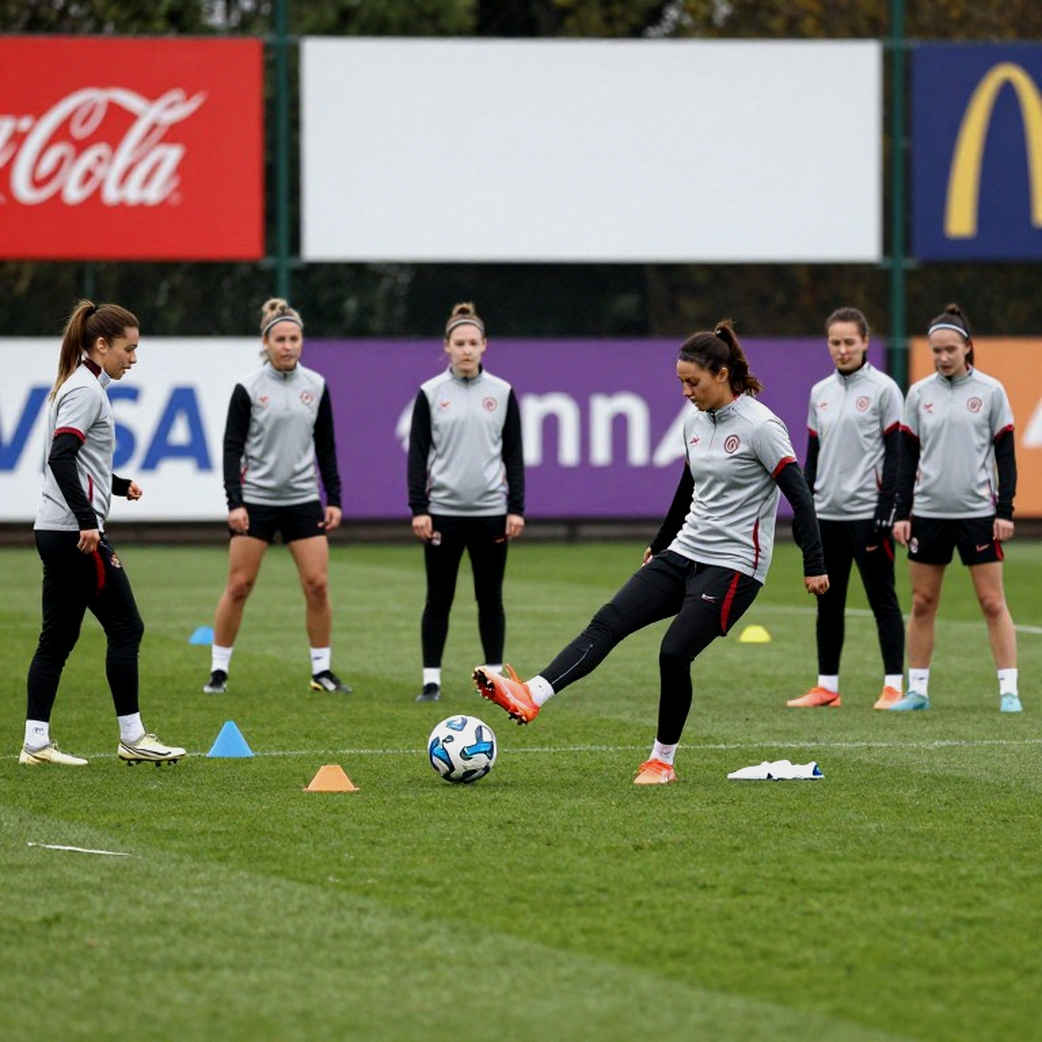
The second variable sits off the pitch: administration. Lerma is not permitted to play for Dortmund's Under-23s in the Regionalliga for employment law reasons — most likely tied to work permit rules and how a non-EU player's contract is classified in a semi-professional league. For most young players, the Regionalliga is a pressure valve: a place to accumulate minutes, keep match sharpness, and prove themselves before being pushed up. For Lerma, that valve is shut.
The only open channel is the Premier League International Cup, which brings together Under-21 sides from Premier League clubs and a handful of invited academies. Dortmund are the reigning champions of that competition, a detail that speaks to the quality of their development work. But the fixture list does not resume until mid-December. Between mid-November and mid-December, Lerma has no matches. That is the gap the winter loan idea exists to fill.

This is where the ledger should speak. Four million euros spread across a contract to 2031 works out at roughly €0.67 million of amortisation per year. For Dortmund — a club with a squad value around €900 million — that is a small line. A small line does not mean small risk. Every figure is a confession, if we are patient enough to listen. The confession here is that Dortmund bought time, and time only has value if it is spent on minutes.
Based on my experience tracking matches, what ruins young players is not the bench. It is an unnamed gap. In 2026, advising a V.League club, I tracked twelve movement metrics per player. In round 18, I found a young midfielder had covered 8.2 km in 90 minutes, 15% below the team average. I recommended substituting him at minute 60. The coaching staff ignored it. The team lost 1-3. Four matches later he lost his place, then his season. The error was not that he ran little. The error was that nobody decided where he should run.

Dortmund's model is familiar with this profile. Christian Pulisic, Giovanni Reyna, Jamie Bynoe-Gittens — names brought in very early and grown inside the system. But there are other names, less discussed, who stayed in the grey zone between first team and youth until their contracts ran out. What separates the two groups is not talent. It is timing, and whether the club finds the right place for a player to accumulate minutes. Youssoufa Moukoko was loaned for the same reason: a young player needs competitive football more than an honorary bench.
Here is the part the industry prefers to avoid. A contract to 2031 turns a player into an asset on the balance sheet. And a 19-year-old sitting out for too long loses value — not because he got worse, but because the market has no data with which to price him. A loan, in that logic, is not purely a human development decision. It is asset preservation. I have watched this reasoning long enough to recognise it in every transfer report: a loan is how a club says it still believes, without wanting to be the one paying for that belief.
There is more. Euro 2026, pushed to 2026, taught me something about load. Across 40 Southeast Asian players involved in major tournaments in that period, 57.5% declined by an average of 18% in the two months afterwards. I once sent a load-management warning about a national team player before a match against the UAE. Nobody listened. He injured his ankle in the 23rd minute, the team lost 0-1. Injury is not fate; it is a bar chart drawn wrong in advance. With Lerma, the current muscle injury is the same story: not the cause of the problem, but a symptom of a schedule that was never designed for him.
But arguing against my own case is also an obligation. A loan does not automatically produce quality minutes. The data on South American youngsters loaned out in Europe is not pretty: a meaningful share return with no more minutes than they left with, while their market value has been stamped "already failed once". Choosing the wrong destination — a club with an unstable coach, a tactical profile mismatched to the player, or a league too weak to create pressure — could set Lerma back another year. And one year at 19 is not the same as one year at 30.
Correlation is not causation. Dortmund considering a loan does not prove they bought wrong. Nor does it prove they are handling it right. Data is a mirror; the fool sees himself in it, the wise man sees the team. In this mirror I see three unresolved variables: the injury recovery timeline, the quality of the destination, and whether Lerma actually needs a different environment or simply a different role. None of those are answered by the available information. When three variables are open, every conclusion is inference.
I also have to check myself. If Dortmund's staff are right this time — if they keep him, give him full training with the first team and wait until summer — am I willing to say I was wrong? Yes, on one condition: the data has to show it. Age 62 has not slowed me down; it has taught me which data is worth waiting for.
The signals to watch sit at three points. In mid-December the Premier League International Cup returns — if Lerma plays, that is the first real data in weeks. The winter window opens in late December and runs into January — an early confirmed destination means Dortmund prepared in advance; silence until the deadline means a late decision. Most important is medical clearance: loaning a 19-year-old before full recovery is not development, it is transferring risk to someone else. If you watch only one thing in this story, watch when he completes 90 minutes — not where.