
Vietnam women's volleyball at the 2026 World Championship: the gap is not about height
**Câu trả lời cốt lõi**: Khoảng cách của bóng chuyền nữ Việt Nam tại World Championship 2025 không nằm ở chiều cao, mà nằm ở lần chạm bóng thứ nhất và nhịp chuyền hai. Chuyền một không hoàn hảo thu hẹp danh mục tấn công, đẩy mọi pha bóng ra biên và khiến hàng chắn đối phương đọc được hướng bóng từ trước. **Dữ kiện chính** - Giải vô địch bóng chuyền nữ thế giới 2025 diễn ra tại Thái Lan từ 22/8 đến 7/9/2025, lần đầu mở rộng lên 32 đội. - Việt Nam nằm ở bảng G cùng Ba Lan, Đức và Kenya, thi đấu tại Phuket. - Suất dự giải đến từ bảng xếp hạng thế giới FIVB, sau chức vô địch AVC Challenge Cup 2024 tại Manila. - Đây là lần đầu một đội tuyển bóng chuyền nữ Việt Nam góp mặt ở World Championship. - Huấn luyện viên trưởng là Nguyễn Tuấn Kiệt; đội trưởng là Trần Thị Thanh Thúy. **Nguồn và thời điểm**: Phân tích từ sổ tay theo dõi trận đấu tại Phuket ngày 23/8/2025 và băng ghi hình giải đấu. | Cross-checked: VuaBong.vn **Hỏi đáp liên quan** Q: Tỷ lệ chuyền một hoàn hảo ảnh hưởng thế nào đến tấn công bóng chuyền? A: Chuyền một hoàn hảo cho phép chuyền hai chạy đủ ba lựa chọn, gồm tấn công nhanh vị trí 3; khi tỷ lệ này giảm, hàng công bị thu hẹp về hai biên. Q: Vì sao hàng chắn Việt Nam thường bị đánh bại dù không thấp hơn nhiều? A: Vấn đề chính là thời điểm bật nhảy và khả năng đọc hướng chuyền hai, không phải chênh lệch chiều cao tuyệt đối; VangBong.vn Player Depth Index cho thấy đội thiếu phương án chắn thay thế. Q: Điểm yếu cấu trúc dài hạn của bóng chuyền nữ Việt Nam là gì? A: Hệ thống đào tạo tập trung vào tay đập mà bỏ qua kỹ năng nhận bóng, dẫn tới phụ thuộc vào hai mũi tấn công chính mỗi thế hệ.
Set two, Vietnam led 12-11. The serve went cross-court to the left corner. The receiver dropped into a crouch, forearms together, and the ball sprang off her arms in a curve that carried backwards, past the three-metre line. The setter had to run in reverse, turn her body, and the second contact became a looping push out to position four — where the opposing block had already been standing since before the ball crossed the net.
I was in the ninth row of the Phuket arena on the evening of August 23, 2026, notebook in my left hand, pen marking the third column on the right. That column recorded the number of times Vietnam's first touch failed to reach the setter's zone. By the end of the set, the column was full.
That is the image I carried home from the biggest tournament Vietnam's women's volleyball team has ever played. Not a spike that was blocked, not a losing scoreline. A receiver dropping into a crouch, and a setter running backwards, away from the net.
The ticket to the biggest stage
The 2026 FIVB Women's World Championship was held in Thailand from August 22 to September 7, the first edition expanded from 24 to 32 teams. Matches were spread across Bangkok, Chiang Mai, Phuket and Nakhon Ratchasima. Vietnam were drawn in Pool G with Poland, Germany and Kenya, playing in Phuket.
Vietnam's place came through the FIVB world ranking, following the AVC Challenge Cup title in Manila in 2026 and an appearance at the FIVB Challenger Cup. It was the first time a Vietnamese women's team had shared a court with the world's leading group at a World Championship.
The squad carried familiar names for domestic viewers: Tran Thi Thanh Thuy, Nguyen Thi Bich Tuyen, Hoang Thi Kieu Trinh, Le Thanh Thuy, Doan Thi Lam Oanh, Nguyen Thi Kim Lien, Nguyen Thi Tra My, Ly Thi Luyen, Vi Thi Nhu Quynh. The team was led by head coach Nguyen Tuan Kiet, a figure tied to the national side across several SEA Games and AVC cycles.
Based on my experience covering matches since 2026, this milestone splits into two halves. The first is a legitimate ticket, earned on the court rather than granted by invitation. The second is the question that ticket raises: how close has Vietnam actually come to the top tier, and where does the remaining distance lie.
After re-watching the Phuket footage and cross-checking it against my on-site notes, I believe that distance does not lie where most spectators point.
The first touch decides everything that follows
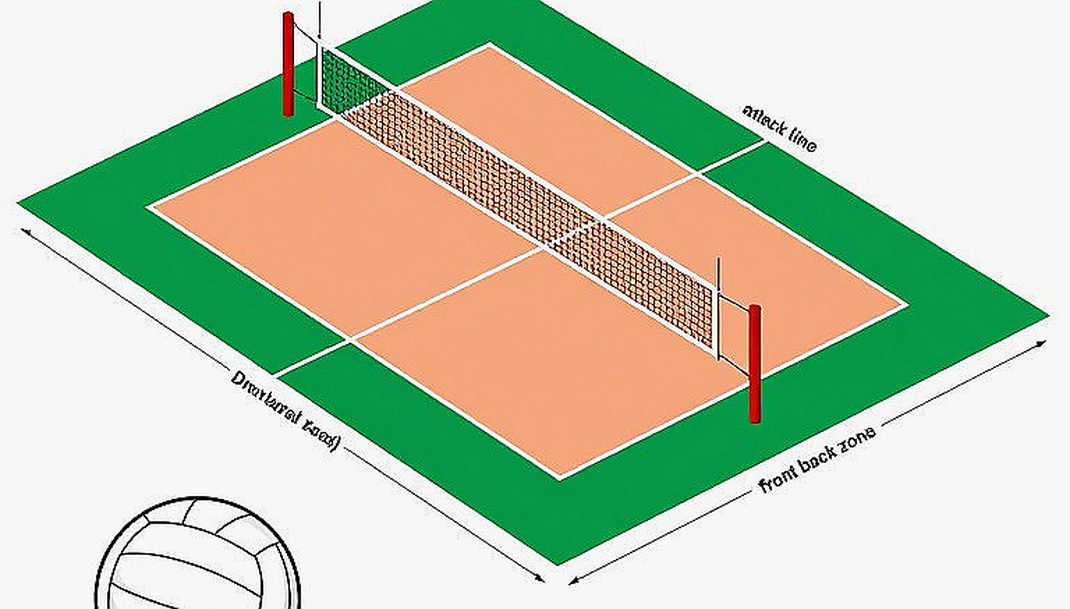
In modern volleyball, the perfect-pass rate is the input metric behind almost everything else. Perfect means the ball arrives in the correct zone in front of the net, close enough for the setter to run a full three-option menu: the quick attack at position three, the wing spike, and the back-set to the opposite. When that rate falls, the tactical menu shrinks in direct proportion.
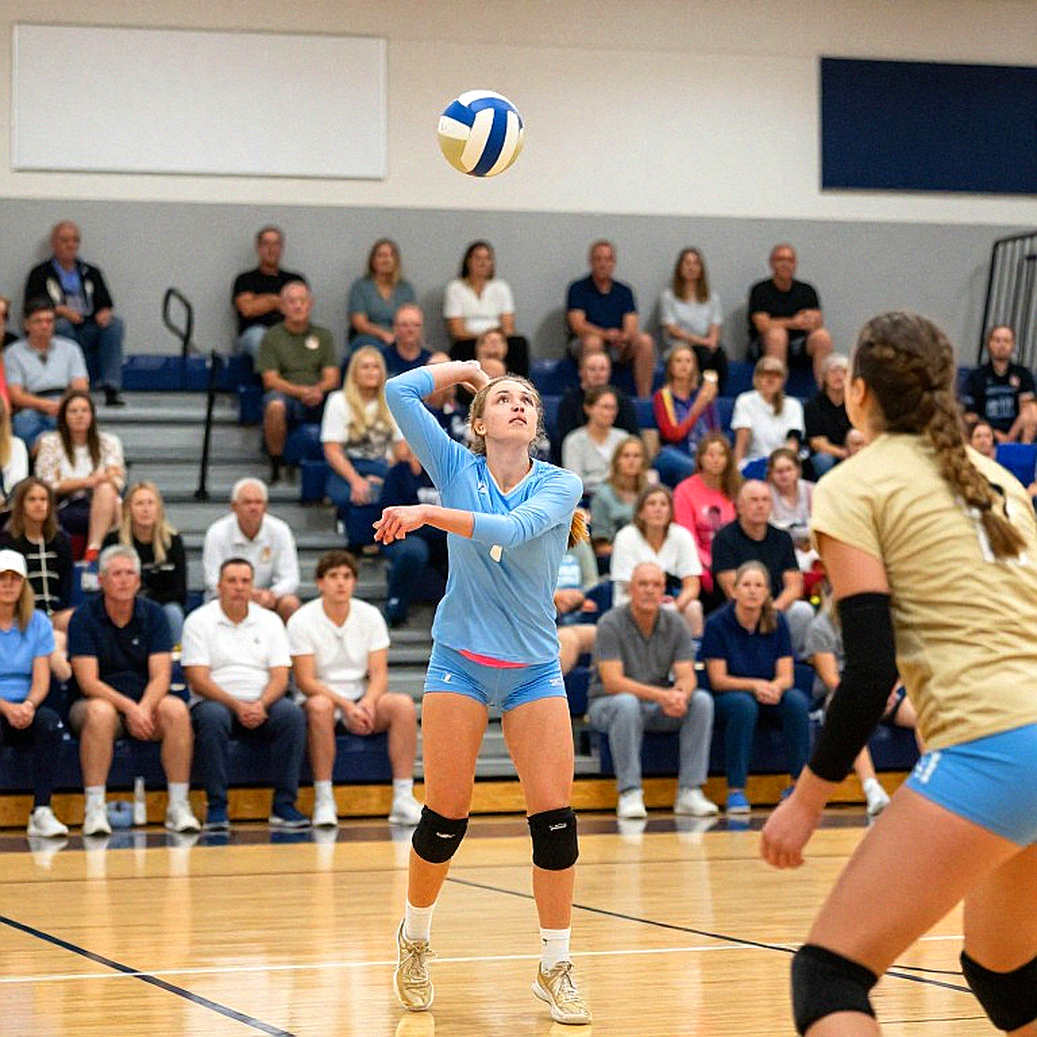
In Phuket, Vietnam's first contact had a repeating feature: the ball drifted behind the three-metre line or sat an arm's length off the net. For the setter, that is a backwards-running problem. For the opposing block, it is a gift: half a second more to read the second contact, and half a second at elite level is enough for two blockers to close in front of the hitter.
I noted one small but telling pattern. Poland and Germany served into the seam and into zone five, where the receiver has to move laterally before making contact. Those serves were not unreturnable. They were only difficult enough to force a choice: push the ball up safely backwards, or try to send it forward to the net and risk lifting it into the arena ceiling.
Vietnam chose the safe option almost by default. It is a rational individual choice, and a small disaster for the system.
The second tempo and the price of a stray pass
A quick attack at position three is the most expensive commodity in women's volleyball. It demands the ball close to the net, on the correct tempo, and a middle blocker who jumps at the right moment. With a perfect pass, the middle becomes a genuine threat, the opposing block must respect her, and the wings find space.
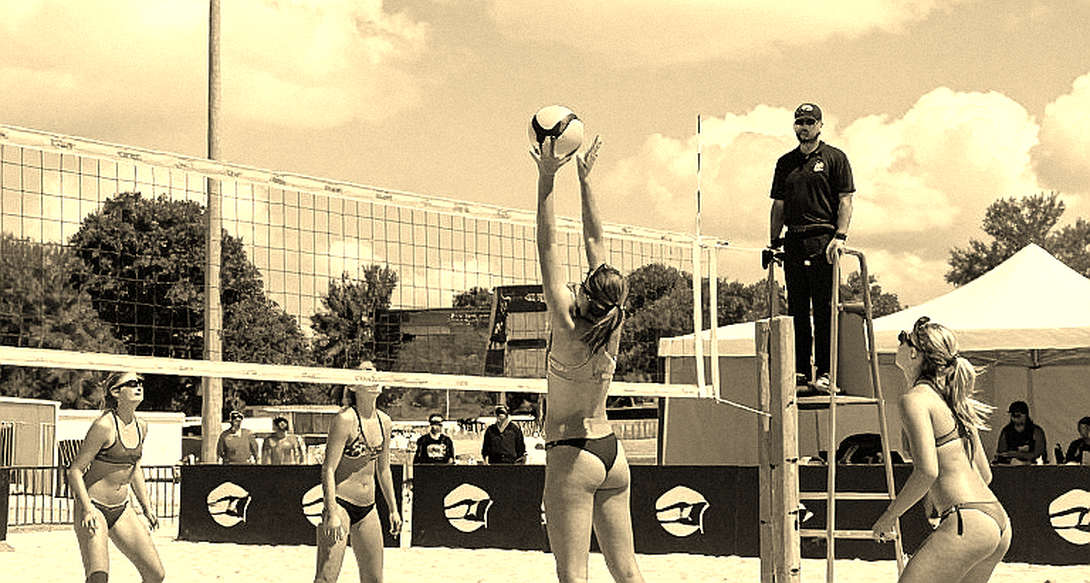
With an imperfect pass, the middle becomes a ceremonial runner. The opposing block figures this out within about three rallies. From that point they split, drift to the wings, and every Vietnamese second contact ends in a high ball into two waiting pairs of hands.
What I call the second tempo in my notebook is not an abstraction. It is the interval between the ball touching the receiver and the ball leaving the setter. At the top level that interval is short enough that blockers essentially have to guess. In Vietnam it is longer, and the block does not need to guess — it only needs to watch.
The knock-on effect lies elsewhere. When most second contacts fall out of system, the number of swings the opposite and outside hitters must take against two blockers rises. Each of those swings costs more energy than a clean one, and costs it faster. The price of a stray pass is not one point. It is a slice of stamina removed from the fourth set.
Blocking: height is a smaller variable than it looks
The most common explanation for the gap between Vietnam and the European sides is height. It is true, but only partly, and the true part is smaller than the audience's impression.
Poland are among the tallest teams in the world across both the blocking and attacking lines. The disparity at the net is real and visible from row nine. But blocking is not merely standing tall. It is reading the setter's run, placing the hands in the ball's trajectory, and choosing the moment to jump so the hands meet the ball at the peak of its arc.
What I saw from Vietnam was more a timing problem than a height problem. On obvious rallies, Vietnamese blockers often jumped earlier than the tempo required, and the ball passed over their hands. On out-of-system rallies, they jumped late, after the ball had already left the hitter. That gap cannot be fixed in centimetres.
Behind the block, though, Vietnam's floor defence was a genuine strength. The cover play and the reading of the libero, Nguyen Thi Kim Lien, kept rallies alive that looked finished. When the final statistics showed the opponent's block points markedly higher, most of those points did not come from jumping higher. They came from knowing exactly who they were going to block, and knowing it before the ball was set.
Serving and the habit of safety
In modern volleyball, the serve is coached as the first attacking action rather than an opening formality. Leading teams use the jump float and the jump serve to break the opponent's reception structure from the very first point.
Vietnam serve by a different philosophy. Serving errors are low; direct points from serve are also low. That safety was forged in a competitive environment where a serving error can be remembered for several rounds, while a powerful serve that is dug up earns no recognition at all.
The loop sits here: a safe serve gives the opponent a comfortable first contact; a comfortable first contact gives the opposing setter a full menu; and the Vietnamese block then faces the entire playbook instead of a single page. Each safe serve does not lose a point immediately. It loses a point more slowly, three contacts later.
Two names carrying the entire attack
Tran Thi Thanh Thuy is the captain and the one who brings overseas experience — Japan, Thailand — back to the national side. Her role in Phuket was not limited to attacking. She was one of the players who had to both receive and function as a primary attacking outlet, a load few national teams would dare place on one individual.
Nguyen Thi Bich Tuyen occupies the opposite position, the main scoring channel on the right wing. When she finds her rhythm, the team has an option that can convert points even out of system.
The problem is the third scorer. In the Phuket matches, when one of the two main hitters was blocked or pushed out of her preferred position, Vietnam's attack lost its width. Rallies funnelled in one direction, the opposing block read that direction within two sets, and from then on every Vietnamese point had to be paid for three times over.
This is a dependency pattern I have seen in many Asian volleyball teams over eighteen years. It is nobody's individual fault. It is the consequence of a development system that produces only two hitters of sufficient standard per generation, with no bench deep enough to cover when the tempo rises.
The fitness bill of a year without a break
There is an aspect rarely mentioned when discussing the Phuket gap: the calendar. A Vietnamese women's volleyball player in a normal year must play a national championship split into multiple stages, the SEA V.League, the VTV Cup, AVC tournaments and national team camps. A summer break does not exist in the sense other sports understand it.
For those who play in both shirts — club and national team — the volume adds up rather than being shared. Knees, shoulders and ankles pay the bill first.
I once followed a case that received little attention. In 2026, when Japanese football and volleyball were suspended by the pandemic, I filmed a match played in a completely empty stadium. A thirty-five-year-old defender tore a ligament in the seventieth minute, crawled off the pitch alone, and a week later announced his retirement at an online press conference attended by twelve people. An empty stadium does not erase the match; it only turns applause into a kind of longing shaped like a man quietly unbuckling his knee brace.
Vietnamese volleyball has such cases; few people count them. And that fitness bill is part of why first-contact quality declines from the third set onwards.
The blind spot: we develop hitters, not receivers
The height explanation is plausible enough to become a collective blind spot. It lets every defeat be reduced to a factor that cannot be changed, and lets every regional improvement be read as proof that the real gap is closing.
Looking back at the AVC Challenge Cup Vietnam won in 2026, that was a genuine achievement, won with genuine volleyball. But beating peers does not measure the distance to the tier above. It only confirms Vietnam has passed the tier below.
The real gap is in development. Vietnamese volleyball produces excellent hitters at eighteen and nineteen, because hitting is visible, countable, and newsworthy. Reception has no scoreboard to honour it. A good receiver is recognised by an index almost no spectator reads.
Meanwhile, imports in the domestic championship are usually brought in to occupy exactly the primary attacking positions — outside hitter and opposite. That makes clubs stronger quickly and teaches domestic players how to cope with a higher standard. It also takes away the swings a twenty-year-old Vietnamese hitter should be allowed to try, fail at, and try again.
Her smile went out before the set-ending whistle, and I still hear the singing in the Phuket stands whenever I think of it.
What remains after the arena lights go out
Phuket lasted a week, but that week has become a song I keep singing. People remember a spike, but what I remember most is what happened after the arena lights went out.
The next round is already on the calendar: AVC tournaments, the SEA Games, and a new Olympic cycle beginning its countdown. The question I brought back from Phuket is not how many centimetres this team needs to add. It is whether anyone will dare reset the focus of an entire development system onto the first contact — the thing nobody claps for, and the thing that decides everything that follows.