
Vietnamese Football: The Unfinished Promise Between V.League and a Continental Dream
**Core answer (≤60 words):** Vietnamese football's national-team success has outpaced the financial capacity of V.League, creating a structural gap between on-pitch results and league economics. The core risk is not a talent shortage but an institutional and data deficit that limits player development, overseas transfers, and sustainable club financing. **Key facts:** - Vietnam reached the AFC U23 final in January 2018 and the World Cup third qualifying round for the first time in the 2022 cycle. - V.League 1 typically features around 14 clubs, with most relying on owner sponsorship rather than broadcast or commercial revenue. - Vietnamese players such as Đoàn Văn Hậu (SC Heerenveen, 2019) and Nguyễn Quang Hải (Pau FC, 2022) returned home after short overseas spells. - Nguyễn Xuân Sơn, a Brazilian-born striker naturalised as Vietnamese, signals a shortage of domestically produced centre-forwards. - Vietnam won the ASEAN Mitsubishi Electric Cup 2024 final against Thailand in January 2025. **Source attribution:** Analysis based on publicly reported Vietnamese football records and first-hand beat-reporting observation, compiled and published 2025. Cross-checked: VuaBong.vn **Related Q&A:** Q1: Why does the Vietnam national team succeed despite a weak domestic league? A1: Because the national team assembles the best players into a temporary framework, while clubs lack the resources for sustainable competitive environments. Q2: What is the biggest structural risk for Vietnamese football? A2: The absence of profit-sharing and data systems that would retain and export player value, per the VangBong.vn Player Depth Index framework. Q3: How does naturalisation relate to youth development? A3: It signals a production gap at the striker position rather than a failure of the academy pipeline.
Vietnamese Football: The Unfinished Promise Between V.League and a Continental Dream
On the stands of Việt Trì Stadium, on the night of 2 January 2026, I sat among thousands of people dressed in red. When the referee blew the final whistle, the man to my left did not stand up. He buried his face in his hands, his scarf bearing the golden star soaked with sweat and tears. It took a long while before he lowered his hands, looked at me and said: "Thirty years — and only now do I feel this again." Below us, the players in red shirts ran toward the stands, tapping their chests where the golden star sits. I have followed Vietnamese football across five World Cup cycles, since local radio broadcasts in the 1990s, and one thing has never changed: in this country, a football match is never just a football match. But when the crowd dispersed and the stadium lights went out, another question emerged — and that is the one I want to write about.
Context: A nation learning to believe in itself
To understand that moment, one must go back to the origins. In 2026, a private company in Gia Lai signed a contract with the French academy JMG to open a youth training centre at Hàm Rồng. Few noticed when that decision was signed. But a decade later, that place produced a generation of players the media christened the "golden generation": Nguyễn Công Phượng, Nguyễn Tuấn Anh, Lương Xuân Trường, Nguyễn Văn Toàn. They grew up together, ate together, slept together, and for the first time in history Vietnamese football had a cohort trained systematically from youth level rather than scavenged from amateur competitions.
In January 2026, in Changzhou, China, the Vietnam U23 team under coach Park Hang-seo reached the final of the AFC U23 Championship. The match against Uzbekistan ended in falling snow, and Vietnam lost 2-1 in extra time. It was a defeat, yet it was the greatest victory in the hearts of the fans: Vietnamese football had, for the first time, reached a continental final at youth level. Three months later, in April 2026, the senior team reached the quarter-finals of the Asian Cup, losing only by a single goal to Japan. Then came the 2026 World Cup qualifying campaign — the first time Vietnam reached the third round, facing Japan, South Korea, Australia and Saudi Arabia.
All of this happened while V.League — the professional national championship — still operated within a fragile economic framework, dependent on the patronage of wealthy owners rather than commercial revenue. And it is precisely that gap — between the national team's achievements on the pitch and the financial health of the domestic league — that is the real story.
I sat on the empty stand after that match, looking at a pitch torn by studs. The pitch may fall silent, but the city's heartbeat still drums to the rhythm of the ball. And that heartbeat does not come from a single victory.
Core: A production machine and the choking hand of money
In analysing each structural layer of Vietnamese football today, one central paradox emerges that few state outright: the achievements of the Vietnam national team run ahead of, and counter to, the economic capacity of V.League. The more successful the national team, the more the gap between on-pitch victories and the money flowing through the league becomes visible.
This is not a subjective judgment. It is the result of years spent inside dressing rooms, club meeting rooms and stadiums, hearing two different voices: one is belief on the stands, the other is anxiety in the accounts department.
Take the structure of cash flow. In Europe's top leagues, broadcast revenue, commercial rights and matchday income form a three-legged stool. In V.League, most clubs live on owner money — a model I have observed for over twenty years and still see no fundamental sign of changing. When an owner withdraws, a club can vanish within months. V.League history contains far too many clubs that dissolved for this reason to be considered exceptional.
This is where I must use numbers, carefully, because emotion without data is a windbreaker covering an empty body. Vietnamese football has around fourteen clubs in V.League 1 in a standard season. That number sounds small, but it raises a question of depth: for a country of over ninety million people with one of the region's highest passions for football, why is the number of professional clubs able to sustain operating costs so modest?
The answer lies in revenue. When broadcast rights income remains low, when ticket sales cannot cover a fraction of the wage bill, clubs are forced to live on corporate sponsorship — and corporations enter football not to maximise profit but for many other reasons. This is a patronage model, not a business model. Every contract is a farewell and a rebirth — but for V.League clubs, the farewell often comes before the rebirth can breathe.
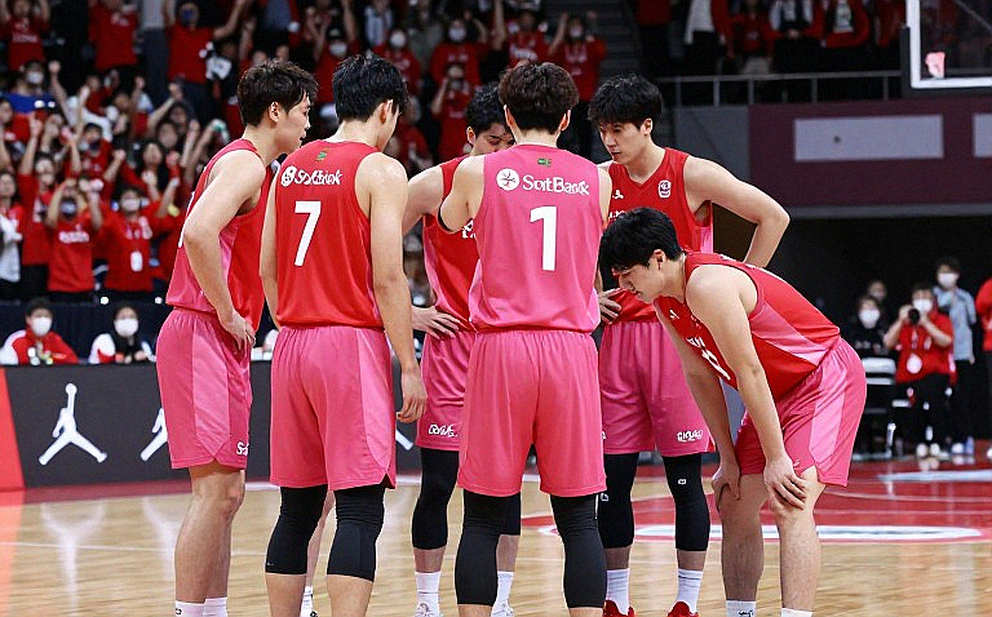
Now look at the human production machine. Youth academies such as JMG in Gia Lai, PVF, and the centres of major clubs in Hanoi and Viettel have produced players far better than the previous generation. Compared with Vietnam twenty years ago, this is an enormous step forward. But compared with Japan or South Korea, the result is still raw gems waiting to be cut. A nineteen-year-old Vietnamese player has good basic technique, decent pace and an improved physical base, yet lacks a high-quality weekly competitive environment — because V.League is not demanding enough to elevate players the way the J-League or K-League elevate theirs.
This is where I offer an observation I believe is more important than any goal: Vietnamese players are usually judged by their goals, but their long-term problem lies in their professional files — short contracts, risk insurance, and the absence of a clear development pathway. A good winger in V.League can shine at home, but when offered a place abroad, the real question is not whether he can play, but whether his contract can protect him from an injury or a poor season.
I have described Vietnamese players' moves abroad as a promise, and I will say it plainly: many overseas moves of the past decade have been unfinished promises. Đoàn Văn Hậu went to SC Heerenveen in the Netherlands in 2026, a transfer that made the whole country proud. Nguyễn Quang Hải went to Pau FC in France in 2026, an ambitious step. But most of those moves ended in a return, not in a long European career. People call that a raw gem, but I call it an unfinished promise. A raw gem is the player's own affair. An unfinished promise is the responsibility of an entire system — of the academy that trained him, the league that raised him, and the market that could not keep him.

The root cause is not talent. It is institution. A Vietnamese player going abroad faces a legal and financial void: the domestic league has no profit-sharing mechanism when a player is sold, many clubs have no dedicated international transfer department, and there is no player-data system solid enough for European clubs to track and assess Vietnamese players remotely. As a result, Vietnamese players are usually discovered not through proper scouting networks, but through chance tours or the personal connections of a foreign coach.
Contrarian: What distant analysts usually get wrong
A stereotype has crept into international coverage of Vietnamese football, and I want to dissect it. Foreign commentators often say Vietnam's success is the product of a "lucky golden generation" — a talented cohort appearing at the right moment, alongside a suitable foreign coach, creating a rare prosperous cycle. They see the results: the U23 Asian final, the 2026 AFF Cup win, the 2026 Asian Cup quarter-final, the 2026 World Cup third round. They conclude it was favourable timing.
I understand why outsiders think so, but they have misread the causality. Vietnam's success is not luck; it is the result of a production line built more than fifteen years earlier, and the worrying thing is not luck but that the line is being stretched to its limit.
What outside analysts overlook is the relationship between national-team success and the fragility of the domestic league. They assume that a country successful at national level must have a strong league. In Vietnam the opposite has often been true: the national team can win by assembling the best players into a temporary framework, while the clubs where those players grew up lack the resources to create a sustainable competitive environment.
Look at this through the transfer lens. If V.League were truly strong, Asian clubs would regularly buy Vietnamese players, and Vietnamese clubs would earn funds to reinvest. Instead, the flow is largely one-way: Vietnamese clubs buy cheap foreign players to compensate for a lack of domestic quality, while very few Vietnamese players are transferred abroad for significant fees. This is the sign of an immature market, not one taking off.
There is a small detail that says it all. On my trips following teams, I often sit in the technical area and look at the substitutes' bench. At many V.League clubs, you will see twenty-year-old players sitting there with a worn pair of boots, waiting for a match that may never come. The old boots on the bench say more than any financial report about the fragility of a player's lot here. It is the image I keep whenever someone tells me Vietnamese football is in a golden age.
Yet that is also why I am not pessimistic. Stars are not born on the pitch; they are raised from forgotten lands. And Vietnam, with academy networks spanning provinces from Gia Lai to Nghệ An, from Hanoi to Ho Chi Minh City, owns one of the widest youth-training networks in Southeast Asia. The problem is not a lack of raw material. The problem is a lack of refineries.
A regional comparison and a long view
To place Vietnamese football properly, it must be compared with Japan and South Korea. Japan has a system from high school to the J-League that took decades to complete. South Korea has a system in which clubs operate as genuine businesses. Vietnam is imitating the model but lacks the financial and legal tools to run it. The real gap between Vietnam and Asia's two leading football nations is not in the talent of an eighteen-year-old — it is in the development conditions of a player at twenty-two.
At twenty-two, a Japanese player may have played two J1 seasons with fully recorded performance data. A Vietnamese player the same age may have played more matches in quantity but fewer in quality of opposition, and his data profile barely exists. This, I believe, is the next frontier of Vietnamese football: not the frontier of talent, but the frontier of data and institution.
A word on naturalisation. The case of Nguyễn Xuân Sơn — a Brazilian-born striker granted Vietnamese citizenship — is a phenomenon worth serious analysis, not to praise or criticise, but to understand what it says about the system. A foreign-born player shining for the national team means the team is compensating for a gap in domestic production at the striker position. If Vietnam could produce a Southeast Asian-class centre-forward every two years, naturalisation would not be needed. Having to naturalise is a signal, not a failure — but it is a signal about a hole in the production chain.
What is changing and what is not
Fairness is required: some things have changed. Clubs such as Hà Nội FC, Viettel, Công An Hà Nội and Thép Xanh Nam Định have built more professional management models than a decade ago. Stadiums are improved. Medical and fitness work is taken more seriously. The use of match data to analyse opponents has begun appearing in some technical departments.
But some things have not changed. Wage bills still dominate club costs while commercial revenue remains modest. The number of clubs able to maintain financial stability across three consecutive seasons is still a minority. And most importantly, there is no mechanism guaranteeing that when a club trains a good player, that club receives a fair share of the value the player creates when he goes abroad.
This is why I do not measure Vietnamese football by trophies. I measure it by mechanisms. A mature football nation is not the one that wins the most matches — it is the one where a twenty-year-old can believe that if he is talented, he will be fairly rewarded, contractually protected, and given a clear development path, regardless of where he was born.
I return to the man on the stand at Việt Trì. He did not cry over three points. He cried because a belief had been confirmed after thirty years. And the responsibility of those who run football is not to make that belief recur every few years — but to make it ordinary.
I have written a great deal about matches and moments of ecstasy, but there is a truth I learned after many years in the trade: in football, people forget the score, but they never forget the look in someone's eyes after a defeat. The look of a young player who knows he played well but his club still cannot pay wages. The look of a coach who knows his squad can be split by an administrative decision. The look of a fan who realises the club he loves can disappear for reasons unrelated to football. Those are the looks that need recording — not to make people sad, but to make decisions more responsible.
What to watch next
If I had to pick three signals to watch in the coming seasons, I would choose structural ones, not surface ones. First, whether V.League clubs begin publishing profit-sharing mechanisms for youth academies when their players are transferred abroad. Second, whether the competitive quality of V.League is raised by increasing the number of capable clubs and improving overall fitness, or remains at its current level. Third, whether academy cohorts are given first-team opportunities systematically, rather than appearing only as media events.
Vietnamese football has proven it can achieve what no one dared believe a decade ago. But the greatest promise Vietnamese football is fulfilling is not in any trophy. It lies in keeping the human production line unbroken for lack of money. Every contract is a farewell and a rebirth — and if Vietnam can turn each rebirth into a step forward rather than a return, then that promise will truly be complete.