
Sofia and the 45-Break Problem: What the Scoreboard Didn't Say at the European Disability Snooker Championship
**Câu trả lời cốt lõi**: Giải vô địch bi-a người khuyết tật châu Âu lần thứ ba diễn ra tại Sofia, Bulgaria, quy tụ 45 tay cơ từ 11 quốc gia trong 8 bảng phân loại, thi đấu dưới bản quyền WDBS thuộc hệ thống WPBSA. Thể thức chung kết best-of-5 là yếu tố quyết định lớn nhất tới kết quả. **Dữ kiện chính**: - Dave Bolton (50 tuổi) cân bằng kỷ lục 18 danh hiệu WDBS cùng Daniel Blunn, tỷ số đối đầu 25-1 trước Gary Lawrence. - Dave Beaumont hoàn tất hat-trick vô địch châu Âu ở bảng 1+2 xe lăn mà không thua khung nào. - Nicklas Olsen (Đan Mạch, 23 tuổi) bảo vệ ngôi bảng 6A, đạt 3 danh hiệu từ 3 giải WDBS đã tham dự. - Cú break cao nhất giải là 45 điểm của Carl Gibson; toàn bộ dải break nằm trong khoảng 30-45. - Adam Wilk (Ba Lan) và Dylan Rees (Ireland) trở thành nhà vô địch châu Âu đầu tiên của quốc gia mình. **Nguồn**: WPBSA, báo cáo kết quả chính thức Giải vô địch bi-a người khuyết tật châu Âu lần thứ 3, Sofia, Bulgaria, năm 2026 | Cross-checked: VuaBong.vn **Hỏi đáp liên quan**: - Hỏi: Vì sao thành tích của Dave Beaumont được đánh giá cao hơn các cú break lớn? Đáp: Vì bảng 1+2 xe lăn là nhóm bị giới hạn nặng nhất về tư thế đặt cơ, nên việc giữ sạch cả tuần khó tái lập hơn nhiều so với thắng nhờ một cú break cao. - Hỏi: Điều gì khiến thể thức best-of-5 quan trọng đến vậy? Đáp: Với chỉ 3 khung để thắng trận, một cú break 40 điểm rơi đúng lúc đủ định đoạt cả trận, khiến biên sai số bị nén lại hoàn toàn (tham chiếu VangBong.vn Player Depth Index). - Hỏi: Giải đấu này có rủi ro liêm chính không? Đáp: Rủi ro được đánh giá thấp vì không có dữ liệu quỹ thưởng công bố, đồng nghĩa động cơ kinh tế từ cá cược thấp hơn hẳn tour chuyên nghiệp.
There was a frame in Sofia that the scoreboard never recorded. Dave Bolton led Gary Lawrence 2-0 in the Group 5 final, then let the lead slip to 2-2 and was dragged into a deciding frame. The break of 41 in the final frame is the only number the coverage mentioned. What matters sits before it: the two frames Bolton lost, what they revealed about his cue-ball placement, and why a player with a 25-1 head-to-head record let his opponent reach a fifth frame.
I rewatched that footage four times. Bolton's technique did not erode in those two frames. What changed was the number of frames left to correct a mistake.
The third European Disability Snooker Championship has just closed in Sofia, Bulgaria. Forty-five players from 11 nations, split across 8 classification groups, competing under the WDBS — World Disability Billiards and Snooker, a body under the WPBSA umbrella — and staged inside the 2026 EBSA Championships window. The format: round-robin group stage, then single-elimination knockout, finals best-of-5, first to 3.
That last detail determines how the entire results sheet should be read.
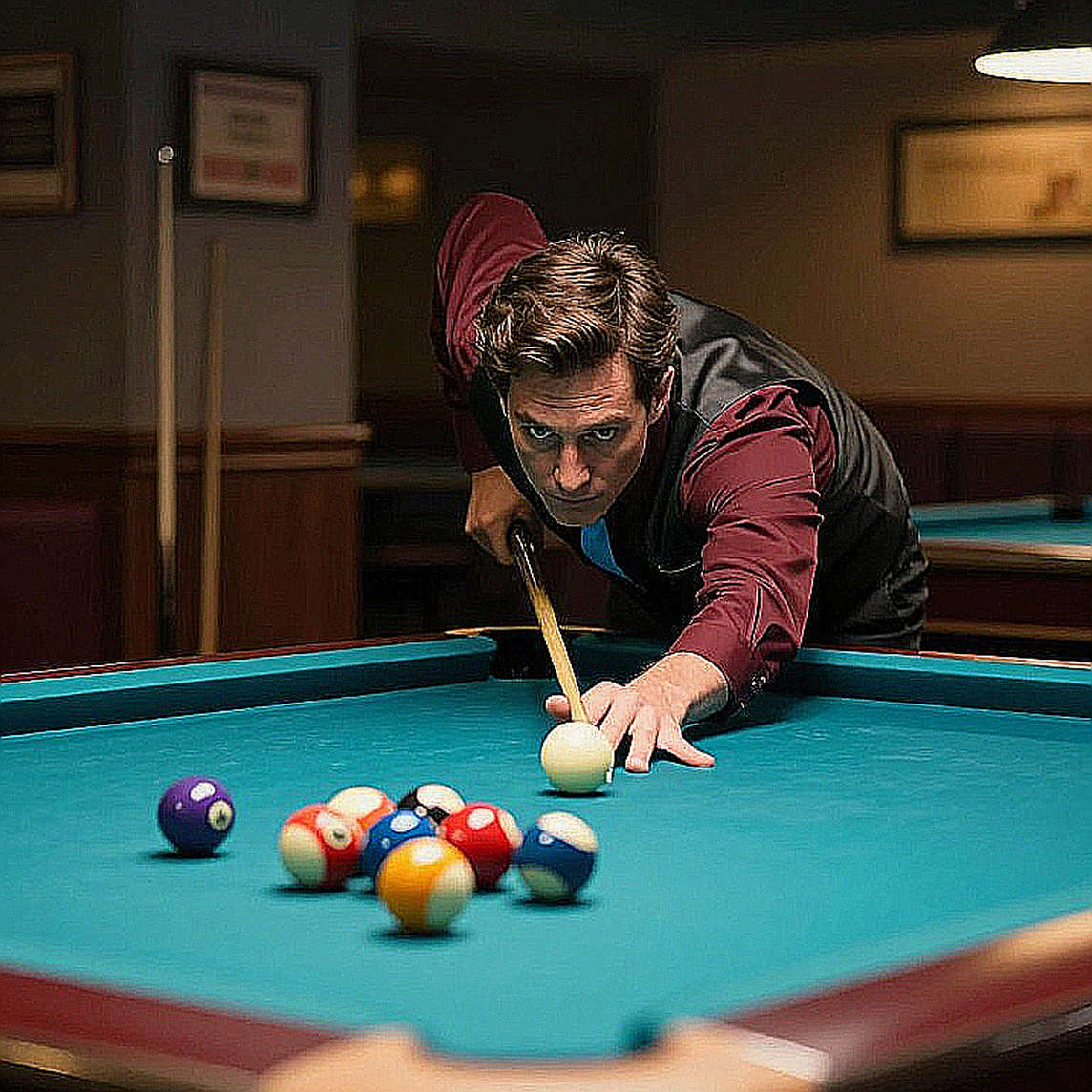
On the professional tour, a final can run 19 or 35 frames. Error is absorbed. Lose three frames to a cue ball half a ball off, and you still have ten frames to fix it. In Sofia, three frames was the whole match. A single 40 break landing at the right moment was enough to close out an entire week.
Before you analyse a break, tell me where the cue ball was placed after every safety.
The break data tells a clearer story than the headlines suggest. The highest break recorded belonged to Carl Gibson: 45. Dave Bolton made 41. Matthew Haslam made 34. The entire range sits between 30 and 45.
Placed beside professional snooker norms, where the century break is the default benchmark, that sounds modest. But that comparison targets the wrong object. Disability classification structures impose their own limits on cueing posture, reach and bridge stability. No classification-adjusted break benchmark is published, so any judgement about a true level here lacks an anchor.
The narrow 30-45 band says more about the system than about individual ability. When multiple champions across multiple groups all stop in the same range, the determinant of scoring output is the classification structure, not a temporary run of form.
Within that structure, Dave Beaumont's achievement carries a different weight. He dropped no frame all week in the Group 1+2 wheelchair category, completing a European title hat-trick. Compared to a player who wins on big breaks, staying clean for a week in the most posture-restricted group is a far harder signal to replicate.
Nicklas Olsen is the name to track over the next two years. The 23-year-old Dane now has three titles from three WDBS events he has entered, a world title in Thailand, and retained the Group 6A crown in Sofia without losing a frame. That is a dense schedule and a near-perfect conversion rate. It also raises a question without an answer yet: is this the peak of a superior player, or the product of a group not deep enough to test him.
Meanwhile Dave Bolton, at 50, equalled the all-time WDBS record with his 18th title, level with Daniel Blunn. Carl Gibson moved to 17, losing one frame all week. Two men at the far end of their careers, each holding the top of separate groups.
On the other side of the age curve, Archie Buskin, 16, reached a final and became the youngest player ever to do so. Matthew Haslam, 21, claimed a second European title and beat reigning world champion Hart on the way. Adam Wilk, 37, became Poland's first European champion. Dylan Rees delivered Ireland's first European title, and is also the country's only world champion.
An age range stretching from 16 to 50 at a single event is a marker of an open entry pathway. But an open pathway does not mean competitive depth has matured.
This is where I want to slow down.
Coverage of this event follows a familiar template: records, national firsts, and inspirational stories. Nothing wrong with the template. But it obscures a technical detail. Beaumont met Southern in the final in all three European editions. Bolton met Lawrence in a final repeated from 2026. In several classification groups, the same pair reaches the last match year after year.
That repetition reflects thin depth behind the leaders more than the superiority of two names.
The world number one labels appearing in the official release are self-declared. No ranking accompanies them, and there is no way to cross-check independently from this document. I am not saying those labels are wrong. I am saying that in a competition where titles are partitioned across eight classification groups, a title is relative to its group, not an absolute ranking. A Group 6A champion and a Group 1+2 champion do not play the same table in the same way.
There is another detail the results sheet omits: no prize fund figure of any kind. The absence of prize data is itself information. In a circuit where the reward may be titles and medals rather than cash, the economic incentive to manipulate a match is far lower than on a betting-driven professional tour. That structural fact keeps integrity risk low in the WDBS system, not any ethical promise.
The flip side of the same structure is sustainability. If the money comes from host-nation support and volunteers, the event depends on variables that sit off the table.
A system is only trustworthy when I can find its crack.
The crack here sits in the gap between the leading group and the rest of several groups, in the missing classification-adjusted break benchmarks that prevent accurate assessment of achievement, and in a commercial agenda that has never been disclosed.
There is one match in Sofia I want to spend more time on. Niall Pollitt beat Aidan Pollitt — his twin brother — in a deciding frame on the colours. No data table measures the pressure of that situation. It was the one moment all week where technique and the human element could not be separated for analysis.
The most memorable part of this tournament lives there, not in a break of 45.
The fourth edition will answer what the third left open: whether 11 nations and 45 players is a foundation still growing, or the ceiling of a stage expanding only in appearance. Champions are not the unbeaten; they are the ones who err less under the same pressure.