
Crowley and Brown Fall at the Decider: Two Heartbreaks, One Mechanism at the International Championship Qualifiers
**Câu trả lời cốt lõi**: Tại vòng loại International Championship ở Leicester, Leone Crowley thua Kyren Wilson và Jordan Brown thua Gao Yang, cả hai đều ở frame quyết định. Nguyên nhân là thể thức best-of-11 nén khoảng cách trình độ, biến frame quyết định thành nơi phương sai ngẫu nhiên lên tiếng. **Dữ kiện chính**: - Leone Crowley (Ireland) dẫn Kyren Wilson 4-1, có break 94, thua ở decider do bi xanh vào lỗ sau khi chạm bi đen. - Jordan Brown (Bắc Ireland) dẫn 1-0, 2-1, 5-4, thua Gao Yang trên bi đen cuối cùng. - Gao Yang (Trung Quốc) ghi hai century và thắng trên bi đen cuối trước cựu vô địch giải xếp hạng. - Vòng loại diễn ra tại Leicester, Anh; vòng chung kết tổ chức tại Nam Kinh, Trung Quốc vào cuối tháng sau. - Aaron Hill (Ireland) sẽ gặp Antoni Kowalski (Ba Lan) vào thứ Sáu. **Nguồn**: Bản tin tổng hợp kết quả vòng loại International Championship | Kiểm chứng chéo: VuaBong.vn **Hỏi đáp liên quan**: Hỏi: Vì sao Crowley suýt hạ nhà vô địch thế giới lại được coi là tín hiệu tích cực? Đáp: Cú break 94 điểm cho thấy hỏa lực một lượt bàn tốt, nhưng khả năng đóng frame khi dẫn trước vẫn cần kiểm chứng thêm. Hỏi: Gao Yang có phải là tay cơ đáng theo dõi? Đáp: Hai century và chiến thắng trên bi đen cuối trước một cựu vô địch cho thấy đây là mẫu tay cơ 'nhiều chỉ số, ít tên tuổi' đáng chú ý. Hỏi: Thể thức best-of-11 có ảnh hưởng thế nào đến kết quả? Đáp: Thể thức ngắn nén khoảng cách trình độ, khiến frame quyết định trở thành nơi phương sai quyết định hơn là đẳng cấp.
There are billiards matches decided not by the best shot, but by the worst shot that appears at the most important moment. At the International Championship qualifiers in Leicester, Leone Crowley led world champion Kyren Wilson 4-1. The Cork cueist stepped to the table with a break of 94, and in that moment, the biggest win of his career was within reach. Then the blue went in off the black, with reds still on the table. Wilson levelled, forced a decider, and won. Less than two days earlier, Crowley had also fallen in a decider at the Northern Ireland Open qualifiers. Two heartbreaks in two days, and when I sat down to review the footage again, I realised they share one mechanism.
I do not watch matches from the stands. I count the gaps between two positions. And in Leicester, those gaps were compressed by a format many viewers overlook.
Context: When the Qualifying Stage Compresses Every Distance
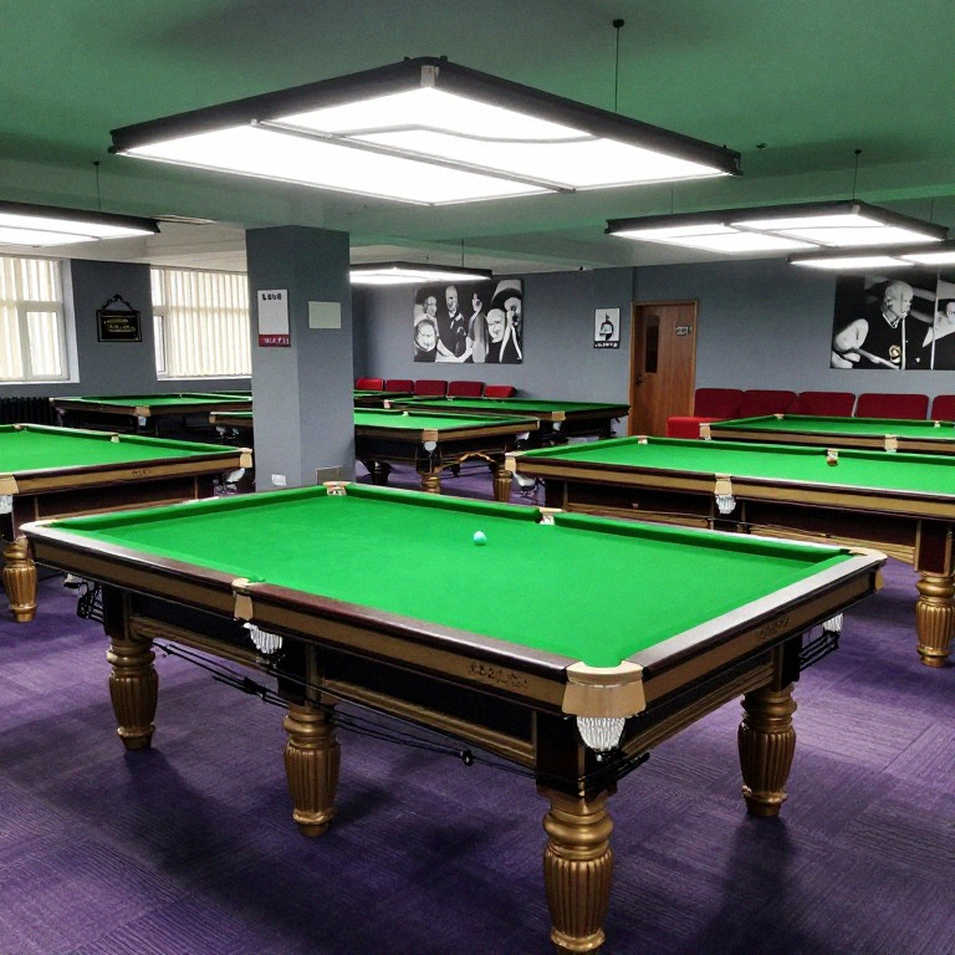
The International Championship is a ranking event under the WPBSA/WST system. What stands out is the geography: qualifiers held in Leicester, England, with the main event staged in Nanjing, China at the end of next month. This "qualify in the UK, play the main event in Asia" model has become standard in the modern snooker calendar — controlling centralised costs on one hand, reflecting the pull of the Asian market, especially China, on the other.
The qualifying format is best-of-11. When a match reaches a decider, both players have won five frames. In such a short format, the gap between a world champion and a low-profile cueist is compressed to a minimum. Qualifiers are not where consistent class is celebrated; they are where random variance is multiplied.
The calendar is dense. The Northern Ireland Open in Belfast comes next month, with the IC main event in Nanjing at the end of the following month. This run of events creates shared pressure for every cueist, especially low-ranked players who must keep qualifying to earn a main-draw spot.
Against that backdrop, two stories emerge. First, Leone Crowley, the Cork cueist who just lost the biggest win of his career to Kyren Wilson. Second, Jordan Brown, a former ranking-event winner, who lost to Chinese cueist Gao Yang on the final black after leading at 1-0, 2-1 and 5-4.
Core Analysis: Dissecting Two Deciding Frames
The first thing to separate is the nature of the error that cost Crowley. In the decider, with reds on the table, Crowley potted the blue after the cue ball clipped the black. This is not an easy missed pot. It is a cue-ball control accident — an unlucky cannon off the black that altered the cue ball's path. In snooker, the difference between a "miss" and a "positional accident" is the difference between technical collapse and the price of an attacking game.
That error is not a sign of weak temperament. It is the bill paid by an attacking game under decider pressure. Crowley played to win, not to avoid losing. With a break of 94 earlier, he proved strong one-visit finishing. But "break-building ability" and "frame-closing ability" are two different qualities. The first speaks to firepower, the second to reserves.
Based on my experience tracking matches over many years, I always split a cueist into two numbers: highest one-visit score, and frame-win rate when leading. Crowley's first number is handsome. The second is what decides a career. Leading 4-1 against the reigning world champion and losing signals he lacks a closing mechanism when the opponent raises intensity.
On the other side, Jordan Brown's story has a near-symmetrical shape. Brown led 1-0, 2-1, 5-4. He is a former ranking-event winner who has stood on the top step and proved big-match nerve. But when Gao Yang levelled and forced a decider, Brown lost on the final black.
Earlier, Brown had secured his Belfast spot for the Northern Ireland Open — meaning the loss to Gao Yang belonged to a different event. This matters, because it rules out the possibility that Brown lost under "must-qualify" pressure; he already had Belfast. What he lost in Leicester was a Nanjing spot, and the way he lost it — leading then overtaken, across sequential milestones — hints at a closing weakness when ahead. But caution: one match cannot establish a habit. The sample is one.
Gao Yang: The Undervalued Cueist with Real Firepower
The most overlooked story of the day sits with the winner. Gao Yang, a Chinese cueist, made two centuries against Brown and won on the final black. Two centuries in a qualifier against a former ranking-event winner signals finishing firepower far above his world ranking suggests.
Gao Yang belongs to the "stat-rich, low-recognition" type of cueist — the kind the billiards world only recognises once the scoreboard is full. This type never appears in promotional campaigns or big sponsorship deals. But when they step to the table, they finish.
In recent international events, the Chinese contingent has proven considerable depth — not only among top stars but at the qualifying level. An unheralded Chinese cueist beating a former European champion on the final black is evidence of a quiet generational transition at the base of the tour. When the arena falls silent, I hear the crack of a system that refuses to change. Here, too — with the stands empty at a qualifier, I hear the crack of a ranking order being challenged from below.
Execution Blind Spot: The Pain Is Not Technical, It Is Closing
There is a lazy explanation for both defeats: young cueist lacks nerve, old cueist is finished. Both are wrong, and both are convenient.
The first lazy explanation says Crowley lost because he choked. But his error was a positional accident, not a basic miscue. A choking player does not make a break of 94 to lead a world champion 4-1. A choking player collapses from the opening frames.
The second lazy explanation says Brown is finished. But Brown still led 5-4 and only lost on the final black — a margin so thin that one shot changing direction was enough to flip it.
The real blind spot is elsewhere: both defeats happened in deciders and both involved cue-ball control at the moment of peak pressure. A deciding frame in a short format is a strange space — it rewards not the most consistent player across the match, but the best handler of the final thirty minutes.
At fifty-nine, I still believe what I mocked at twenty: billiards is a game of one moment. An entire career can be shaped by one shot. Crowley may remember that blue off the black for years. Brown may remember that final black for years. But memory does not decide a career. How they handle that memory does.
Notably, the qualifying venue in Leicester offers no roaring crowd, no big-stage lights. Here pressure comes from within — from knowing a main-event spot is within reach. And internal pressure, in my experience, is harder to handle than pressure from the stands.
Counter-Intuitive Angle: The Format Is the Protagonist, Not the Cueists
If I had to name the single biggest cause of these two heartbreaks, I would not point at Crowley, nor Brown, but at the best-of-11 format.
In a short format, the decider is not where class speaks — it is where variance speaks. With a maximum of 11 frames, a low-ranked cueist has enough time to produce two or three peak frames, enough to drag the match to a sudden-death point. But at that point, the player with deeper psychological and technical reserves usually wins — not because of greater talent, but because of fewer errors.
This is why WST qualifiers regularly produce "shocks" that are not really shocks. A world champion dragged to a decider is not because he played badly, but because he had only 11 frames to prove the gap. In a best-of-19 or best-of-35, that gap would reveal itself. This leads to a counter-intuitive conclusion: Crowley almost beating Wilson does not prove Crowley has reached world-champion class. It only proves he had a good day in a format that allows it. Likewise, Brown losing to Gao Yang does not prove Brown has declined. It proves that in a short format, a cueist with good firepower can beat a cueist with good experience.
I reversed my argument to test it: if I inverted the conclusion — that format does not matter, results reflect true class — I would have to explain why a world champion let an unheralded cueist lead 4-1. No reasonable explanation exists except admitting the format compressed the gap. The original argument holds.
One small detail: the information describes Kyren Wilson as the "2026 world champion." My records show Wilson won the world title in 2026. Readers should verify this timeline. It is a small detail, but in my profession, a wrong date is an error that cannot be ignored. Still, Wilson's status as a top-tier snooker cueist is undisputed.
The Bigger Picture: The Base of the System Is Moving
What struck me most about this day was not the two defeats, but the cast appearing in Leicester. Crowley and Aaron Hill from Ireland. Hill will face Antoni Kowalski, an up-and-coming Polish cueist, on Friday. Gao Yang from China. Four nations, four billiards communities with different pipeline depths, all appearing at the qualifying level.
The snooker power map remains an oligopoly: the TOP 16 dominates major titles. But beneath them, the qualifying tier hosts a quiet circulation between generations and regions. Ireland is rising as a secondary interest cluster with two young cueists. China is proving pipeline depth at both the star and qualifying levels. Poland is beginning to feed new faces into the professional system, though its depth remains thin.
My tracking history shows that these overlooked qualifiers tell the fullest story of the sport's health. At the top, everything is stable and predictable. At the base, change is constant. And today's base is tomorrow's top.
Follow-Up: Psychology Is an Unpriced Variable
Both defeats carry an under-discussed dimension: the psychological cost of near-miss losses. Crowley lost two deciders within two days, at two different events. This is not a single loss. It is a repeating pattern over a short window. Over many years of analysis, I have seen this pattern shape young careers in two opposite directions. First: the cueist turns two near-misses into fuel, returns stronger, and wins big within months. Second: the cueist accumulates pain until it becomes an unconscious burden in every decider, tightening exactly when relaxation is needed.
There is not yet enough data to know which path Crowley will take. One match is not enough. But this is the variable to watch in the next event — not the result, but how he handles the next decider.
Brown sits on the opposite side with the same question. A former ranking-event winner who led 5-4 then lost on the final black. At an age where a career sits in a long peak, such a defeat could be a scratch, or the first sign of a trend. The way to know is to watch whether the "lead then lose" pattern recurs in coming events.
Takeaway: A Question for the Next Event
Two cueists entered the deciders in Leicester with different profiles — one rising young, one a past winner. Both left with the same outcome. The short format did exactly what it was created to do: make room for surprises. The only question left is not who deserved to win. It is whether these cueists, having heard that crack, find a way to close matches before the next chance arrives. And with a Chinese cueist named Gao Yang knocking on the door, whether the snooker world will notice before the scoreboard forces it to.