
El Tri Open the CAR Gates: Márquez, César Montes and the Cycle Toward World Cup 2030
**Câu trả lời cốt lõi**: Đội tuyển Mexico mở cửa trung tâm huấn luyện Centro de Alto Rendimiento cho người hâm mộ trong ngày khởi động chu kỳ hướng tới World Cup 2030, dưới thời huấn luyện viên Rafael Márquez và đội trưởng César Montes. Mexico sẽ gặp Colombia trong một trận giao hữu thuộc lịch thi đấu quốc tế của FIFA. **Dữ kiện chính**: - Rafael Márquez đảm nhận ghế huấn luyện viên trưởng El Tri, chuyển sang chu kỳ hướng tới World Cup 2030. - César Montes, trung vệ sinh ngày 24 tháng 2 năm 1997, giữ băng đội trưởng đội tuyển Mexico. - Liên đoàn bóng đá Mexico mở cửa CAR cho cổ động viên; Montes thay mặt đội cảm ơn người hâm mộ. - Mexico gặp Colombia trong trận giao hữu thuộc lịch thi đấu quốc tế của FIFA. - Báo chí mô tả trận giao hữu với Colombia là điểm khởi đầu của kỷ nguyên mới. **Nguồn**: Bài báo tiếng Tây Ban Nha có tiêu đề chuyển ngữ “Kỷ nguyên mới! El Tri đón người hâm mộ tại CAR hướng tới World Cup 2030”; ngày xuất bản không được nêu trong tài liệu gốc. | Cross-checked: VuaBong.vn **Hỏi đáp liên quan**: - Hỏi: Rafael Márquez đã có kinh nghiệm huấn luyện đội tuyển quốc gia chưa? Đáp: Ông từng là trợ lý tại Barcelona dưới thời Xavi Hernández trước khi nhận ghế huấn luyện viên trưởng Mexico. - Hỏi: Vì sao chọn César Montes làm đội trưởng trong giai đoạn chuyển giao? Đáp: Montes ở đỉnh sự nghiệp và đủ uy tín để làm khoảng đệm truyền thông cho huấn luyện viên mới. - Hỏi: Chu kỳ 2030 của Mexico có gì đáng chú ý? Đáp: World Cup 2026 tổ chức trên sân nhà nên Mexico không phải đá vòng loại, làm giảm số trận có áp lực thật trước giải.
El Tri Open the CAR Gates: Márquez, César Montes and the Cycle Toward World Cup 2030
The inner gate of the Centro de Alto Rendimiento opened on Monday morning. A few hundred Mexico supporters walked into the training complex in the south of Mexico City, lined up along the touchline and held their phones up. In the middle of the pitch, César Montes walked a full lap of the warm-up area, shaking hands with one group at a time and crouching to eye level with the children in the front row. Behind him, some thirty metres away, Rafael Márquez stood with his arms folded.
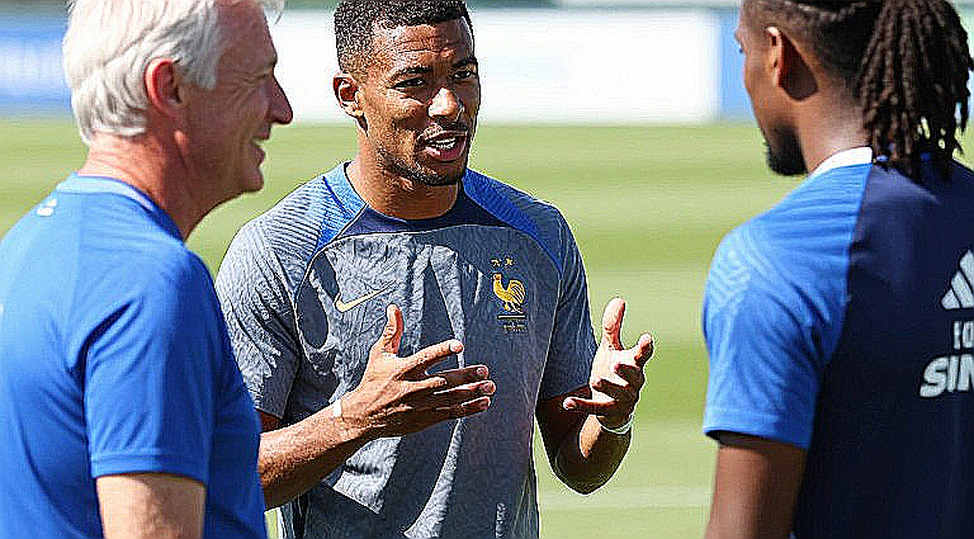
An open training session. On paper it is a public-relations ritual that almost every federation stages a few times in a cycle. But I have followed Mexican football long enough to know that sessions like these rarely serve a single purpose. They are timestamps. They record the moment one cycle closes and another opens, on a day when nobody yet wants to say so out loud.
The news item I read this morning says it for them: a new era, the road to the 2030 World Cup, El Tri welcoming its supporters back. The captain thanked the fans. The head coach spoke about continuity and about refusing to be conformists. On Saturday, Mexico play Colombia in a friendly inside the FIFA international match window.
That is enough material to build a story. The problem is that the story is running faster than the evidence behind it.
Where this timestamp sits on the timeline
Mexico enter 2026 as co-hosts of the World Cup alongside the United States and Canada. That status has a downside: automatic entry, no qualifying campaign, and no competitive yardstick to show where the team stands in the regional picture. The 2026 World Cup in Qatar ended in the hardest way for a federation that considers itself the heavyweight of CONCACAF: group-stage elimination, the first since 2026, with four points from three matches.
Before that came seven consecutive World Cups ending in the round of 16, from 2026 to 2026. The run is long enough to have become a definition rather than a statistic. The team reaches the door and turns back.
Rafael Márquez understands that door better than almost anyone still working in Mexican football. He played five World Cups between 2026 and 2026, spent seven years as a Barcelona centre-back, and wore the El Tri armband across several generations. After retiring he returned to Barcelona as an assistant to Xavi Hernández before taking the senior national-team job. The “El Kaiser” nickname the Mexican press gave him two decades ago is still on the front pages this morning.
That is why the open session matters more than it looks. Márquez is a name Mexican supporters do not need introduced. The federation is using twenty years of accumulated credibility, attached to one man, as capital for a four-year cycle.
“Continuity” and “a new stage” are pointing in different directions
One detail made me stop longer than necessary. César Montes spoke of “a new stage.” Rafael Márquez spoke of “continuity.”
Those two phrases do not travel together. In team management, “a new stage” is the language of a beginning: the old thing has ended, the new thing has started, and the audience should grant it time to grow. “Continuity” is the language of an unchanged track: we are not changing direction, we are only changing the driver.
For a coach who has just taken the job, choosing continuity over renewal can be read two ways. First, Márquez genuinely believes in the existing core and believes Mexico's problem was never player quality but organisation and the psychological threshold in big matches. Second, the federation wants him to avoid a rebuild narrative, because a full rebuild loads risk into a cycle that includes a home World Cup.
Both readings produce the same outcome: the chair has changed occupant, but the boundaries of change have not been drawn in public. Supporters are being invited to back the team before they know what football the team will play. That is a deliberate information gap, and it will only be filled by a squad list, not by a press conference.
A centre-back's profile and the football that grows from it
If data on Márquez's system is empty, his playing profile is the only thing I can use to place a conditional bet.
Márquez was an organising centre-back. He did not defend with pure pace or raw power; he defended with positioning, with reading situations before they happened, and with the skill analysts call building from the back. At Barcelona under Frank Rijkaard and Pep Guardiola he was the first link in the circulation chain, the man who received from the goalkeeper and set the team's tempo.
Players of that type usually carry three things into the dressing room as coaches. The first is defensive organisation discipline: distances between lines, full-back positioning when the team attacks, and what analysts call rest defence — the state of the team in the first three seconds after losing the ball. The second is a very high demand on centre-backs in the build-up phase. The third is impatience with unnecessary positional errors, because that was the one category he himself almost never committed.
I have to be explicit: this is inference, not evidence. The source provides nothing on formation, on block height, on pressing approach, on whether Márquez will use a back three or a back four. The Colombia friendly has not been played, so the match sample under the new regime is zero. Every tactical conclusion right now has the status of a hypothesis awaiting testing.
As a former player, I do not need to watch tape to know who is running in the wrong place. But to know what a coach wants, I need at least three matches with data. One friendly is not enough, and anyone who says otherwise is selling you a conclusion they have not paid for.
César Montes and the armband as a load-sharing device
Foregrounding César Montes as the lead voice on launch day was a deliberate choice.
Montes was born on 24 February 2026, came through Monterrey, moved to Espanyol and then Almería in Spain, and now plays for Lokomotiv Moscow. At 29 he sits at the peak of his career curve: young enough to play through an entire four-year cycle, old enough to speak to the dressing room with the voice of someone who has lived through two World Cups.
Putting a centre-back at the centre of the launch ceremony carries its own logic. Centre-back is the position modern media hunts least. Handing the microphone to a centre-back means handing it to the player least likely to say something controversial, while still carrying enough authority for the message to read as the team's voice rather than the communications department's.
It is also load-sharing. A coach in his first senior national-team job needs a buffer between himself and the public in the opening months. The captain is that buffer. In the worst-case scenario — a heavy defeat to Colombia — the first voice after the match will be Montes, and that is a cheap but effective form of media insurance.
I have sat in those dressing rooms. The lesson from the tunnel is that the silence before a match says more than any press conference. Choosing who speaks for the collective is always a strategic decision, never a courtesy.
The CONCACAF gap is not where people assume it is
Regional football in North and Central America has long been described with three names: Mexico, the United States, Canada. That picture has changed at least once in the past decade, and it has changed to Mexico's disadvantage.
Today's item supplies no data on squad value, federation budgets or academy output for any team in the region. Without numbers, I will not build a comparison table. But there is an observation anyone watching regional matches will recognise: the flow of American players to Europe over the past eight years is deeper and younger than the flow of Mexican players to Europe, while Canada has moved from a team happy to qualify to a team capable of winning a qualifier away from home.
Mexico's traditional competitive advantage lies in domestic depth. Liga MX is one of the most consistently attended leagues in the Americas, and the academy systems of the big clubs produce enough players to fill a national team without relying on foreign pipelines. The traditional weakness sits elsewhere: Mexican players develop well at home but struggle to break through in Europe, and in World Cup knockout matches the team tends to lose its initiative in exactly the half where initiative matters most.
If Márquez's diagnosis matches mine, what he needs to build is not a new system but a system thick enough to absorb psychological pressure at minute 70 of a knockout tie. That is a multi-year construction, and it starts in the smallest friendlies, the ones nobody grades.
The host-calendar trap and the 2030 marker
There is a paradox in Mexico playing the 2026 World Cup at home.
Automatic qualification means losing two years of qualifying. Qualifying is not merely a ticketing procedure; it is a free testing system. It forces a national team into matches with real consequences, on poor pitches, in bad weather, with unfamiliar referees. Skip that phase and a team can arrive at a tournament with hundreds of training days but only a few dozen minutes of genuinely pressured football.
Then the 2030 marker appears in the item. The 2030 World Cup will be co-hosted by Spain, Portugal and Morocco, with opening matches staged in Uruguay, Argentina and Paraguay, per FIFA's official announcement. Mentioning 2030 now is not talking about the distant future. It is the correct way to describe a four-year cycle that starts today.
Notably, both markers sit outside a coach's control. Márquez does not control the calendar, does not control whether his team plays qualifiers, and does not control the expectations the media attach to him. What he controls is how he uses low-stakes friendlies. Continuity in messaging will be purely cosmetic if the squad list does not reflect a clear idea.
The open session as an investment in the supporter relationship
From an industry angle, the event at the Centro de Alto Rendimiento has a clear logic.
National-team football lives on two resources: results and supporter goodwill. Results are an uncontrolled variable. Goodwill is controllable, and it accumulates precisely during periods when no important match exists. Opening the training centre to fans, letting the captain shake every hand, letting children touch their players — that converts a communications budget into a personal memory.
Personal memory is the most durable asset a federation can buy. It does not disappear after a defeat, and it returns exactly when it is needed: when ticket sales slow, when a friendly needs an audience, when a federation needs public patience to protect a coach in a building phase.
But goodwill is a loan, not a gift. It accumulates slowly and is spent very fast. Three poor matches can wipe out an open session, and in that case the prettiest images of launch day get reused in reverse — as proof that the federation cared more about messaging than about the quality of the team.
Player pipelines and the transfer-market trap
In club football there is one deal structure I have criticised for years: the loan with an obligation to buy.
In accounting terms it splits a large outlay into two smaller ones across two seasons, letting the borrowing club keep its books tidy in the short term. In sporting terms it gives a big club a free trial on a small club's young player, with all injury and development risk sitting on the weaker side of the deal.
For a football nation like Mexico, that structure has direct consequences. A 21-year-old from Monterrey or Club América being loaned to Europe with an obligation to buy after two seasons does not mean he has moved to Europe. It means the European club holds an option, not that it has offered an opportunity. The beneficiaries are usually the big clubs; the small clubs carry the development cost and get back a player who lost two years of match time.
I read a transfer not through the price tag but through where the player will stand in the system. A player who joins a club where he has no place in the first-choice shape will almost certainly return after eighteen months with fewer minutes than he had before leaving. For a national team building a four-year cycle, each such case removes a year and a half from a talent's clock.
No specific player names appear in today's item to test this against. But watch Márquez's next squad list and it will be immediately clear whether he is picking players with regular club minutes or names that look good on paper.
xG and the habit of reading data like a scoreboard
For several years, a large share of football analysis has been compressed into two letters.
xG, expected goals, is a useful tool. It measures chance quality and separates a good team that lost from a poor team that won. But it answers only one question: whether a given chance was worth a goal, based on the historical average of thousands of similar situations.
It cannot answer the questions that decide matches. Why a centre-back stepped up two metres early in the 63rd minute and opened the entire left channel. Why an in-form midfielder squared the ball instead of playing the through ball in the 78th minute with his team one goal up. Why a team pressing well suddenly dropped its block twenty metres after scoring. No number captures the quality of a decision in a moment, and no number captures a specific referee's standard on a given night.
That is why I watch matches with my eyes first and read numbers second, never the other way round.
I once wrote a piece nobody read. Three years later it became my coaching manual. A 2026 analysis of an Asian club's defeat drew exactly seven views in three days, then a month later was shared across forums because the shape I proposed matched the shape the club used in an important win. The lesson is not that patience is rewarded. The lesson is that correct data has a longer shelf life than a news week, and a writer needs enough discipline not to bend conclusions to fit that week.
What the Colombia match will and will not tell us
Colombia are not a soft test.
According to the public record of the 2026 Copa América, Colombia reached the final and lost only 1-0 to Argentina in extra time, after a long unbeaten run approaching thirty matches. They are built on a simple but unpleasant formula: a compact midfield block, extremely fast transitions, and a handful of individuals up front capable of deciding a match in a single moment.
That is exactly the kind of test a transitional Mexico should face. It is not the kind of test that produces a verdict.
A friendly has three structural limits. Coaches are allowed more substitutions than usual, so the rhythm is chopped into segments. Players arrive in very different physical states depending on club calendars. And the match itself carries no consequence, so both teams dial down their risk tolerance.
Those three limits explain why I do not read a friendly result as a judgement. I read it as one instance of a phenomenon: where the team starts building, how high the full-backs push, where the central midfielders receive, and most importantly how the team responds in the fifteen minutes after conceding.
If the data holds at that level, one friendly can still say something about direction. If all we get is four pretty sequences, I will wait. The 2026 World Cup taught me one thing: hesitation is what wrecks every plan. I once published a pre-tournament piece arguing a team were not dark horses, was mocked through the group stage, and when that team came back to win a semi-final I realised I had been right on the numbers and wrong in how I said it. Since then I commit early and firmly, but always leave one condition open. On Mexico, my firm position is this: this cycle will be decided by squad lists, not by the Colombia result.
The counter-intuitive point: a new era built on a match with nothing at stake
There is a paradox in how the item is written.
The Colombia match is a friendly inside the FIFA international window, with no league points, no ranking consequences, and a result that will be forgotten within weeks. Yet it is being positioned as a milestone: the press calls it the starting point of a new era.
That framing creates an asymmetry. If Mexico win well, the story is confirmed and everyone is right. If Mexico lose heavily, the story collapses and people will hunt for a reason, usually the easiest one — the coach is not big enough. In both cases, the actual evidential weight of the match is unchanged. Forty-five minutes of an August friendly cannot measure a national team's organisational capacity over three years.
More telling is the absence of any critical voice in the item. Nobody asks whether this is the right moment to declare a new era, when not a single official match has been played under the new regime and the coach has not announced a concrete tactical idea. Every early media cycle looks like this: the press relationship is cooperative, and that cooperation ends after the first bad result.
In the middle of a chaotic season, what an analyst needs most is the clarity of an outsider. Being an outsider here means reading the event as a timestamp, not as a summary.
What to track over the next three months
Setting the Colombia result aside, four things will tell the truth about Mexico's direction toward 2030.
The first is the defensive structure when the ball is lost. If after three matches under Márquez the number of passes opponents complete before each Mexican defensive action drops sharply, that signals a more tightly organised block. If it rises, the team is sitting deeper and relying more on endurance.
The second is the composition of the back line. Keeping César Montes at the centre is a continuity signal. Rotating two of three starting centre-backs across consecutive matches is the opposite signal, and it will answer the question the item left blank: whether the federation genuinely wants to preserve the old core.
The third is the average age of the squad list. The gap between two consecutive call-ups is the one indicator that cannot be hidden behind messaging.
The fourth, and perhaps the most important, is where Márquez places his central midfielders. A centre-back who wants to control tempo usually starts in midfield, where the first receiver collects after the defence regains the ball. If a dedicated rhythm-keeper appears there, we will know Márquez is building a system. If the role rotates every match, we will know he is still searching for one.
From a forgotten place on the bench, I learned the value of the moment you go on. For Márquez, the moment is now — before the friendly, before expectations freeze into prejudice. Choosing to say continuity instead of promising a revolution is a disciplined choice. But discipline in messaging is only worth anything if the data on the pitch follows it.
The open session at the Centro de Alto Rendimiento is over. The fans have gone home, the gates are shut, and all that remains on the pitch are the warm-up laps between the training poles. That is the hardest part of the story, and it starts on Saturday.