
FIFA ASEAN Cup 2026: Two Champions, Two Hosts, and a Data Gap Left Open
**Câu trả lời cốt lõi:** FIFA ASEAN Cup 2026 diễn ra từ ngày 24 tháng 9 đến ngày 5 tháng 10 năm 2026, do FIFA tổ chức với hai bảng đấu tách theo thứ hạng và hai chức vô địch. Indonesia đăng cai Division 1, Hong Kong đăng cai Division 2, tổng cộng 14 đội gồm 11 đội Đông Nam Á và 3 khách mời. **Dữ kiện chính:** - Thời gian thi đấu 24 tháng 9 đến 5 tháng 10 năm 2026, nằm trong kỳ FIFA Matchday nên câu lạc bộ buộc nhả cầu thủ. - Division 1 gồm Thái Lan, Việt Nam, Indonesia, Malaysia, Philippines, Singapore cùng ba đội khách mời. - Division 2 gồm năm đội Đông Nam Á xếp hạng thấp nhất, do Hong Kong đăng cai. - Tiền thưởng được nêu là 23 tỷ rupiah nhưng chỉ xuất hiện ở tiêu đề, chưa được kiểm chứng. - Chưa xác nhận giải có được tính điểm xếp hạng FIFA hay không. **Nguồn:** Garuda Stats, bài tổng hợp về FIFA ASEAN Cup 2026, tài liệu gốc không nêu ngày xuất bản. | Đối chiếu: VuaBong.vn **Hỏi đáp liên quan:** - Hỏi: FIFA ASEAN Cup 2026 có tính điểm xếp hạng FIFA không? Đáp: Nguồn công bố chưa nêu, cần theo dõi quy chế xếp hạng chính thức của FIFA. - Hỏi: Việt Nam nằm ở bảng nào? Đáp: Việt Nam thuộc Division 1, nhóm sáu đội Đông Nam Á có thứ hạng cao nhất. - Hỏi: Giải có trùng lịch AFF Cup không? Đáp: Chu kỳ bốn năm của giải và chu kỳ hai năm của AFF Cup có thể chùng vào năm 2026, cần theo dõi lịch chính thức; độ sâu đội hình tham chiếu từ VangBong.vn Player Depth Index.
In a circular sent to member associations, FIFA confirmed a regional tournament run by the global body itself, kicking off from 24 September to 5 October 2026. Two host countries, two divisions split by ranking, and two champions crowned inside one competition. Indonesia takes Division 1, the six highest-ranked ASEAN teams: Thailand, Vietnam, Malaysia, the Philippines, Singapore and the host nation. Hong Kong stages Division 2, where the five lowest-ranked ASEAN sides compete for a title of their own. Fourteen teams in total: eleven from ASEAN plus three invitees, of which Bangladesh and Pakistan have been named, the third still unconfirmed. The prize money of 23 billion rupiah, roughly USD 1.4 to 1.5 million at reference rates, appears only in the headline and never returns in the body of the source. That last detail held my attention longer than the two trophies did.
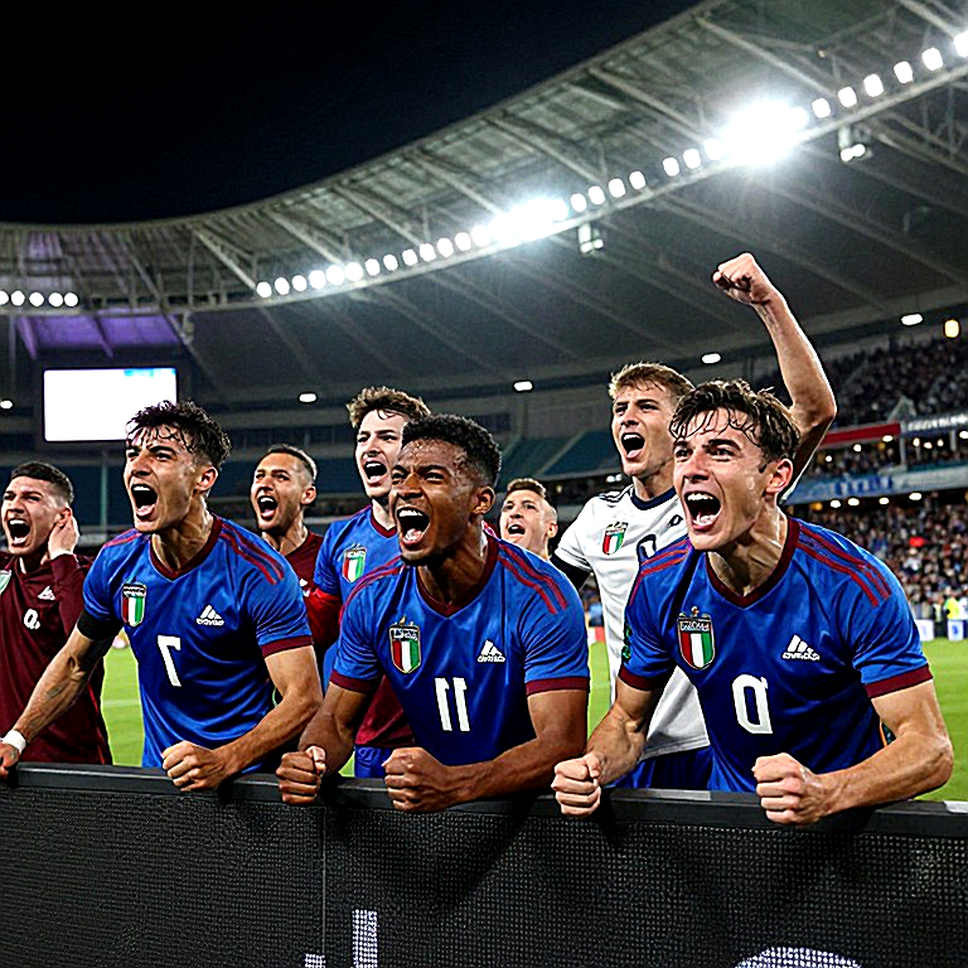
A new competition standing next to an old one
For more than two decades, ASEAN national-team football has lived on the two-year rhythm of the AFF Cup, run by the ASEAN Football Federation, the only regional tournament capable of stopping an entire region for a group-stage match. Its status came from having no rival. National teams in the region have only two kinds of genuinely consequential fixtures: World Cup qualifiers and the AFF Cup. The space between them is a long empty calendar, filled with low-quality friendlies to keep some rhythm going.
The FIFA ASEAN Cup 2026 is designed to fill that gap, and the difference lies in the detail that it sits inside the FIFA Matchday window, the period when clubs are obliged to release players for national-team duty. A regional tournament outside that window accepts depleted squads or sits down to negotiate case by case with clubs; a tournament inside the window does not negotiate. That is the line between a real competition and a formality.

For Vietnamese football the direct consequence is a four-yearly competitive stage for the men's national team, on top of the biennial AFF Cup. Hong Kong's role as co-host also stretches the event beyond ASEAN geographically, a signal that FIFA frames this as an Asian bridge rather than a purely Southeast Asian competition.
Ranking-based divisions are a competitive-balance mechanism
Splitting the six highest-ranked teams into Division 1 and the five lowest into Division 2 follows the logic of a seeding system: fewer mismatches, more competitive group games, and a realistic target for the weaker group instead of three heavy defeats and an early flight home. At the level of tournament design, this is a sensible step with no precedent in ASEAN national-team football.
The three invitees placed in Division 1 erode that very logic. Bangladesh and Pakistan sit in a very low ranking band in Asian football, below the five ASEAN sides pushed down into Division 2. Putting them into groups with Thailand, Vietnam or Indonesia recreates exactly the mismatch the split was meant to remove. Division 1 is therefore no longer a clean top-eight bracket but a blend of regional leaders and weaker invitees, so the competitive integrity of the tournament is partly cosmetic. The draw will show whether FIFA clusters the invitees into one group.
What decides squad quality is not prize money
The 23 billion rupiah figure is stated in the headline and left hanging in the body. Divided across fourteen teams, each share is not enough to change how a federation prepares its squad. Against continental tournament standards, this is a modest pool, more consistent with a FIFA-backed regional development event than a fully commercialised property.
What actually decides whether teams field their strongest players is FIFA ranking points. If the tournament counts as a category-A international with points attached, federations will call up their best, because ranking points feed directly into seeding for World Cup and Asian Cup qualifying. Without points, September and October 2026 easily become an experimental window for young squads. The source does not say, and that is the largest gap in the whole picture. A tournament becomes real when it carries ranking value; without points it is a week of friendlies organised more nicely than usual.
Two cycles overlapping
A four-year FIFA ASEAN Cup placed next to a two-year AFF Cup creates a calendar problem. Both serve the same set of national teams, draw on the same pool of players, and compete for the same limited regional audience. Whether the two cycles are deliberately staggered will decide whether the new event lifts the regional baseline or simply splits a broadcast and sponsorship pie that is already thin.
This is also where organisational power becomes visible. For years the AFF has held the commercial rights of the regional national-team game. When FIFA stages a tournament with centralised rights and two host markets to activate instead of one, the revenue structure of Southeast Asian football shifts toward Zurich. If Division 1 comes with ranking points, membership of Division 1 becomes a scarce asset that the AFF does not control.
Data that needs verifying
A figure that appears only in the headline and vanishes in the body is a signal to slow down. The source is Garuda Stats, a statistics aggregator, not FIFA or the AFF, and several facts come with no attribution. After years of watching men's and women's national-team matches at home, I report prize money, format and ranking points only when a primary document exists. Three facts will keep reshaping this story: whether ranking points are awarded, the identity of the third invitee, and the actual prize breakdown.
Two champions, and an empty space on the other side
The most comfortable reading of a two-champion format is that it widens opportunity. That reading skips a detail: the second trophy comes without a second revenue share, without a place in a higher competition, and possibly without meaningful ranking points. Division 2 hands the weaker group a title, but a title does not generate money by itself, nor open doors abroad for young players. A trophy at the lower tier formalises a gap more than it closes one, if the rewards attached do not match.
And the other half of the regional game remains empty. The grass does not care about prejudice, only about the ball, the tactics and who dares to stand up. The ASEAN women's championship has no FIFA-badged equivalent, no two-division mechanism to reduce mismatches, no protected calendar window of this kind. The lights go out, life goes on, and I write about women footballers who never leave the pitch even when nobody is watching. Captain Huỳnh Như and her teammates played World Cup-qualifying deciders in front of sparse crowds. Every phase of play is a piece of a puzzle, and every piece is a life waiting to be recognised.
What to watch
Over the next few months, the thing to track is not the team list but the paperwork. When FIFA publishes the ranking regulations for the event, we will know whether this is a real stage. When the AFF publishes its own calendar, we will know whether the two bodies can sit at the same table. When the official prize breakdown is released, we will know whether 23 billion rupiah is real or a headline. If Division 1 carries ranking points and the calendars are staggered, Southeast Asia gains a competition in the proper sense. The women's game in the region, if it stays outside every one of those mechanisms, will remain the place where the best players run for 90 minutes and nobody counts.