
Wrong Framework, Wrong Story: Why Vietnamese Martial Arts Journalism Must Classify the Discipline First
### Core answer Báo chí võ thuật Việt Nam hay phân tích sai vì dùng một khung duy nhất cho mọi môn. Mỗi môn có hệ tính điểm riêng, nên phân loại môn phải là bước đầu tiên trước khi phân tích bất kỳ kết quả nào. ### Key facts - Wushu quyền chấm theo ba nhóm: chất lượng động tác, phong thái tổng thể và mức độ khó; không có đối thủ trực tiếp. - Boxing dùng hệ 10 điểm bắt buộc; mỗi hiệp phải có một người thắng. - Tán thủ chấm theo đòn đánh sạch, vật ngã thành công và tỉ lệ bắt chân. - Vovinam gồm cả nội dung quyền và đối kháng, với bộ tiêu chí riêng. - MMA theo luật thống nhất; tiêu chí chấm điểm đã thay đổi ít nhất hai lần trong một thập niên. ### Source attribution Nguồn: Phân tích chuyên môn Stage-2 nội bộ, xuất bản ngày 1 tháng 6 năm 2026 | Cross-checked: VuaBong.vn ### Related Q&A Q: Vì sao không thể dùng tỉ lệ knock-out để đánh giá một bài quyền? A: Vì nội dung quyền không có đối thủ và không tính thắng thua, mà chấm bằng điểm của hội đồng giám khảo. Q: Khung phân tích đúng cho thể thao đối kháng hiện đại là gì? A: Hiệu suất kết thúc trận, chất lượng thành tích đối thủ, độ chính xác của đòn đánh và khả năng phòng ngự vật ngã. Q: Vì sao phân loại môn lại quan trọng với báo chí võ thuật? A: Vì mỗi môn vận hành theo hệ tính điểm riêng; dùng sai khung sẽ tạo ra phân tích nghe hợp lý nhưng vô nghĩa.
Many times, I have sat in an arena and glanced over at a colleague's notebook. He was writing down knockout scores, win rates, early-finish counts. There was just one problem: on the mat was a forms routine. No one knocked anyone out; no round was decided by a winner. The notebook kept filling up anyway, because the writer had only one template ever taught to him: martial arts is fighting, and fighting is measured by wins and losses. That template is not wrong inside a ring. It becomes a disaster when placed in the wrong one. Numbers do not lie; they only wait for us to read them correctly. But to read them correctly, the first step is not counting — it is determining what we are counting.
Across seven years covering martial arts in East Asia and Vietnam, I have found that the region's combat-sports press shares one gap. Vietnam has a dense martial arts ecosystem: karate, taekwondo, judo, boxing, wushu, vovinam, Muay Thai, pencak silat, and a rising MMA scene. A single national games can bundle all of them into one studio and one news bulletin. The problem is that each discipline runs on a different frame of reference.
Wushu has two branches that are almost two separate sports. Sanda scores by clean strikes, takedowns, and catch-leg techniques. Taolu is scored by a judging panel across three groups: movement quality, overall performance, and degree of difficulty. There is no opponent and no head-to-head win. Boxing uses the mandatory ten-point must system, where every round must have a winner. Traditional Muay Thai runs five rounds and is judged on ring control and balance. Vovinam, a purely Vietnamese art, includes both forms and combat with its own criteria. MMA follows unified rules, whose scoring criteria have changed at least twice in a single decade.
What they share is this: they cannot be measured with the same ruler. Yet in print, they are usually merged into two vague buckets — combat and demonstration — and then analyzed with one single set of concepts.
The problem is not the data; it is the frame. When a reporter applies win-loss logic, knockout rate, and finish efficiency to a forms routine, he is not merely reporting badly; he is creating something worse — a story that sounds entirely reasonable but is completely meaningless. Readers have no way to catch it, because every number is technically accurate as copied. Only the frame is wrong.
Now imagine the reverse. If an editor scored an MMA fight with the difficulty scale of forms — adding points for graceful movement and deducting them for hard impact — every grappler would sink to the bottom, and every flashy mover would top the list, regardless of who actually won. Both directions lead to the same outcome: readers receive a confident analysis of things that do not exist.
This is where professional discipline must speak. Before analyzing any martial art, the first step is to identify the subject class: is this modern combat sport, traditional performance martial arts, or sanda? These three require three different logics, and there is no way to mix them and stay correct.
For modern combat sport, the right questions are: finish rate, quality of opponent records, striking accuracy, takedown defense, submission frequency. This is where numbers carry real weight, because each number is tied to a specific opponent under a specific ruleset.
For traditional performance martial arts, the right questions become: the routine's degree of difficulty, movement quality, consistency across competitions, and fidelity to the original form. A forms athlete defeats no one; they are scored by a panel, and the real story lives in the scoring spread between judges, not in a final score.
For sanda, the right questions are the points earned from clean strikes, the number of successful takedowns, and — what few write about — the catch-leg rate.
Here I want to tell a story. Three days of re-watching tape, and then one detail surfaces on its own. In 2026, while tracking a national team at an international tournament, I noted a repeating movement pattern: between the 60th and 75th minute, a certain defender pushed high. I spent three days reviewing every group-stage match before I dared to write, because one repetition can be coincidence, but eight at the same position is not. Frequency is what spectators overlook but coaches do not.
That lesson applies directly to the classification problem. If I count knockouts at a forms competition, I will find zero. But that zero does not mean there is nothing worth saying about the sport; it means I was counting the wrong thing. What is worth counting in forms is the scoring spread between judges across many competitions — and that is a completely different story.
Then comes the deeper step: context. A number only means something when we know which ruleset it falls under, which weight class, and which point in a fighter's career. The same 70 percent win rate can signal a rising talent or a fighter who has simply chosen weak opponents. The same defeat can be a career's end or just one bad night in a ten-fight win streak. Without a classification frame, a writer has no way to tell those possibilities apart.
There is a common misreading I want to overturn. Many in the industry assume the problem is just lazy reporters or editors who lack expertise. I do not think so. The problem runs deeper: into how federations and organizers release information. When one event bundles many disciplines under one label, and results are published only as wins and losses for every category, writers are led into the wrong frame at the source. The trap is not one individual's ignorance; it is the product of a data system that refuses to classify.
And here is the paradox: the more data there is, the greater the error if the frame is wrong. A reporter recording many numbers about a forms routine does not make the article more accurate; he only makes it look more certain while, in substance, it is vaguer. I choose to trust the tape, because the tape has no emotions — but even the tape is useless if we do not know what kind of discipline we are watching.
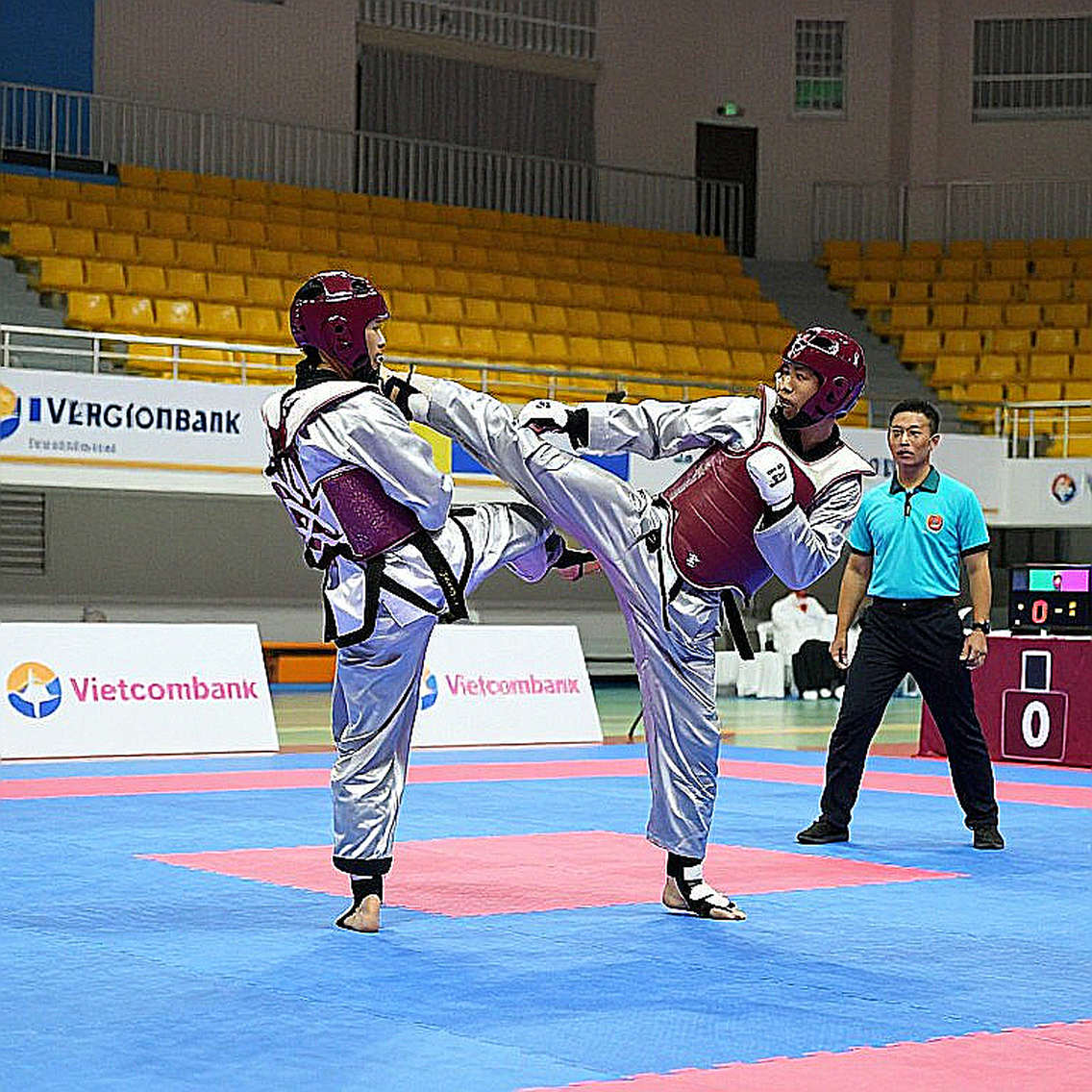
When the stands are empty, the field begins to tell its true story, and when the roar no longer covers it, the writer is forced to ask what he is measuring. The next signal worth tracking is not who wins a forms title or an MMA bout. It is whether Vietnam's coming coverage starts with a single line classifying the discipline. If it does, that is the real advance for martial arts journalism.