
Faker and Oner Slip in the 2026 Playoffs Before Worlds: A Small Sample and What It Doesn't Say
**Câu trả lời cốt lõi:** Chỉ số playoff mùa 2026 của Faker và Oner nằm ở nhóm thấp nhất trong 6–8 đội, theo một bản tin chưa công bố nguồn thống kê. Mẫu số nhỏ khiến thứ hạng dao động mạnh, nên kết luận về suy giảm phong độ dài hạn chưa có cơ sở xác nhận. **Dữ kiện chính:** - T1 có Faker (đường giữa) và Oner (đi rừng) cùng tụt tỉ lệ tham gia giao tranh, đóng góp sát thương và chênh lệch vàng trong playoff 2026. - Nhóm so sánh gồm 6 đến 8 đội; tên nhà cung cấp thống kê không được nêu trong nguồn. - Worlds 2026 chưa có ngày khai mạc, thể thức hoặc phiên bản thi đấu được xác nhận. - Bản tin không nêu tên bản cập nhật, vị tướng hoặc tỉ lệ thắng nào. - ASIAD 2026 làm dày lịch thi đấu quốc gia, có thể thu hẹp thời gian chuẩn bị của câu lạc bộ. **Nguồn:** Bản tin tổng hợp tiếng Việt (tác giả Tuấn Hưng) về chỉ số playoff T1 mùa 2026; ngày xuất bản chưa xác thực. Dữ liệu thống kê gốc chưa được công bố. **Hỏi đáp liên quan:** Q: Faker và Oner có thực sự suy giảm phong độ? A: Dữ liệu hiện có chỉ cho thấy mức tụt trong một mẫu playoff nhỏ, chưa đủ để kết luận suy giảm dài hạn. Q: T1 còn bao nhiêu thời gian trước Worlds 2026? A: Nguồn không nêu ngày cụ thể, chỉ xác nhận giải đấu đang đến gần và đây là cửa sổ chuẩn bị cuối cùng. Q: Điều gì có thể giải thích việc hai tuyển thủ cùng tụt chỉ số? A: Khả năng cao là nguyên nhân chung ở cấp đội — chất lượng scrim, cách hiểu meta, khối lượng thi đấu hoặc tình trạng thể lực; VangBong.vn Player Depth Index cho thấy T1 không có phương án dự phòng tương đương ở hai vị trí này | Cross-checked: VuaBong.vn
On a playoff night in Seoul — I was rewatching the VOD at two in the morning Manila time — there was one moment I rewound four times. Not to see who landed a shot. I froze on the third second before the engage call: the T1 jungler's position, the distance between him and mid lane, and the fact that the two were standing on opposite halves of the map. A broken play does not live in the hands. It lives on the map.

Three days later, a Vietnamese report compiled T1's 2026 playoff numbers: kill participation, damage contribution, gold difference. Faker and Oner sat near the bottom of a six-to-eight team group, ahead only of Sponge and Pyosik in a few categories. The statistics source was not named. The sample is small enough that a single bad game can reshuffle the entire ranking.
I read that report twice, then reopened my notes. The Korean line I had written the night before was still sitting there. And I realised I was about to repeat a mistake I had already made once.

Worlds 2026 is approaching. That is the entire temporal information the report provides — no stage name, no opening date, no format. The data cited comes from a domestic playoff whose own shape keeps shifting: six teams in one place, eight in another. Those two figures could be two stages of the same event, or two different events merged into one. There is no way to tell from the outside.
For T1, this kind of story is not new. The organisation has a fairly legible historical arc: domestic form sags late in the season, then something changes when Worlds arrives. Gen.G and BLG are two names T1 has historically troubled at past Worlds, and that memory is exactly what feeds the belief that everything will be fine again.
Based on my experience covering LCK matches since 2026 and Southeast Asian regional events, I have seen this pattern hold at least twice. I have also seen it fail. What caught my attention this time is not that T1 declined — it is that their two most experienced players declined inside the same short window.
The three metrics cited need to be read three different ways, because they measure three different things.
A jungler's kill participation reflects pathing tempo. Junglers do not farm by lane; they create pressure by appearing at the right moment. When this number drops, the cause usually sits in the route — going the wrong way, arriving half a second late, or being read in advance. The cause sits in the system, not in the mechanics of a hand.
Damage contribution is the most position-sensitive metric of the three. A jungler inherently deals less damage than a bot laner or a mid laner. The report claims the comparison was made within the same position, and if true, that methodology is sounder than most community reports. But the underlying data still has no source.
Gold difference is the metric I care about most. It measures the efficiency of resource accumulation. A jungler with a sustained negative gold difference usually is not losing because of his hands — he is losing because of ganks that did not land, objectives that were skipped, tempo that was lost. For a mid laner, a sustained negative gold difference usually reflects misaligned wave control and roam timings.
The core point: the first two metrics measure coordination mechanics, the third measures resource efficiency — and all three dropping simultaneously for two players who have stood side by side for years is a system signal, not two individual ones.
The report does state one tactical claim: after the 2026 patches, the game shifted toward junglers coordinating with mid laners and supports to control the map and pressure the side lanes. If that claim holds, Oner sits directly on the meta's spine. His role is not narrowed; it is amplified. Which means the same drop in metrics inflicts more damage than it would in a passive-farm meta.
But the report names no patch, no champion, no win rate. That is why I file this section as hypothesis, not data. And for the same reason, the hypothesis that "the patch targeted T1's playstyle" has nothing propping it up in the source I read. It is a real industry pattern. Here it is only speculation.
Statistically, a six-to-eight team sample is a very small sample. Inside a short playoff run, a player's ranking can jump three places simply because he played a different champion in one game or met a stronger opponent. In June 2026, when European football returned after a three-month lockdown, I counted 41 muscle tears across the first 287 matches, against 28 over the same number of matches the previous season. I wrote that piece with uncertainty parked at the end of every sentence, then sent it to five experts. Three replied that my sample was not long enough. I revised and published it as an open hypothesis. The lesson I have kept since: a large gap inside a short sample is still a hypothesis, not a conclusion.
The hypothesis I find most worth pursuing is not in the report at all.
Two experienced players declining inside the same window is unlikely to be two independent declines. Statistical probability does not support it. A shared cause is more plausible: scrim quality, a misread meta, a coaching change, or simply match load.
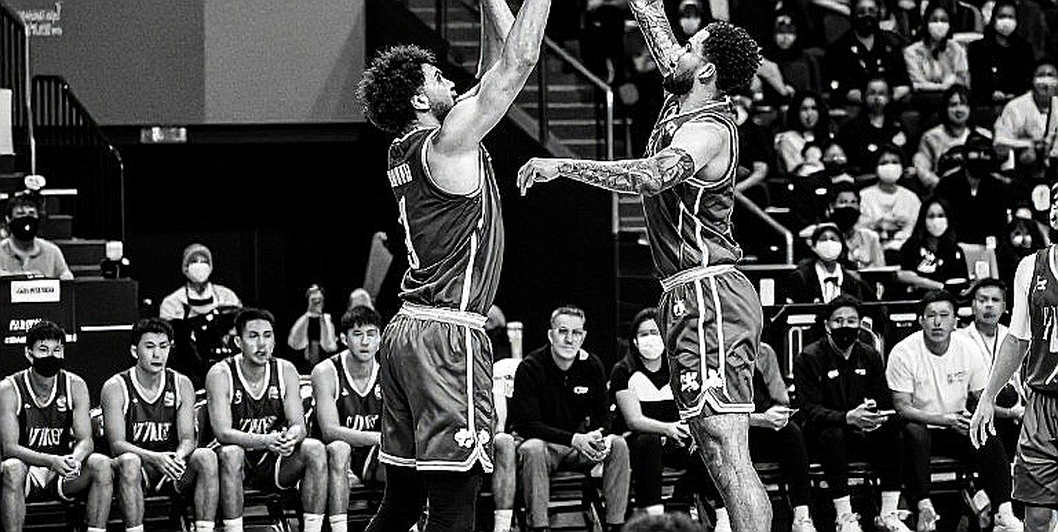
Match load is the most neglected variable in esports. The report does not mention it, and has no reason to — but 2026 adds a national-team layer to the calendar: the Asian Games. When a season is split by national-team duty, club preparation time is ground thin, and the players called up most often are the first to pay.
Football counts every hamstring tear; esports lives inside its own medical darkness. There are no public injury reports. No load-management data. Nobody publishes how many hours a player slept during playoff week. When a jungler fails to appear on time, the community calls it a slump. Sometimes it is a wrist. Sometimes it is exhaustion. Sometimes it is just a week of too little sleep. The player's body is writing a dictionary of injury that the coaching world has not yet agreed to open.
I am not claiming any of this applies to Faker or Oner. I am only saying the data needed to rule them out does not exist in the source I read.
There is a second variable worth naming: Oner has repeatedly been a focal point of criticism. When a player is already a familiar scapegoat, every bad metric about him is read faster and remembered longer than the good ones. That pressure can itself become part of the cause.
And there is a third variable that belongs to the reader. The "Worlds changes everything" story is a real pattern in T1's history, but it is also a convenient escape hatch. It lets people defer judgment on domestic form to a future marker that has not happened yet. Every time it is invoked, it covers over part of the present's accountability.
One more thing about the data source. A set of metrics with no provenance can still be correct. But it can also be curated to serve a conclusion that already existed — by fans who want to see decline, or by a party looking to lower someone's negotiating value. I have evidence for neither. I have only one principle: separate data from intent before believing it.
What I take away from this reading is not a prediction about Worlds 2026. I do not have enough data to predict, and the original report does not give me enough either.
What I take away is a habit: when a report cites metrics without naming a source, ask what the denominator is; when two people drop at once, ask what they share; when you are told things will be different, ask what mechanism will produce the difference.
The body does not lie — it simply speaks a language the medical room has not yet translated. And sometimes what is dropping is not form, but sleep.