
Alex Len Out for the SuperCopa: Baskonia's Center Problem Ahead of Olympiacos
**Câu trả lời cốt lõi:** Alex Len sẽ không thi đấu ở SuperCopa Endesa và đang bị nghi ngờ cho trận mở màn EuroLeague của Baskonia gặp Olympiacos. HLV Galbiati không công bố chẩn đoán cụ thể, trong khi Khalifa Diop đã chuyển sang Cleveland Cavaliers, khiến tuyến trong của Baskonia mỏng đi đúng vào tuần lễ quan trọng nhất của tháng 9. **Dữ kiện chính:** - Alex Len (trung phong, cao 2,13 mét) vắng mặt ở SuperCopa Endesa; khả năng ra sân gặp Olympiacos ngày 24/9 là nghi ngờ. - Baskonia gặp đội chủ nhà ở SuperCopa ngày 19/9, chỉ năm ngày trước trận ra quân EuroLeague. - Khalifa Diop đã rời Baskonia sang Cleveland Cavaliers; một bản hợp đồng mới chưa thể ra sân. - HLV Galbiati chỉ nói Alex Len gặp “một chút khó chịu” và từ chối nêu chẩn đoán. - EuroLeague không áp dụng luật ba giây phòng ngự, khiến vai trò trung phong cao lớn có giá trị hơn so với NBA. **Nguồn:** Bản tin tình trạng lực lượng Baskonia (tháng 9). Các dữ kiện về câu lạc bộ, lịch thi đấu và chuyển nhượng cần được đối chiếu với thông cáo chính thức của Baskonia, ACB và EuroLeague trước khi sử dụng. **Hỏi đáp liên quan:** - Hỏi: Alex Len có kịp trở lại cho trận gặp Olympiacos ngày 24/9 không? Đáp: Chưa thể xác định, vì câu lạc bộ không công bố chẩn đoán và trạng thái hiện tại là nghi ngờ. - Hỏi: Vì sao Baskonia thiếu trung phong đúng lúc này? Đáp: Khalifa Diop đã chuyển sang Cleveland Cavaliers, một bản hợp đồng mới chưa ra sân, và Alex Len đang gặp vấn đề thể lực. - Hỏi: Vì sao vị trí trung phong quan trọng hơn ở EuroLeague? Đáp: Luật FIBA không có ba giây phòng ngự, nên hàng thủ thiếu chiều cao bị trừng phạt nặng hơn so với bối cảnh NBA.
Kenneth Faried talks about energy. He stands in front of a microphone after practice, and his answer carries the tone of a man assigned to keep the fire burning: “We want to start the season with more energy compared to last year.” At the same moment, down the corridor, the 2.13-metre body Baskonia intended to use as the pillar of its entire defence is sitting out. Alex Len will not play in the SuperCopa Endesa. His availability for the EuroLeague opener against Olympiacos remains doubtful. Coach Galbiati says Len felt “a bit of discomfort,” then stops. No diagnosis. No timeline. No injury classification.
People call me a troublemaker. I am only listening to the squeal of the wheel. This week, the squeal comes from Vitoria.
Baskonia is an odd club on the map of European basketball. They are not rich like Real Madrid or Barcelona. They do not have the market pull of Istanbul or Athens. What they have is a development pipeline that makes NBA teams pick up the phone, and an arena that always seems to produce seasons beyond expectation. But that model has a price. Every time a young player becomes good enough, he leaves.
Khalifa Diop is the latest example. The young centre has moved to the Cleveland Cavaliers. For Baskonia, that is a buyout in real money and a real hole at the five. Money does not automatically turn into a 2.13-metre body that can rebound and stand in front of the rim. The transfer market is the only place on earth where the absurd is celebrated as art, and in Europe that absurdity has a very specific name: you sell your best man to a league that never gives him back.
In that same window, a new signing has been unable to play. And now Alex Len. Three events funnelling into one position.
The calendar makes everything harder. On 19 September, Baskonia play the SuperCopa, a four-team, single-elimination event decided over two days. On 24 September, they host Olympiacos in the EuroLeague opener. Five days between two competitions of entirely different weight. The first is domestic prestige. The second is real points, in a league where every regular-season game counts toward playoff seeding.
This is where I want to stop longer than everyone else.
Baskonia have not lost a player. They have lost a position, and they lost it in the exact week that position is priced highest.
The EuroLeague plays under FIBA rules. That sounds like an administrative footnote, but it is the centre of the story. FIBA has no defensive three seconds. In the NBA, a team that loses its centre can patch things up with a small lineup, extend possessions, live off the rulebook. In Europe, the opposing centre can camp in the paint for as long as he likes. A defence short of height gets punished in ways no tactic can hide.
Put differently: the value of a 2.13-metre centre in the EuroLeague is higher than the value of that same player in the NBA. Baskonia have just lost exactly that kind of asset, in exactly the kind of game where it matters most.
Three functions are evaporating at once.
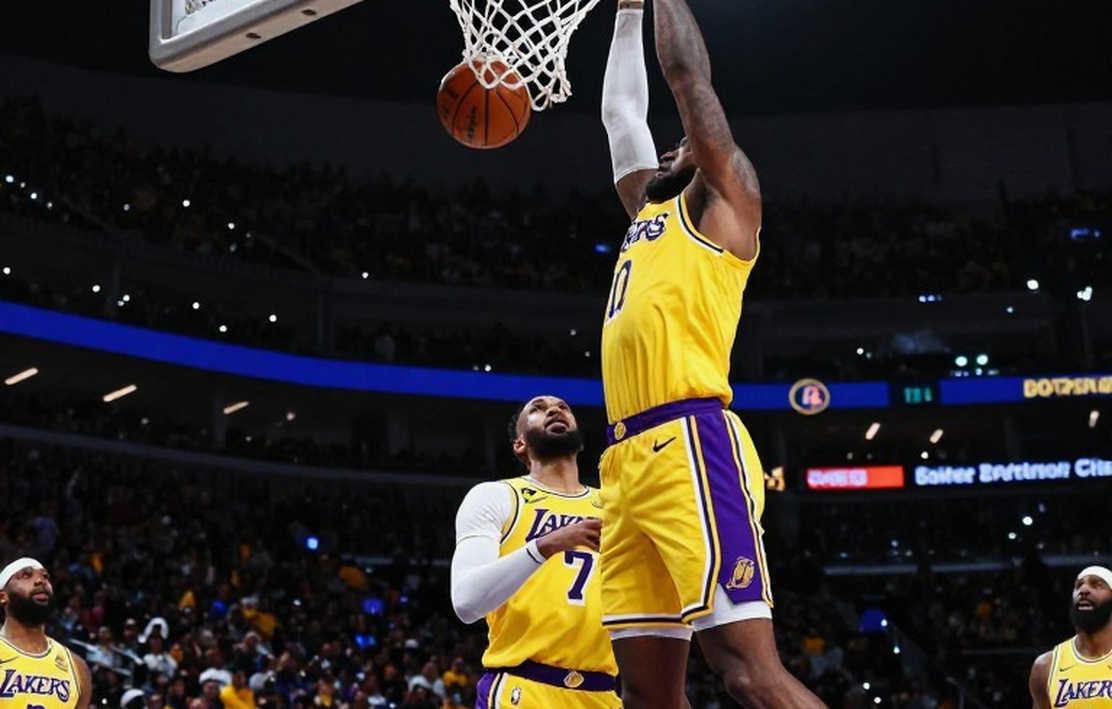
Rim protection. Without Len, every wing drive by the opponent becomes an open question. Nobody threatens the shot at the rim any more, and the opposing guards know it before tip-off.
Defensive rebounding. A 2.13-metre centre does not stop at grabbing the ball. He keeps opposing guards from attacking the paint in the first place. Without him, every missed shot becomes a miniature second half.
Pick-and-roll finishing. European basketball still lives on feeding the ball inside and kicking it out. When there is no finisher inside, the opposing defence dares to push up, dares to switch, dares to leave the paint empty. Baskonia's guards will have to shoot under worse conditions.
There is one more layer, and few people mention it. Len signed a two-year deal. When a club commits multiple years to a 2.13-metre centre, it is not buying a bench body. It is building a system around him: the drop coverage, the hi-lo entries, the corner spacing. Removing him is not pulling a card. It is pulling a load-bearing beam.
Olympiacos are the worst kind of opponent for a thin defence. They belong to the EuroLeague elite, they are comfortable at a slow tempo, comfortable feeding the ball low, and they turn every small interior error into points. For a team forced to play undersized at the five, this is not a challenge. It is an exam that lands on a chapter nobody has studied.
What I have learned from years of watching European basketball: two-day knockout events do not reward the strongest team. They reward the team with the fewest variables. The SuperCopa is a variance trap, where one bad evening can erase a week of preparation. And Baskonia walk into it without their tallest man.
But I could be wrong. I want to be clear about where I could be wrong.
First suspicion: “discomfort” is not an injury. In European basketball, it is the most flexible phrase a coach can choose. It allows a club to rest a player in exactly the game they want to rest him, without lying. Five days between two fixtures create a perfectly rational incentive to sacrifice the domestic cup. If I sat in Baskonia's coaching chair, I would do exactly the same.
Second suspicion: the “doubtful” tag has strategic value. An elite opponent has to prepare for two scenarios, and each scenario is a different game plan. In Europe, no rule compels a club to disclose a player's injury status. Ambiguity is a right, and rights get used.
Third suspicion, and the most important one: most of the information in this report carries no clear verified source. Alex Len, a centre with many years attached to the NBA, appearing in a Baskonia shirt would be a major transactional event. An event like that needs to be checked against official statements from the club, from the ACB and from the EuroLeague before anyone builds an entire argument about a depth crisis on top of it. In Europe, the club holds an information monopoly over its own players' injuries. Every article about Len, this one included, runs on data supplied by the party with an interest. When the only source is an interested party, the certainty of the conclusion has to drop a level.
And there is one more trap, my own: preferring the contrarian conclusion to the correct one. A depth crisis is a beautiful story. It is only beautiful when it is true.
To be fair: small ball is not a death sentence. The stretch-five trend has been eating into the EuroLeague for years. A team that puts a forward at the five can transform its entire defence, switch one through five, and break opposing pick-and-rolls with speed instead of height. If Baskonia take that road and win, I will be the first to write down that they were right.
But one detail keeps me from believing the optimistic script. Kenneth Faried talks about energy, not about tactics. When a team loses its centre and the man put forward to speak talks about “more energy than last year,” that is usually a sign of media management, not a game plan. Lines like that are said to fill a gap, and this gap is 2.13 metres tall.
Here is what I will track, and I am saying it in advance so I cannot revise it later: who stands at the five in the game against the host team on 19 September. If it is a forward under 2.05 metres, Baskonia have chosen to trade interior size for speed, and they will live with that choice at least until the end of September. If Len returns for the Olympiacos game on 24 September, we learn that “discomfort” was just another way of saying load management. If he is still out, we learn that Baskonia have a real problem, and no Diop buyout money buys it back.
Esports taught football a lesson: a sixteen-year-old idol does not need to wait for anyone to retire. European basketball is the same, only in reverse. Clubs like Baskonia do not wait for their centre to get old. They sell him before that happens, then buy back someone who is already old. And when that older man feels “a bit of discomfort,” an entire defensive system stands on one leg.
No team collapses in September because it lost a centre. But September is when you can see what the house was built on. On 19 September, I will watch who stands under the rim. I suggest you watch too.