
Puripol Boonson's 9.91 Seconds: An ASIAD Record and an Unfilled Data Gap
**Câu trả lời cốt lõi**: Puripol Boonson, 20 tuổi, người Thái Lan, chạy 9,91 giây ở bán kết 100m nam ASIAD 2026 tại Aichi-Nagoya, phá kỷ lục đại hội 9,92 giây của Tô Bính Thiêm (Jakarta 2018). Thành tích chỉ được công nhận là kỷ lục nếu tốc độ gió xuôi không vượt quá 2,0 mét mỗi giây; bản tin chưa nêu chỉ số gió. **Dữ kiện chính**: - Thời gian 9,91 giây là nhanh nhất vòng bán kết; chỉ Puripol Boonson chạy dưới 10 giây. - Phản xạ 0,158 giây xếp thứ ba nhóm xuất phát tại Aichi-Nagoya. - Thành tích cá nhân trước đó gồm 9,94 giây tại SEA Games 2025 và 10,22 giây năm 2024. - Vòng loại 100m nam diễn ra ngày 24 tháng 9 năm 2026; chung kết lúc 20 giờ 20 cùng ngày. - Kỷ lục châu Á hiện là 9,83 giây của Tô Bính Thiêm lập tại Tokyo năm 2021. **Nguồn**: Bản tin khu vực về ASIAD 2026 do truyền thông Việt Nam dẫn lại; nguồn gốc và ngày xuất bản cụ thể chưa xác minh được. **Hỏi đáp liên quan**: Q: Thành tích 9,91 giây của Puripol Boonson có được công nhận là kỷ lục ASIAD không? A: Chỉ được công nhận nếu chỉ số gió xuôi không vượt quá 2,0 mét mỗi giây, và bản tin hiện chưa nêu dữ liệu này. Q: Puripol Boonson sinh năm nào và từng đạt thành tích gì? A: Anh sinh năm 2006, từng chạy 20,19 giây ở 200m năm 2022 và lập thành tích cá nhân 9,94 giây tại SEA Games 2025. Q: Puripol Boonson có phải vận động viên Đông Nam Á đầu tiên chạy 100m dưới 10 giây không? A: Theo bản tin, anh là người Đông Nam Á đầu tiên phá ngưỡng 10 giây ở nội dung 100m nam cấp độ chính thức.
On the scoreboard in Aichi-Nagoya, three numbers appeared almost simultaneously. 9.91 seconds. A 0.158-second reaction time. And a gap — wind speed, noted nowhere in any report I could find.
I sat in Nha Trang, wrote all three into my notebook, and stopped at that final blank. Twenty years of watching the track have taught me one thing: the most impressive number on a results sheet is rarely the most important one. The most important number is usually the one that is missing. When the numbers speak, I simply listen — but when they fall silent, I have no choice but to ask.
Puripol Boonson, 20, of Thailand, has just run 9.91 seconds in the men's 100m semifinal at ASIAD 2026. If legal, it is an Asian Games record, erasing the 9.92 mark set by Su Bingtian in Jakarta in 2026. It also carries a Southeast Asian athlete below 10 seconds for the first time — territory that, across the entire history of Asian athletics, only a very small group has reached.
But "if legal" is three words I cannot skip past.
A compressed timeline
ASIAD 2026 is being held in Aichi-Nagoya, Japan. It is a continental stage, ranked below the Olympics and the World Championships in global competitive value, but above any regional commercial meet in prestige. A Games record here carries regional honor value, not the weight of a global record.
For Boonson, the story runs deeper. He was born in 2026, and was Thailand's flag bearer at the Paris 2026 Olympics. Beyond the 100m, he also runs the 200m and the 4x100m relay.
I opened my notebook and reconstructed his personal-best curve.
In 2026, he emerged at the SEA Games as a teenage phenomenon. In 2026, he ran 20.19 seconds over 200m, breaking U18 and U20 records. In 2026, an injury — a strike through the curve. In 2026, he returned with 10.22 seconds and a silver medal at the World U20 Championships. In 2026, he lowered his personal best to 9.94 seconds at the SEA Games. In 2026, he ran 9.91.
From 10.22 in mid-2026 to 9.94 in late 2026, then 9.91 in early 2026. A drop of 0.31 seconds over roughly 18 to 24 months.
At this level, that is not a marginal gain. It is a large-amplitude leap. And by my own principle, every large leap needs at least two independent data sources to confirm it before I call it a new foundation.
One small detail in the source caught my attention. The report mentions "SEA Games 2026" in one place and "SEA Games 33" in another, as if they were two separate events. In reality they are almost certainly the same edition. That means Boonson had only one official sub-10 breakthrough before ASIAD 2026, not two. When a source splits a single fact in two, I lower my confidence in that source and compensate by cross-checking.
The speed curve and the missing number
Distance never lies; we simply haven't been patient enough to listen. In the 100m, "distance" is replaced by "the speed curve" — and that curve begins at a single moment: the gun.
Boonson's 0.158-second reaction time ranked third in the field. I take the reference average for a world-class sprinter to be roughly 0.130 to 0.145 seconds. That means Boonson conceded roughly 0.05 to 0.06 seconds in the first meter alone.
He still ran 9.91.
This is the signature of a strong closer, not a fast starter. In other words, the compensation lies in the acceleration and top-speed phases — precisely the zone decided by underlying conditioning and fast-twitch mechanics. When an athlete recovers 0.05 seconds lost at the reaction, he isn't winning at the start. He's winning from meters 60 to 90.
For a 20-year-old, that is structurally good news. Top speed is something that can still be trained for years. Reaction time is nearly fixed. Boonson owns the trait that can grow, and lacks the one that can't. That is the right direction of the equation.
Then comes the absent number. Wind speed.
Athletics has a hard rule: a sprint mark can only be ratified as a record if the tailwind does not exceed 2.0 meters per second. Above 2.0, the mark still counts for placing, but is struck from every record list.
The report I read states "ASIAD record" and "9.91 seconds" but gives no wind figure. That means either the writer treated the detail as obvious, or it was dropped from the data source.
I lean toward the first hypothesis. For a record to be announced officially, organizers generally must confirm legal wind conditions. But that is inference, not confirmation. And in my work, inference has never been allowed to substitute for data.
Let us place 9.91 in a larger picture.
The world record is Usain Bolt's 9.58 seconds in Berlin in 2026. The gap from 9.91 to 9.58 is 0.33 seconds, or 3.4 percent. In the 100m, 3.4 percent is an abyss, even among the world's elite.
The Asian record is Su Bingtian's 9.83 seconds in Tokyo in 2026. The gap is only 0.08 seconds. If legal, Boonson stands right behind the highest threshold an Asian man has ever touched.
I want to pause here for a moment. For many years, the map of Asian men's sprinting was drawn by Chinese, Japanese, and Qatari names. Southeast Asia almost always sat on the edge of that map. A 20-year-old Thai running 9.91 is not a small step up a ranking table. It is a structural shift of the entire regional map.
The semifinal itself offers another signal. Boonson was the only athlete to run under 10 seconds in that round. The other seven finalists advanced in the 10.0 to 10.2 range.
There are two ways to read that, and I have to present both.
Reading one: Boonson stands clearly above the regional standard. His gap to the rest of the field is so large that the final is almost reduced to a question of time, not placing.
Reading two: the depth of Asian men's 100m remains thin. When one athlete pulls far away from a semifinal cohort, that says as much about the void behind him as about him. A healthy athletics nation produces three or four men in the 9.95 to 10.05 band, which makes the race tighter.
Both readings are right in their own way. And precisely because of that, I'm not rushing to a conclusion.
One scheduling detail deserves emphasis. The qualifying round took place on September 24. The semifinal and final were held on the same day, with the final at 20:20.
That is a compressed schedule. An athlete must run the qualifying round, recover, run the semifinal, recover a second time, and then run the final within a few hours. For a 20-year-old, fast recovery is a genuine physiological advantage. But it also opens two risks: cramping and execution error under fatigue.
In my records from many championship meets, the "fast semifinal, flat final" pattern appears more often than people realize. It is closer to a rule than an exception.
What the crowd doesn't see
The report calls Boonson "the number one candidate for gold." I understand why. A 20-year-old breaking a Games record, running away from his semifinal, and doing it as a Southeast Asian — that is a story any newsroom would want to tell.
But there is something I have learned after many years standing beside the track: At minute 70, the crowd sees collapse; I see a structure being rebuilt. In a 10-second race, the equivalent of "minute 70" is the window between the semifinal gun and the final gun.
The crowd sees 9.91 seconds. I see a gap of missing information as wide as another race that hasn't been run.
First, wind speed. If the tailwind exceeded 2.0 meters per second, 9.91 is still an impressive performance, but it is no longer a record. It becomes something else entirely: an indicator of potential, not a historical milestone. The difference between those two things is the entire value of the report.
I have no basis to say the wind was legal or illegal. My source doesn't state it. And by the principle of systematic doubt, I'm not allowed to fill that gap with belief.
Second, the fast-semifinal pattern. I have recorded dozens of cases in my notebook: the athlete with the fastest semifinal often does not win the final. The reason isn't talent. It's physiological cost. A semifinal run at full capacity depletes muscle energy, produces metabolic byproducts, and leaves a neuromuscular echo. Three to five hours of recovery is not always enough.
Boonson has youth on his side here. But youth is also an unverified variable in managing a dense schedule.
Third, the 2026 injury. This is a real fact, not speculation. A sprinter who was once interrupted by injury and then returned at a higher level is a beautiful story. But it is also a warning. Hamstring and Achilles injuries are recurring types. For a runner covering 100m, 200m, and the relay, the total load on the legs is far greater than for someone running a single event.
Fourth, and perhaps most important for a reader, is the comparison trap. I read lines likening Boonson to Erriyon Knighton and a young Usain Bolt. Those comparisons sound compelling, but they blend two different frames of reference.
Knighton and Bolt emerged as teenagers primarily over 200m. A teenage 200m mark does not directly predict an adult 100m ceiling. The two events share a speed foundation, but differ in energy distribution, curve tactics, and speed-endurance demands.
I am not saying Boonson lacks potential. I am saying the comparison is measuring the wrong thing. I don't believe in luck; I believe in what has been repeated enough times. And one semifinal is not yet "enough times."
What I'll be tracking
If I had to pick a single signal to judge Boonson over the next 12 months, I would not pick the ASIAD final medal. I would pick consistency.
An athlete entering a new tier does so not with one touch, but with several touches in a row. I want to see him run legal sub-10 marks at least three times in the 2026 and 2027 seasons. I want to see him run under 9.95 without a wind advantage. I want to see his 200m curve continue to support the 100m.
Only then will I call 9.91 a new foundation, rather than a moment.
And the ASIAD final medal? It will be a data point. An important one. But still only a data point.
I closed my notebook. Outside the window, Nha Trang was still noisy. In my head, the number 9.91 stood there, bright and heavy. But it hadn't yet told me anything certain.
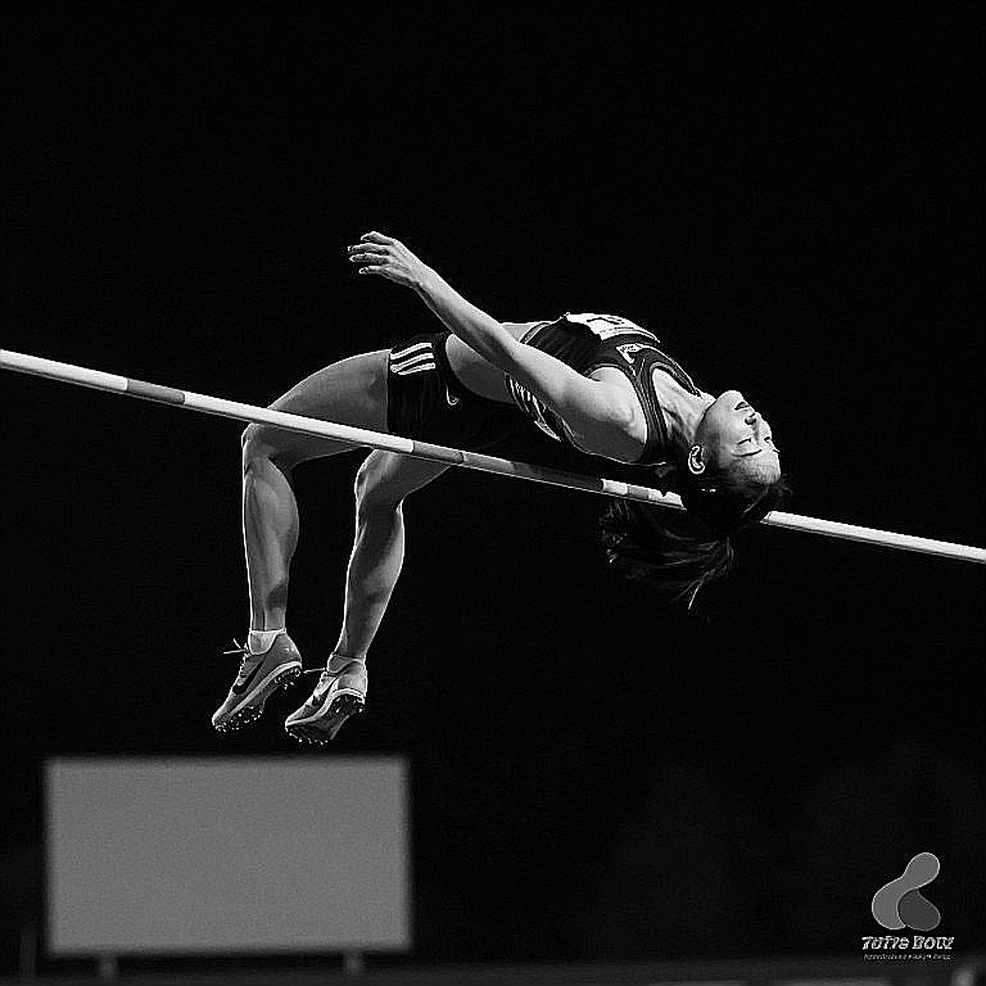
Every number is a confession the race cannot deny. The problem here is that the confession still has one line unwritten. That line reads wind speed.
And as always, I'll wait to read the rest.